.jpg)
Setup to Cleanup: A Repeatable Job-Day Workflow Customers Trust
Customers cannot always evaluate your chemistry ratios or nozzle selection. They can evaluate whether you look prepared, whether you communicate proactively, and whether the result matches what you said it would be. A repeatable job-day workflow is what makes all three of those things consistent rather than dependent on how you feel on a given morning. This post delivers the complete job-day framework that professional drone cleaning operators use to produce consistent results and build client relationships that renew automatically. Topics covered include the ten-minute site assessment protocol covering parking, water source identification, hose routing, overhead hazard mapping, and environmental assessment, the three-phase fifteen-minute setup sequence for pump system, drone preparation, and safety zone establishment, real-time operations management across the four tracking categories of safety, efficiency, quality, and data, the customer walkthrough protocol that must happen before teardown while equipment is still deployed, the system flush and drone post-flight sequence that protects equipment longevity, the same-day and within-one-week follow-up cadence that captures testimonials and proposes recurring maintenance, and the weekly and monthly continuous improvement review process. Built for operators who want consistent results, easier team training, and the kind of professional reputation that generates referrals without asking for them.
This is for drone cleaning operators who want a complete, repeatable job-day process they can run consistently across every job, every crew member, and every property type. Whether you are standardizing your own solo operation or building a workflow that scales to a team, this post walks through every phase of a professional job day from arrival and site assessment through setup, operations, customer walkthrough, system cleanup, and the follow-up sequence that turns one job into a recurring relationship.
Customers cannot judge your chemical dilution ratios or your nozzle selection. But they can judge whether you look prepared, whether you communicate clearly, and whether the result matches what you promised. A repeatable job-day workflow is what makes those things consistent regardless of which job it is, which crew member is running it, or what the site conditions happen to be. The operators who build this kind of systematic process do not just produce better individual jobs. They build operations that are easier to scale, easier to train on, and more likely to generate the repeat business and referrals that compound over time. Here is the complete workflow.
Setup to Cleanup: A Repeatable Job-Day Workflow Customers Trust
Professional drone cleaning is not about having the best equipment or the most flight hours. It is about having a process that produces consistent results regardless of which job it is, which site it is on, or which crew member is running it. Here is the complete job-day workflow that the most professional operators use from arrival to follow-up.
Phase 1: Arrival and Site Assessment (10 Minutes)
The first ten minutes on any job site should be entirely dedicated to assessment, not setup. Rushing into equipment staging before you have understood the site is one of the most common causes of mid-job complications.
Park in a position that allows all vehicle doors to open freely for equipment staging, keeps the staging area level and secure, avoids blocking customer access or emergency routes, and positions you for clean hose routing to the water source. Consider prevailing wind direction when choosing your staging position, not just convenience.
Identify all available water sources and test pressure and flow before committing to a source. Locate electrical outlets if your equipment requires them. Walk the hose path from your staging position to the building and note any terrain challenges, snag points, or obstacles that need to be managed. Check overhead hazards including power lines, cell towers, and tree canopies that could affect flight operations. Locate all storm drains and identify any sensitive landscaping in the treatment zone.
Before touching equipment, introduce yourself to the customer contact, review the job scope together, explain safety procedures and area restrictions, set expectations for noise, chemical presence, and timing, exchange direct contact information for real-time communication during the job, and agree on a time for the completion walkthrough. Customer communication at arrival sets the tone for everything that follows.
Phase 2: Setup in Three Phases (15 Minutes Total)
The fifteen-minute setup target is achievable when it is broken into three sequential five-minute phases that run in a specific order. The order matters because it ensures the pump system is ready and tested before the drone is prepared, and the safety zone is established before any flight operations begin.
Pump System (5 Minutes)
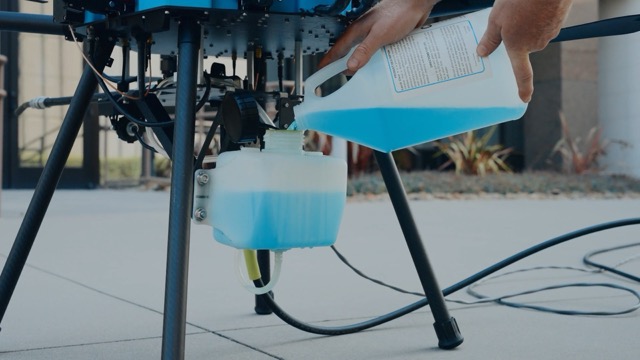
Connect the water source and verify pressure and flow. Set up the chemical mixing station using the dilution ratios calculated the night before. Connect and pressure test all hose connections before the drone is in the air. Prime the pump system and verify spray patterns are correct. Position hose routing guides and weights along the planned path.
Drone Preparation (5 Minutes)
Inspect the drone for any damage or loose connections from transport. Install a fully charged battery and verify all systems. Calibrate the controller and confirm communication link. Attach the cleaning payload and test spray operation on the ground. Complete pre-flight safety checks.
Safety Zone Establishment (5 Minutes)
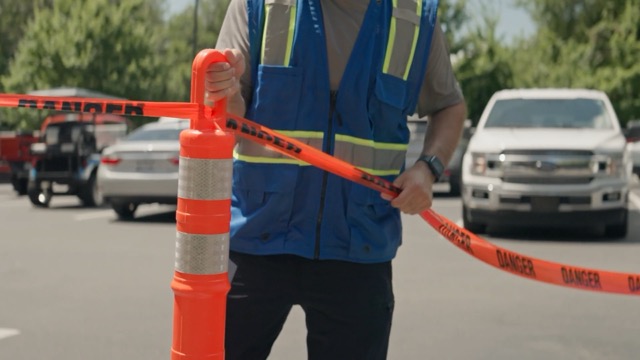
Mark the operational area with cones and tape in a perimeter that keeps uninvolved people clear of the flight path and the chemical application zone. Brief any bystanders on safety procedures. Confirm emergency contacts are accessible. Verify weather conditions are within operational limits. Make the explicit go or no-go decision before any aircraft leaves the ground.
Phase 3: Real-Time Operations
During operations, professional operators are tracking four categories simultaneously. Safety means monitoring bystander positions, watching chemical drift patterns as wind conditions shift, and maintaining emergency readiness throughout the job. Efficiency means tracking time per section against the estimate, monitoring battery consumption against coverage progress, and adjusting hose management to minimize transition time between sections. Quality means watching surface response to confirm chemistry is performing at the expected rate, verifying even coverage across each section, and assessing rinse effectiveness before moving to the next area. Data means annotating times and observations as you go rather than reconstructing from memory after the job.
The most important habit in real-time operations is asking questions rather than assuming. Is the chemistry working at the expected speed? Is coverage even? Is drift increasing? Are we on pace? Is the hose management adding time? Operators who ask these questions during the job adjust in real time. Operators who do not ask them discover the answers during the customer walkthrough, when it is more complicated to fix.
Phase 4: Customer Walkthrough Before Teardown
The walkthrough must happen before equipment is broken down. This is not optional. Once the equipment is packed and the drone is in the vehicle, your ability to address any quality concerns immediately is gone. While the equipment is still deployed, walk every cleaned surface with the customer present. Review the results together. Address any areas that need additional attention right then, while you can still respond to them. Document customer satisfaction and capture any sign-off on the completed work. This is also the best moment to collect a testimonial quote, when the result is visible, the client is satisfied, and the goodwill is at its highest point.
Phase 5: System Cleanup and Equipment Care
System cleanup is not an afterthought. It is equipment maintenance that directly affects the reliability of the next job. Flush the pump and hose system with clean water and continue flushing until the water runs completely clear. Run water through the entire payload system. Operate the diverter valve multiple times to clear any chemical residue from the lines. Empty the system and allow it to air dry rather than sealing residual moisture inside.
Post-flight drone care takes about three minutes and is worth every second. Spray the aircraft down with clean water, paying particular attention to the front motors and any areas with direct chemical exposure. Wipe down all surfaces. Check for any new damage or wear points that appeared during the job. Inspect all connection points. Document anything that needs attention before the next deployment.
Before departing the site, pack all equipment using the checklist rather than from memory. Remove all cones, tape, and safety signage. Confirm no chemical residue or debris has been left on the property. Complete any final customer communication and confirm the next scheduling touchpoint. Process the invoice or payment.
Phase 6: Follow-Up Within 24 Hours
The follow-up phase is where single jobs become recurring relationships. Within 24 hours of job completion, send the customer a completion notification that includes before-and-after photos from the job. This is both a quality confirmation and a marketing asset that demonstrates your documentation discipline. Request feedback and a testimonial if the customer has not already provided one. Schedule a follow-up check-in within the week to confirm satisfaction and address any post-job questions.
Use the follow-up conversation to discuss ongoing maintenance scheduling. A customer who just saw a dramatic before-and-after result is in the best possible frame of mind to commit to a recurring maintenance plan. Propose one directly rather than waiting for them to ask. A building that gets cleaned once and then deteriorates back to its previous condition over the next year is a missed opportunity. A building on a regular maintenance cycle is a recurring revenue relationship.
Phase 7: Continuous Improvement
The workflow improves through deliberate review, not just through repetition. Every week, analyze completed jobs for efficiency opportunities, review any customer feedback, update checklists based on field experience, and plan upcoming equipment maintenance. Every month, compare actual job times and costs against estimates, review customer satisfaction patterns, evaluate pricing against real operational data, and plan for capacity or equipment needs.
The operators who build this review habit into their weekly and monthly routines are not just getting better at individual jobs. They are building an operation that compounds: better estimates, better pricing, better training material for new crew members, and a documented track record that supports the kind of growth that requires bringing other people into the process.
The Big Takeaway
A repeatable job-day workflow does not just prevent problems. It makes the business scalable. When operations are standardized, quality becomes predictable, training becomes straightforward, and customers feel confident hiring you again without needing to re-evaluate the decision each time. Build the workflow. Run it consistently. Let the system produce the results that your reputation gets built on.
.jpg)
I Don't Fly the Drone. I Fly the Environment.
New drone cleaning operators tend to focus on aircraft control: smooth flight, stable hover, obstacle avoidance. Those skills matter, but they are the entry requirement, not the differentiator. The operators who consistently produce better results faster and with fewer problems have made a different mental shift. They are not flying the drone. They are flying the environment. This post unpacks what that means in practice. Topics covered include why chemical management, hose routing, wind and drift, surface response, and safety perimeter integrity are the actual variables that determine job quality, the four real-time tracking categories that professional operators monitor continuously during a job: safety, efficiency, quality, and data, the specific questions experienced operators are asking themselves throughout a cleaning run, and how real-time data gathering during jobs produces the continuous improvement cycle that separates operators who scale from those who plateau. Includes the direct quote from a senior Lucid Bots operator describing his mental discipline during flight operations. Built for operators who want to move from completing jobs to mastering them.
This is for drone cleaning operators who have the flight basics handled and want to understand what separates competent operators from excellent ones during a live job. If you have completed your first jobs and found yourself reacting to problems rather than anticipating them, or if you want a framework for thinking about what to track and adjust in real time while a job is running, this post gives you the mental model and the operational categories that professional operators use to manage jobs at a higher level.
New drone cleaning operators focus on aircraft control: smooth flight, stable hover, clean obstacle avoidance. Those are the basics. They are not the job. One of our senior operators describes the mental shift that separates competent operators from excellent ones with a single sentence: I do not fly the drone. I fly the environment. In drone cleaning, the outcomes that customers care about are determined almost entirely by things happening around the drone, not by the drone itself. Wind direction, chemical dwell time, hose routing, surface porosity, safety perimeter integrity. These are the variables that determine whether a job produces a result worth paying for. This post explains how to manage them.
I Don't Fly the Drone. I Fly the Environment.
New operators spend most of their early mental energy on the aircraft. Smooth flight path. Stable hover. Obstacle clearance. Those skills matter and they need to become automatic. But once they are automatic, the real work begins.
One of our senior operators describes the mental shift that distinguishes professional drone cleaning from basic drone operation with a single sentence:
"I don't fly the drone. I fly the environment."
That reframe changes everything about how you approach a job site.
What Flying the Environment Actually Means
Traditional drone flying is primarily about aircraft control. You are thinking about flight path, altitude, battery status, and obstacle avoidance. Those concerns do not disappear in drone cleaning, but they move to the background. What moves to the foreground is the environment the drone is operating in and the chemical-based workflow it is executing.
In drone cleaning, the outcomes that customers care about are determined by variables that have nothing to do with how smoothly the drone flies. They are determined by whether the chemistry is working at the expected rate on the surface in front of you, whether the hose is routed in a way that does not create drag or snags that affect flight stability, whether wind conditions are causing chemical drift that is landing somewhere it should not, whether the building material is responding to the cleaning method the way you anticipated, and whether the safety perimeter is holding as the job progresses and conditions change. Flying the environment means keeping all of those variables in awareness simultaneously and adjusting when any of them shifts.
The Four Tracking Categories That Professionals Monitor Constantly
Safety
Safety monitoring during operations is not a background task. It is a continuous foreground responsibility. Bystander positions change throughout a job as people arrive, depart, or wander closer out of curiosity. Chemical drift patterns shift as wind speed and direction change, sometimes subtly enough that operators who are not paying attention do not notice until overspray has already reached unintended surfaces. Equipment behavior can change during a job in ways that require immediate response. Professional operators are scanning all of these continuously, not occasionally.
Efficiency
Efficiency tracking during a job means knowing at any given moment whether you are on pace to complete the scope within your estimated time, and understanding why if you are not. How long did each section take relative to the estimate? What is your battery consumption rate against the work completed so far? Are you using more or less chemistry than planned? Is hose management adding time to each section transition? These questions are not just useful for post-job analysis. Answering them in real time allows you to adjust your approach mid-job rather than finishing late and discovering the problem only after the customer has been waiting.
Quality
Quality monitoring means watching the surface, not just the drone. Is the chemistry producing visible results at the expected rate? Are you getting even coverage across each section, or are there areas receiving more or less solution than others? Is the rinse removing contamination completely, or are you seeing residue that suggests the dwell time was insufficient or the dilution was off? Is the customer, if they are watching, satisfied with the visible progress? Real-time quality awareness allows operators to catch and correct problems during the job rather than discovering them during the walkthrough.
Data
Data gathering during a job is what makes the next job better. The most useful habit professional operators develop is annotating time for each task as they go, noting whether chemistry performance matched expectations, identifying what they would adjust if they ran the same job again, and capturing anything unexpected about surface response, site conditions, or equipment behavior. This real-time annotation does not require sophisticated tools. It requires the discipline to record observations while they are fresh rather than reconstructing them from memory after the fact.
What a Senior Operator Thinks About While Flying
When asked what occupies his attention during a cleaning run, one of our senior operators described the mental discipline this way:
"Things that I'm thinking include power requirements and battery management, as well as understanding the targets I'm cleaning and the method I'll use. If I start at a specific point, how long will it take to complete each section? Begin tracking and annotating your times for every task. Also, evaluate the chemical's effectiveness: is it working immediately? If not, determine the adjustments you'll make."
That description is not the thinking of someone flying a drone. It is the thinking of someone managing a chemical-based production process that happens to use a drone as its primary delivery tool. The aircraft is in service of the workflow. The workflow is what the operator is actually running.
Why This Mindset Produces Better Results
Operators who fly the environment rather than just the drone produce better cleaning results because they are responding to what is actually happening on the surface rather than executing a predetermined flight pattern regardless of feedback. They produce faster results because they are optimizing section timing, battery usage, and hose management in real time rather than discovering inefficiencies only after the job is done. And they produce safer jobs because they are tracking the environmental variables that create risk rather than assuming conditions are stable because they were stable at the start.
The mental shift from flying the aircraft to flying the environment is the difference between an operator who completes jobs and one who masters them. Mastery is what builds the kind of reputation that fills a pipeline with repeat customers and referrals.
The Big Takeaway
Aircraft control is the entry requirement. Environmental management is the job. Wind, chemistry, hose routing, surface response, safety perimeter integrity, battery efficiency, and customer satisfaction are all happening simultaneously during every cleaning run. The operators who track all of them consciously and adjust in real time consistently outperform those who focus on the aircraft and hope the rest takes care of itself. Fly the environment. The drone will follow.
The Checklist Mindset: Why Pros Don't Wing It in Drone Cleaning
The difference between professional drone cleaning operators and amateurs is not technical skill or expensive equipment. It is systematic execution. This post makes the case for the checklist mindset as the single most important operational habit a drone cleaning operator can build, and then delivers the practical framework for applying it across every phase of a job. Topics covered include the four psychological reasons why experienced operators make field mistakes even when they know better: excitement kills execution, memory fails under pressure, small mistakes cascade into large problems, and inconsistency erodes customer trust. The post walks through the complete pre-job checklist structure covering core equipment, cleaning system components, safety and documentation items, and the night-before routine that prevents morning scrambles. It also addresses why the value of a checklist is not just in what it catches but in what it signals to customers who can see a systematic, visible process happening in front of them. Built for operators who want to stop relying on memory and start running operations that are predictable, professional, and scalable.
This is for drone cleaning operators at any experience level who want to run tighter, more professional job sites with fewer mistakes, fewer surprises, and more consistent results. If you have ever arrived at a job missing something important, started a cleaning run only to realize a step got skipped, or felt the gap between how prepared you meant to be and how prepared you actually were, this post gives you the mindset framework and the practical checklist structure to close that gap permanently.
Most field mistakes in drone cleaning are not caused by a lack of knowledge. They are caused by skipped steps. Operators arrive at a job site excited to fly and eager to impress, and that excitement is exactly what causes problems. Professional athletes use pre-game routines for a reason: adrenaline makes people skip fundamentals. Drone cleaning is no different. When you are managing customer expectations, weather windows, equipment, and a chemical-based workflow at the same time, your brain prioritizes whatever feels urgent. Checklists protect you from that dynamic by moving critical decisions out of the moment and into a system that runs before the pressure starts.
The Checklist Mindset: Why Pros Don't Wing It in Drone Cleaning
"Excellence is never an accident. It is always the result of high intention, sincere effort, and intelligent execution." - Aristotle
The difference between professional drone cleaning operators and amateurs is almost never equipment quality or flight skill. It is systematic execution. Professionals follow checklists. Amateurs rely on memory and hope. And the operators who document their processes and build repeatable systems consistently outperform those who wing it, regardless of how experienced or talented they are.
Here is why that is true, and what the checklist mindset looks like in practice.
Why Even Experienced Operators Make Field Mistakes
Excitement Kills Execution
One of our senior operators puts it plainly: you get to the site, you get excited, and then you start missing steps. That is not a character flaw. It is human nature. Adrenaline and anticipation redirect attention toward what feels important right now and away from the systematic preparation that prevents problems later. Professional athletes use pre-game routines for exactly this reason. The routine runs whether the athlete feels ready or not, because feelings are not a reliable signal for execution quality. Drone cleaning is the same.
Memory Fails Under Pressure
When you are simultaneously managing customer expectations, watching a weather window, monitoring equipment, and running a chemical-based workflow, your brain prioritizes immediate problems over systematic preparation. That is how small things get forgotten. And in drone cleaning, small things forgotten at the start of a job have a way of becoming large problems by the middle of one.
Small Mistakes Cascade
Forgetting a water key seems like a minor oversight until you are trying to open a hose bib with pliers while a customer watches. Missing a battery charger seems inconsequential until it costs you half a day driving back to base. Skipping a pre-flight spray test seems fine until you are aloft and discover the nozzle is partially blocked. Small mistakes in field operations do not stay small. They cascade into delays, rework, equipment damage, and customer experiences that undercut everything else you did well on that job.
Consistency Builds Trust
Customers cannot evaluate your chemical ratios or nozzle selection. They can evaluate whether you look prepared. A visible, systematic process communicates competence in a way that no amount of verbal reassurance can match. Operators who follow checklists in front of customers are sending a signal: we have done this before, we have thought through what can go wrong, and we are not improvising. That signal builds the kind of trust that generates referrals and repeat contracts.
The Pre-Job Checklist: What to Never Leave Without
The most valuable checklist in drone cleaning is the one you run the night before a job, not the morning of. By the time you are loading the van at 6am, the decisions should already be made. Everything on the list should already be charged, mixed, packed, and confirmed. The morning is for execution, not preparation.
Core Equipment
The drone should be inspected and confirmed ready before it goes in the vehicle. Bring a minimum of three fully charged batteries, the charger and all power cables, the controller with charged batteries, at least two sets of spare propellers, a basic tool kit covering screwdrivers, hex keys, and pliers, and a water key. The water key deserves special mention because it is small, easy to forget, and completely irreplaceable on site. If you do not have one, you cannot connect to most commercial hose bibs.
Cleaning System Equipment
The pump and hoses should be pressure tested before leaving base. Cleaning chemicals should be identified and dilution ratios calculated in advance, not improvised on site. Bring spray nozzles and quick-connect fittings, chemical mixing containers and measuring tools, and hose weights and routing guides. Knowing your ratios before you arrive means you are mixing with intention rather than guessing under time pressure.
Safety and Documentation
Every job requires PPE including goggles, chemical-resistant gloves, a respirator appropriate for the exposure level, and protective clothing. A first aid kit and eyewash solution should be in the vehicle on every job without exception. Bring a phone or camera ready for before-and-after documentation, the job scope and customer contact information, and the emergency procedures relevant to the site. A weather monitoring app should be open and checked before departure and again on arrival.
The Night-Before Routine
The night before a job is when professional operators do their real preparation work. Review the job scope and the weather forecast together so you know what conditions you are walking into and whether any adjustments are needed. Inspect and charge all equipment so nothing is scrambling for power in the morning. Calculate your chemical dilution ratios in advance and write them down. Pack the vehicle using the checklist rather than from memory. Plan your route and identify backup water sources in case the primary source is unavailable. Set your alarm early enough to account for traffic and setup time without rushing.
Five minutes of checklist discipline the night before prevents hours of firefighting the day of. That is not an exaggeration. It is the consistent experience of operators who have built this habit versus those who have not.
What Checklists Signal to Customers
There is a sales dimension to operational discipline that operators often overlook. When a customer watches you arrive, work through a visible setup sequence, brief bystanders on safety procedures, and operate with obvious systematic structure, they are forming an impression that no proposal or testimonial can fully create on its own. They are watching professionalism in real time. That impression is what makes them comfortable signing a recurring maintenance contract, what makes them confident referring you to colleagues, and what makes them less likely to shop your next renewal on price alone.
The checklist mindset is not just about preventing mistakes. It is about building the kind of operation that customers trust and competitors cannot easily replicate.
The Big Takeaway
Every mistake you can make in the field has already been made by someone else. Every efficiency you can gain has already been discovered. The operators who document those lessons and build them into repeatable checklists consistently outperform those who rely on memory and improvisation, regardless of talent or experience. Build the checklists. Run them every time without exception. Let the system protect the job so you can focus on the work.
Chemical Safety, Dilution, and Environmental Protection in Drone Cleaning
The most powerful tool in exterior cleaning is chemistry. And chemistry handled without discipline creates consequences that outlast any single job: surface damage from incorrect dilution, operator injuries from skipped PPE, landscaping damage from runoff or drift, and the reputational harm that follows all of these. This gives drone cleaning operators a complete practical framework for working with exterior cleaning chemistry safely and responsibly on every job. Topics covered include sodium hypochlorite dilution guidelines for heavy growth and light growth applications with specific mix ratios and dwell time requirements, the full PPE kit every operator should have on every job site and the reasoning behind each piece of equipment, and a complete landscaping protection protocol organized across the three phases of every job: pre-treatment, during application, and post-treatment. The post also covers chemical neutralization basics for both sodium hypochlorite and acid-based cleaners, and the post-cleaning documentation practices that protect operators from liability when customers follow up with concerns about plant health. Built for operators who want to run professional job sites that clients trust, refer, and return to.
This is for drone cleaning operators who want to handle chemistry professionally on every job and for property managers who want to understand what responsible chemical handling looks like before they bring a new vendor onto their property. Getting the chemistry right is what produces consistent results. Getting the safety and protection protocols right is what makes those results repeatable without incident, liability, or the kind of landscaping damage that turns a satisfied client into a former one.
The most powerful tool in exterior cleaning is not pressure. It is chemistry. And chemistry handled without discipline creates consequences that extend well beyond the job itself: surface damage from incorrect dilution, operator injuries from skipped PPE steps, and landscaping damage from runoff or drift that turns a satisfied client into one who never calls back. Professional drone cleaning operators do not treat chemical handling as a secondary concern. They build it into the job from the first site assessment to the final post-treatment rinse. This post covers the complete framework for doing that correctly on every job.
Chemical Safety, Dilution, and Environmental Protection in Drone Cleaning
Professional drone cleaning results come from professional chemistry. Not from the drone, not from pressure, and not from the equipment. From using the right solution at the right concentration on the right surface, with the discipline to protect operators, clients, and job sites throughout the process.
Here is the complete framework for handling chemistry safely and responsibly on every commercial exterior cleaning job.
Sodium Hypochlorite Dilution: Getting the Concentration Right
The goal with sodium hypochlorite dilution is always to use the minimum effective concentration for the contamination and surface in front of you. Using more chemistry than the job requires does not produce better results. It increases surface damage risk, creates more runoff to manage, and raises cost without a corresponding benefit.
For heavy growth on brick, stone, or stucco, a concentration of approximately 4 percent sodium hypochlorite is the appropriate starting point. To achieve this from a 12.5 percent bleach concentrate, mix one part bleach to three parts water and apply with a soft wash system and surfactant. Allow 15 to 20 minutes of dwell time before rinsing. The dwell time is not optional. It is what gives the chemistry enough contact time to kill organic growth at the root level rather than just removing the surface appearance.
For light growth on siding, wood, or surfaces with less severe contamination, a concentration of 1 to 2 percent is typically appropriate. Mix one part 12.5 percent bleach to between 6 and 12 parts water depending on the severity of the contamination. Dwell time for light growth applications runs 10 to 15 minutes. Exact ratios will vary based on surface type, ambient temperature, and local practices. Always test in an inconspicuous area and dial in your mix before committing to a full application.
PPE: What Every Operator Needs on Every Job
Personal protective equipment is not optional and it is not just about regulatory compliance. It is about making sure every operator on the job site goes home the same way they arrived. The consequences of a chemical splash to the eyes or sustained respiratory exposure to sodium hypochlorite vapor are serious enough that no time saved by skipping a step is ever worth the risk.
Eye Protection
Chemical splash goggles are the minimum standard for any job involving sodium hypochlorite or other cleaning chemicals. A full face shield is required for overhead work where chemical drift and drip are more likely. Standard safety glasses are not adequate protection for liquid chemical exposure.
Respiratory Protection
An N95 respirator is the minimum for outdoor applications with adequate ventilation. Chemical cartridge respirators are required for enclosed or poorly ventilated areas and for applications involving heavy mist or prolonged exposure. A full-face respirator is appropriate for extensive exposure scenarios. Match the respirator to the actual exposure level rather than defaulting to the minimum.
Skin Protection
Chemical-resistant gloves in nitrile or neoprene are required for all chemical handling. Long sleeves and pants protect skin from incidental contact and drift. A chemical-resistant apron is appropriate for mixing operations where spill risk is higher. Closed-toe shoes with chemical resistance protect against ground-level spills and runoff.
Landscaping Protection: Before, During, and After
Chemical runoff and drift are among the most common sources of client complaints and liability exposure in exterior cleaning. Landscaping damage is visible, emotional, and memorable in a way that property managers do not forget. A thorough protection protocol eliminates that risk and demonstrates a level of professionalism that most competitors do not bother to show.
Before the Job
Identify all sensitive plants, ornamental shrubs, and ground cover in the treatment zone before setting up. Pre-water all vegetation thoroughly with clean water before any chemistry is applied. Saturating plants before exposure dilutes any chemical contact that occurs and significantly reduces uptake. Cover delicate plants with plastic sheeting where practical. Identify the location of all storm drains in or adjacent to the treatment area and protect them if runoff could reach them during the application.
During the Job
Monitor wind direction continuously throughout the application. Chemical drift from drone operations at height can carry further than operators expect, particularly in light crosswinds that are not strong enough to suspend operations. Use targeted application patterns that keep overspray away from landscaping and unintended surfaces. Keep a continuous water supply available throughout the job for immediate dilution response if drift occurs. Adjust drone positioning and application angles when wind conditions shift.
After the Job
Rinse all vegetation in the treatment zone immediately after the application is complete, regardless of whether visible chemical contact occurred during the job. Remove any protective coverings once the chemistry has been neutralized or rinsed away. Monitor plant health for 24 to 48 hours after completion and document your observations. If a client contacts you about plant stress during that window, a documented post-job monitoring record turns a potential dispute into a manageable conversation.
Chemical Neutralization Basics
Sodium hypochlorite neutralizes naturally over time with dilution and exposure to sunlight. For most soft wash applications on exterior surfaces, thorough rinsing and natural neutralization are sufficient. Acid-based cleaners require specific neutralizing agents that must be confirmed before the job and applied deliberately after cleaning. Never leave a job site with active chemistry on a surface or in runoff channels without confirming neutralization. Provide the client with post-cleaning care instructions that cover any monitoring they should do in the hours following the job.
Documentation: Your Protection When Questions Arise
Even when a job is executed flawlessly, clients sometimes follow up with concerns about plant health or surface appearance in the days after cleaning. Documentation is what protects operators in those conversations. Log the chemicals used, the concentrations applied, and the surfaces treated on every job. Note the landscaping protection steps taken and the condition of the plants at the time of the post-treatment rinse. If you monitored plant health in the 24 to 48 hours after completion, record what you observed. That documentation turns a vague complaint into a specific, documented conversation where you can demonstrate exactly what was done and when.
The Big Takeaway
Professional chemical handling is not overhead. It is the foundation of results that are consistent, repeatable, and safe. Get the dilution right. Wear the PPE every time without exception. Protect the landscaping before, during, and after every job. Document what you did. The operators who do all of this build the kind of client relationships that generate referrals and recurring contracts for years. The ones who skip steps spend their time managing complaints instead.
Soft Wash vs Pressure Wash vs Window Cleaning: Choosing the Right Method Every Time
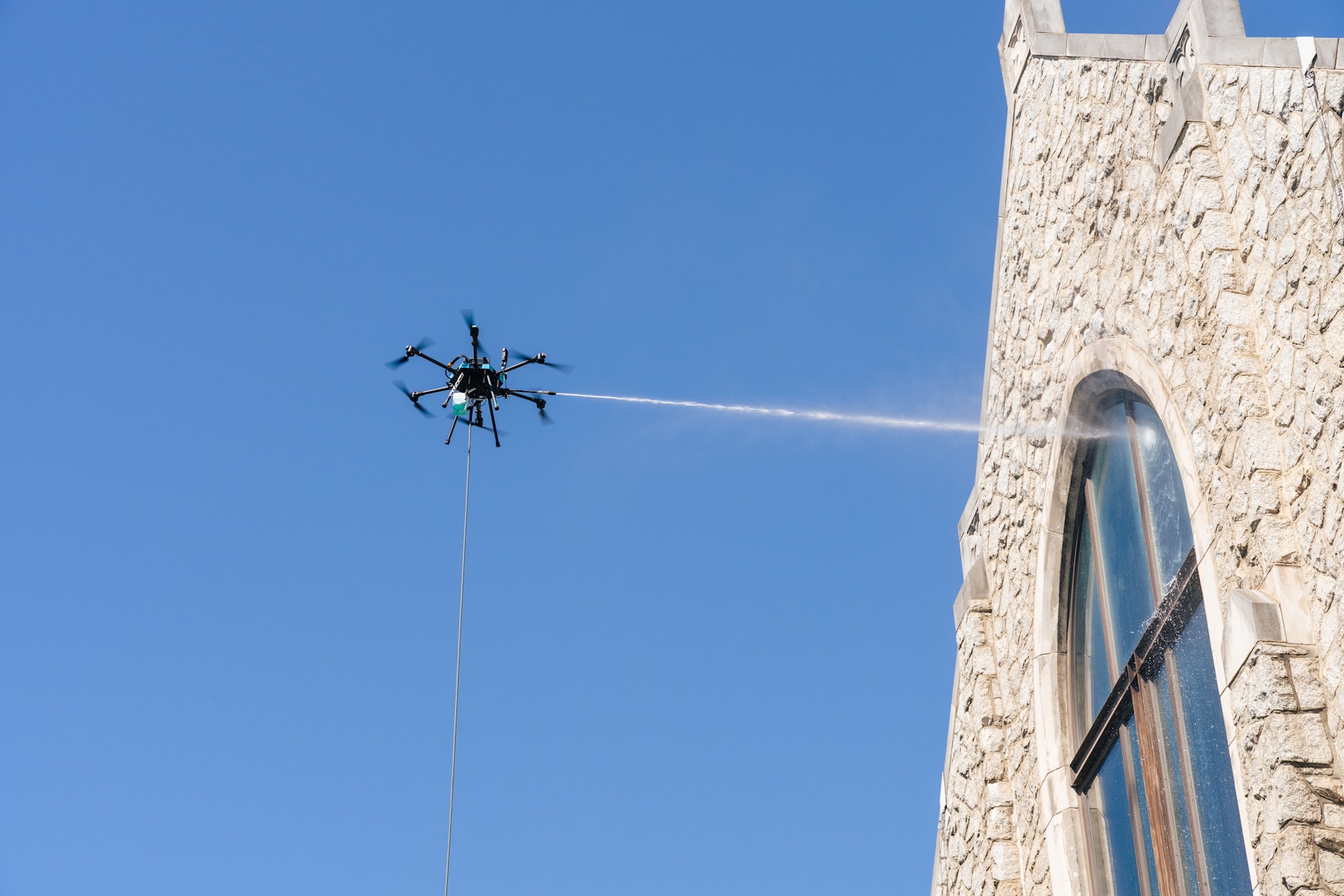
Drone cleaning changes how solutions reach a surface. It does not change the fundamental chemistry and method principles that determine what actually cleans a building. Every exterior cleaning job falls into one of three categories: window cleaning, soft washing, or pressure washing. Each has a different mechanism, different pressure and flow parameters, a different set of surfaces it is suited for, and a different set of surfaces it will damage if misapplied. This post breaks down all three methods in practical detail and walks through a surface-by-surface guide covering glass and glazed surfaces, stucco and EIFS, brick and masonry, metal panels, and concrete. It also covers the most common method selection mistakes in each category and explains why organic growth requires chemical treatment rather than mechanical force regardless of what surface it is growing on. The limestone cautionary story from a real university job illustrates the cost of prioritizing equipment over chemistry knowledge. Built for operators who want to quote and execute with confidence and for buyers who want to understand what separates a professional exterior cleaning vendor from one who causes expensive damage.
This is for drone cleaning operators who want to make confident, well-reasoned method selections on every job, and for property managers and facility directors who want to understand why their cleaning vendor recommends one approach over another. Method selection is one of the highest-stakes decisions in exterior cleaning. The wrong choice does not just produce poor results. It damages surfaces, voids warranties, and destroys client relationships that took significant effort to build. This post gives operators and buyers a clear, surface-by-surface framework for getting it right every time.
The difference between a professional exterior clean and a costly mistake almost always comes down to one decision: choosing the right method for the surface and contamination in front of you. Drone cleaning does not change the fundamentals of exterior cleaning method selection. It makes those decisions more consequential because bad choices executed at height on expensive commercial facades can cause significant damage fast. Every exterior job falls into one of three categories: window cleaning, soft washing, or pressure washing. Each one has different chemistry, different pressure requirements, and a different set of surfaces it works on. Here is how to choose correctly every time.
Soft Wash vs Pressure Wash vs Window Cleaning: Choosing the Right Method Every Time
Drone cleaning does not change what cleans a surface. It changes how safely and efficiently cleaning solutions reach one. The three fundamental exterior cleaning methods still apply to every job, and using the wrong one is one of the most expensive mistakes an operator can make. Here is what each method does, how it works, and when to use it.
Window Cleaning
Window cleaning is designed for glass and glazed surfaces where streak-free results are non-negotiable. The process applies a specialized cleaning solution that breaks down contamination on the glass surface, then rinses with ultra-pure filtered water to prevent mineral deposits and spotting. The critical variable is not pressure. It is water quality. Water that has not been filtered to near-zero parts per million will leave mineral deposits on glass regardless of how well the chemical step performs. Operating pressure for window cleaning typically runs between 800 and 1,200 PSI, which is enough to rinse effectively without risking seal damage or thermal stress on the glass.
The most common mistakes on glass are using unfiltered water, using incorrect chemical ratios, and rushing the rinse step. All three produce spotting and streaking that customers notice immediately and remember for a long time. Streak-free glass comes from chemistry and water quality, not force.
Soft Washing
Soft washing is the correct method for mold, mildew, algae, and organic growth on surfaces that cannot handle high pressure. Stucco, EIFS, painted wood, certain brick types, and most roofing materials all fall into this category. The process applies a chemical solution, typically sodium hypochlorite combined with a surfactant for cling and dwell performance, at low pressure and allows it to sit on the surface for 10 to 15 minutes. During that dwell window, the chemistry kills the organic growth at the root level rather than simply removing what is visible on the surface.
This root-level kill is what makes soft washing results last significantly longer than pressure washing on organically contaminated surfaces. A pressure wash removes the visible growth without treating the root system, which means regrowth begins almost immediately. A soft wash removes both the visible growth and the biological structure underneath it, which extends the clean result substantially. Operating pressure stays under 300 PSI with a flow rate around 10 to 12 gallons per minute. Surface damage risk at those parameters is minimal when dilution is correct and dwell time is respected.
Pressure Washing
Pressure washing uses mechanical force to remove contamination from hard, durable surfaces that can tolerate the pressure involved. It produces immediate visual results and works well on concrete, pavers, and certain metal surfaces. Operating pressure can reach up to 4,400 PSI with flow rates under 8 gallons per minute. The results are visually satisfying and the process is fast.
The limitation is that pressure washing works at the surface level only. It removes what is visible without addressing the biology underneath, which means organic growth returns faster than it would after a soft wash treatment. Pressure washing is the right tool for the right surface and the right contamination type. It is not the right default for every job, and applying it to surfaces that require soft washing can cause real and expensive damage.
Surface by Surface: Matching Method to Material
Glass and Windows
Glass requires window cleaning with filtered water and a specialized cleaning solution at 800 to 1,200 PSI. The single most important variable is water purity. Nothing else matters if the rinse water is leaving mineral deposits. Use deionized or reverse osmosis filtered water and confirm the output reads as close to zero parts per million as possible before starting.
Stucco and EIFS
Stucco and EIFS are among the most damage-prone surfaces in commercial exterior cleaning. They require soft washing at very low pressure, under 200 PSI, with sodium hypochlorite and a surfactant mix that allows proper dwell time. High pressure on these materials strips finish coats, forces water behind the cladding system, and voids manufacturer warranties. There is no job on stucco or EIFS where high pressure is the right answer.
Brick and Masonry
Brick can typically tolerate soft washing or light pressure washing in the 200 to 800 PSI range, but it always deserves a test patch first. Older mortar can be fragile and may not survive even moderate pressure. Acid-based cleaners on brick require careful testing because the wrong acid at the wrong concentration causes permanent discoloration and surface damage. When in doubt, start with soft washing and only introduce pressure if the surface clearly needs it.
Metal Panels
Metal panel cleaning varies significantly based on the finish type and the nature of the contamination. Low to moderate pressure applies in most cases. The critical rule is to avoid chemicals that react with the specific metal finish in use. Sodium hypochlorite on certain metal finishes causes oxidation and discoloration that cannot be reversed. Confirm the panel finish type before selecting chemistry and test in an inconspicuous area first when working with an unfamiliar material.
Concrete
Concrete is the most forgiving surface in exterior cleaning and can handle pressure washing up to around 3,000 PSI in most applications. Soft washing is also effective on concrete when organic growth is the primary contamination type. The key consideration for concrete is sealer compatibility. Decorative concrete finishes and sealed surfaces can be damaged by the wrong chemistry or excessive pressure, so confirm what has been applied to the surface before selecting your approach.
The Core Rule
Match the method to the contamination type and the surface material, not to the equipment you happen to have available. When the contamination is organic growth of any kind, mold, algae, mildew, moss, or lichen, chemistry is the primary weapon. Pressure without chemistry removes the surface appearance of organic growth without treating the biology underneath it. The result comes back faster, the customer is disappointed sooner, and the operator's reputation takes the hit.
Drone cleaning rewards method knowledge because it makes professional execution accessible on surfaces and heights where traditional methods create too much risk or too much disruption. The technology advantage is real. But it only delivers its full value when the operator behind it knows which chemistry to apply, at what pressure, on which surface, for how long.
The Big Takeaway
Soft washing, pressure washing, and window cleaning each have a purpose and a set of surfaces they are designed for. Choosing correctly every time is what separates operators who build long-term client relationships from those who cause damage and lose accounts. Learn the methods. Know the surfaces. Let the chemistry do the work it is designed to do.
Drone Cleaning Is Chemistry: The Two Analogies That Build Instant Customer Trust
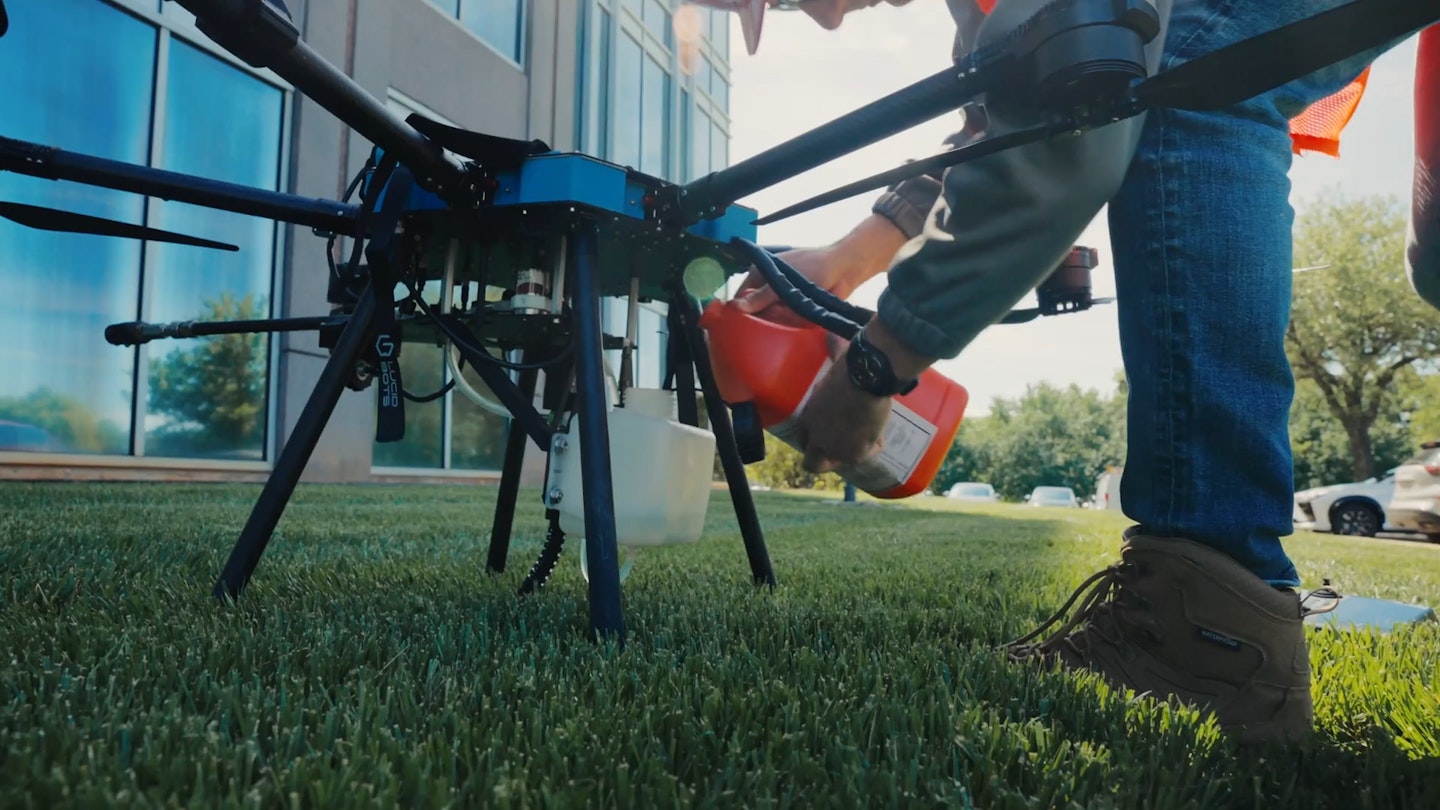
The biggest misconception about drone cleaning is that the technology is the secret ingredient. It is not. The cleaning chemistry used in drone exterior cleaning is identical to the proven methods traditional contractors have used for decades. The drone is simply a safer, more efficient delivery system. The problem is that when customers do not understand this, they approach the service with skepticism that no amount of technical explanation can dissolve. This gives operators two simple analogies that reframe chemical cleaning in terms every prospect already understands. The dishwasher analogy addresses the agitation objection directly by connecting drone cleaning to a process every homeowner trusts. The pool chemistry analogy neutralizes fear of bleach-based solutions by linking sodium hypochlorite to chlorinated pools that customers happily let their families swim in. The post also includes the limestone cautionary story that illustrates what happens when method selection goes wrong, the full customer education framework with tailored language for four distinct customer types, and guidance on what not to lead with in sales conversations. Built for operators who want to close more deals by explaining their service more simply.
This is for drone cleaning operators who struggle to explain their service to skeptical customers in plain language. If you have ever watched a prospect's eyes glaze over during a technical explanation of your cleaning process, or fielded the question 'but how does it actually clean without scrubbing,' this post gives you two simple, field-tested analogies that cut through confusion immediately. Understanding the chemistry behind drone cleaning and knowing how to communicate it simply is one of the most practical sales skills an operator can develop.
When people first encounter drone cleaning, they often assume the drone is doing something special to the surface: scrubbing, blasting, or using some new futuristic method. That assumption creates immediate skepticism. How does it clean without brushing? Is it strong enough? Is it safe? The fastest way to overcome those objections is not a technical explanation of your equipment. It is a familiar analogy that connects chemical cleaning to something the customer already understands and trusts. This post walks through the two analogies that drone cleaning operators use to build instant customer confidence, and the customer education framework that turns those analogies into closed deals.
Drone Cleaning Is Chemistry: The Two Analogies That Build Instant Customer Trust
"The expert in anything was once a beginner." - Helen Hayes
The biggest misconception about drone cleaning is that the drone is the secret sauce. It is not. After thousands of successful jobs across hundreds of operators, one truth becomes clear: the cleaning chemistry is identical to traditional exterior cleaning methods. The drone is simply a safer, more efficient delivery system that gets proven solutions exactly where they need to go.
The challenge is that customers do not know this. And when they do not understand how chemical cleaning works, skepticism fills the gap. The answer is not a more technical explanation. It is a simpler language.
The Dishwasher Analogy
When a customer asks how drone cleaning works without scrubbing, this is the response that lands every time:
"There are no scrub brushes in your dishwasher. The detergent is specially designed to break down food and bacteria chemically, and water flow rinses it away. Exterior cleaning works exactly the same way."
This analogy works for several reasons. Everyone understands how dishwashers clean without scrubbing, so the concept requires no technical education. It normalizes chemical-based cleaning as proven, familiar technology rather than something experimental. It addresses the agitation objection directly without being defensive. And it shifts the customer's attention from the mechanism to the outcome, which is a clean surface, which is all they actually care about.
Once a customer accepts that their dishwasher cleans without brushes, the logic of drone cleaning follows naturally. Chemistry breaks down contamination. Dwell time allows it to work. Rinsing removes the residue. The drone just delivers the chemistry more safely and efficiently than a crew on a lift.
The Pool Chemistry Analogy
Some customers hear the word bleach and immediately become concerned. Sodium hypochlorite sounds industrial and dangerous to people who have not worked with it professionally. The pool analogy resolves that concern in a single sentence:
"Do you have a pool? Have your kids ever swam in a pool? How do you think that water stays clean? It is chlorine. Sodium hypochlorite is the same family of chemistry, used correctly at the right concentration for the job."
The psychology behind this analogy is straightforward. People who are comfortable with chlorinated pools, which is most people, already trust the chemistry at a personal level. They have made peace with the fact that their families swim in chlorinated water regularly. Connecting sodium hypochlorite to that existing comfort immediately reframes the conversation. The chemical is no longer scary industrial bleach. It is a familiar cleaning agent they already accept in their daily lives.
The Limestone Story: Why Method Matters More Than Equipment
Understanding chemistry is not just a sales tool. It is what protects customers from expensive mistakes. One of the clearest illustrations of this comes from a real job at a university.
The building had beautiful limestone trim that was heavily stained with mold. A previous contractor had approached it with a lift, high pressure, and hot water at 4,000 PSI. They literally ate away a quarter inch of the limestone trying to clean it with mechanical force.
The correct approach had nothing to do with pressure. Mold is an organic compound with root systems. If you do not treat it chemically, you are not truly removing it. You are just abrading the surface. The right solution was a soft wash pump running around 150 PSI with proper chemistry and dwell time. The pressure was almost irrelevant. The chemistry did the work.
The principle applies to every job: match the method to the contamination type and the surface material, not to the equipment you happen to have available. Operators who understand this protect their customers from exactly the kind of expensive damage that makes property managers distrust contractors for years.
How to Explain Drone Cleaning to Any Customer
Not every customer cares about the same thing. The operators who communicate most effectively tailor their explanation to what the specific customer values. Here is the framework that works across four common customer types.
For Safety-Focused Customers
"We use the same proven cleaning chemistry that traditional contractors use. The difference is that our drone keeps workers safely on the ground throughout the entire job. No lifts, no ladders, no workers at height."
For Quality-Focused Customers
"Our window cleaning works like a dishwasher. Specialized chemistry breaks down dirt without physical scrubbing, and we use ultra-pure filtered water to prevent any spotting or streaking. The result is consistent, streak-free glass every time."
For Cost-Focused Customers
"Chemical cleaning kills organic growth at the root level, which means buildings stay clean longer after a soft wash than after a pressure wash. Fewer cleanings per year translates directly into lower total annual maintenance costs."
For Skeptical or Technical Customers
"The chemistry is identical to what traditional exterior cleaning contractors have used for decades. We are not doing anything experimental. We are just delivering proven solutions more safely and efficiently using a drone as the delivery system instead of a crew on a lift."
What Not to Lead With
When introducing drone cleaning to a new prospect, resist the urge to open with equipment specifications. Flight time, battery capacity, payload engineering, and drone model numbers do not answer the questions customers are actually asking. They want to know whether it works, whether it is safe, and whether it will damage their building. Lead with the analogies. Let technical details come out naturally if the customer is curious, not as your opening pitch.
The operators who explain drone cleaning most effectively do not sound like engineers. They sound like trusted professionals who happen to use a smarter tool.
The Big Takeaway
Drone cleaning is not magic. It is proven chemistry delivered more safely and efficiently. The dishwasher analogy explains how chemical cleaning works without scrubbing. The pool analogy neutralizes fear of bleach-based solutions. The limestone story illustrates what happens when operators prioritize equipment over chemistry knowledge. And the customer education framework gives you the right language for any prospect you sit across from.
Master the simple explanation. Use the analogies. Let the chemistry do the work it has always done.
Insurance, Safety, and Documentation: The Risk Framework Customers Trust
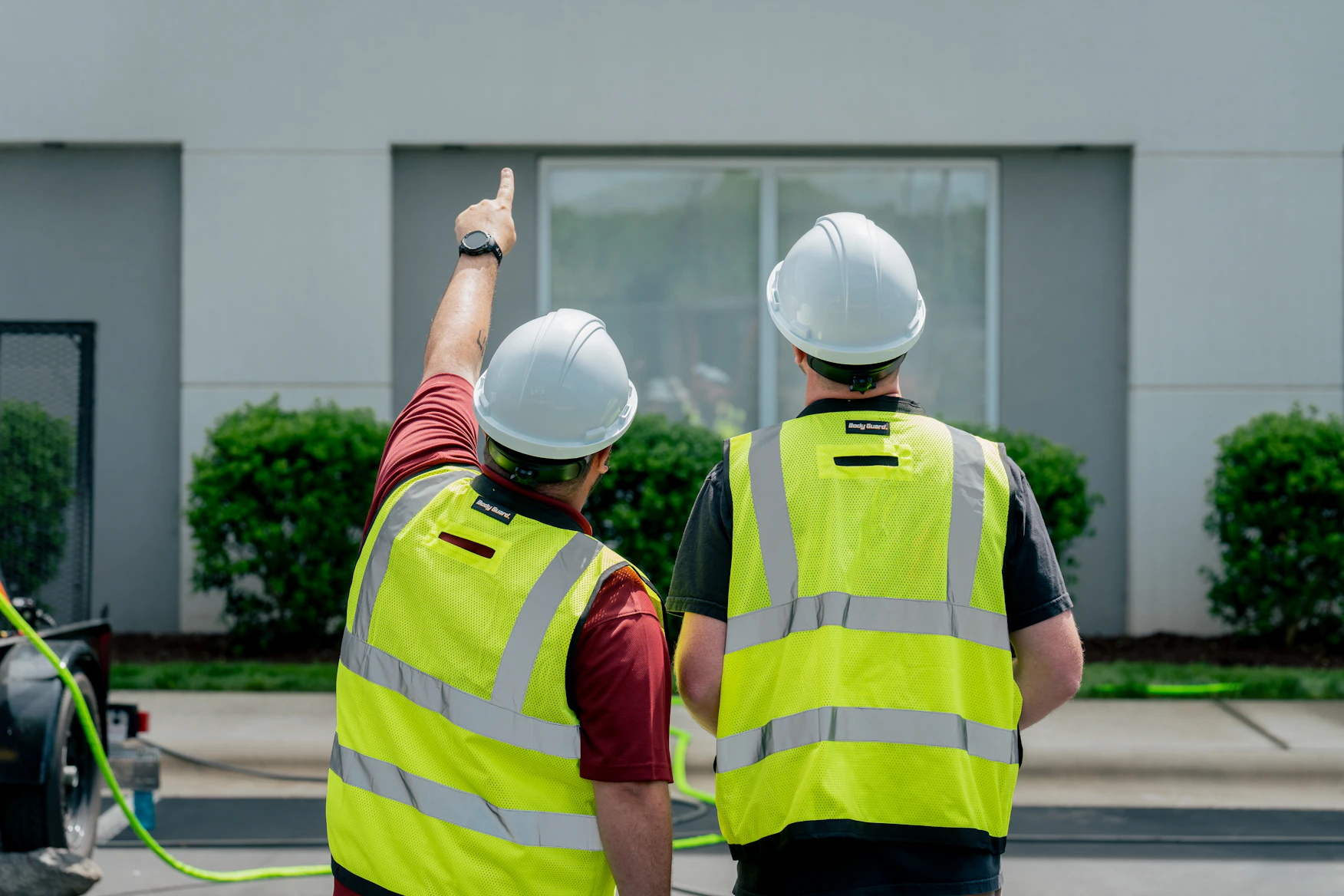
FAA Part 107 certification is the starting point for commercial drone cleaning compliance, not the finish line. The operators who win and retain high-value commercial accounts have built a complete risk framework that addresses every category of exposure a property manager or facilities director might reasonably worry about: financial liability through comprehensive insurance coverage, operational safety through documented standard operating procedures, and administrative credibility through organized documentation systems. This post walks through each component in detail. Topics covered include the three insurance coverage types that serious commercial properties require and the specific coverage levels that satisfy enterprise vendor qualification requirements, the core elements of an operational safety system including pre-job site assessments, safety zone protocols, weather and emergency procedures, and aircraft malfunction response plans, and the documentation categories that function as silent sales tools throughout the customer relationship. The post also addresses how documentation reduces insurance premiums, speeds vendor approval processes, and protects operators legally when incidents occur. Built for operators who want to operate at the level that enterprise commercial accounts require and who understand that professional risk management is not overhead but a core business competency.
This is for drone cleaning operators who have their FAA certification and are ready to build out the rest of their professional risk framework: insurance coverage, standard operating procedures, and documentation systems. If you are targeting commercial properties, medical facilities, universities, or any institutional account with a formal vendor qualification process, this post gives you a complete picture of what those customers expect to see before they approve a new contractor and how to present your risk management systems in a way that builds confidence rather than raising more questions.
FAA certification gets you legally authorized to fly. It does not, by itself, get you hired for premium commercial work. The property managers and facilities directors who oversee institutional properties, enterprise facilities, and high-value commercial real estate have vendor qualification requirements that go significantly beyond regulatory compliance. They want to know what happens if someone gets hurt, what coverage is in place if property gets damaged, and what documentation exists to prove that your operation runs professionally every time. This post covers the complete risk framework that answers all of those questions before they become objections.
Insurance, Safety, and Documentation: The Risk Framework Customers Trust
Skill alone does not win enterprise commercial contracts. What wins them is proof: proof that people will not get hurt, proof that property will not be damaged, proof that incidents have been planned for, and proof that the operator's systems are professional enough to be trusted with a building that represents millions of dollars in asset value.
FAA Part 107 certification establishes your legal right to operate. The risk framework described in this post is what establishes your right to the accounts worth having.
Insurance: The Gatekeeper to Premium Work
Many high-value commercial properties will not consider an uninsured or underinsured contractor regardless of how compelling the demonstration looks or how competitive the pricing is. Insurance requirements are often embedded in vendor qualification processes that happen before any sales conversation takes place, which means operators without adequate coverage are eliminated from consideration before they ever get the chance to prove their work.
The three coverage types that professional drone cleaning operations require are general liability insurance, aviation and hull insurance, and workers' compensation. General liability coverage should sit at a minimum of one million dollars per occurrence with a two million dollar aggregate. This is the baseline that most commercial properties require and what enterprise vendor qualification processes typically specify. Aviation and hull insurance covers the aircraft and payload against damage or loss, which matters both for protecting your equipment investment and for satisfying insurers who want to know that a drone malfunction during a job will not result in an uninsured claim against the property. Workers' compensation coverage needs to explicitly include aviation-related work, as standard workers' compensation policies sometimes exclude aerial operations and operators who have not confirmed this with their carrier may find themselves with a gap in coverage at exactly the wrong moment.
This level of coverage does more than satisfy vendor requirements. It allows you to work on properties that competitors without adequate coverage cannot access, price with confidence because your cost structure reflects your actual liability exposure, and present yourself in vendor qualification conversations as an operator that has thought seriously about risk rather than one who is hoping nothing goes wrong.
Safety SOPs: Where Trust Is Built Before the Job Starts
Professional operators do not improvise on commercial job sites. They run standard operating procedures that have been developed, documented, and practiced before any customer ever sees them. The difference between an operator with written SOPs and one without is not primarily operational. It is perceptual. When a property manager asks how you handle an equipment malfunction mid-job and you hand them a written emergency response protocol, the conversation about whether you are a professional vendor ends immediately.
The core elements of a drone cleaning safety system begin with pre-job site assessments that identify hazards, access constraints, overhead obstacles, proximity to uninvolved people, and any site-specific conditions that affect the operational plan. Safety zones and access control procedures establish the perimeter around the work area that keeps uninvolved people clear of the flight path during operations. Weather protocols define the wind speed, visibility, and precipitation thresholds below which operations are suspended, and they specify the notification and rescheduling process that follows.
Emergency readiness planning covers the scenarios that operators hope never happen but must be prepared for: aircraft malfunction and uncontrolled descent, medical response if a team member is injured, and the customer and regulatory notification steps that follow any incident. Good safety systems prevent most incidents. Great safety systems prove you were prepared for the ones that occur anyway.
Documentation: Your Silent Sales Tool
Documentation is not administrative busywork. It is proof of professionalism that works for you in every vendor qualification process, every insurance renewal conversation, and every legal dispute that might arise from an incident on a job site. Operators who maintain organized, current documentation records operate with a confidence that operators who do not simply cannot replicate.
The documentation categories that matter most for commercial drone cleaning operations are training records showing that all team members have completed relevant certifications and safety training, equipment inspection logs that demonstrate regular maintenance and airworthiness verification, incident reports for any event that deviates from normal operations regardless of whether it resulted in damage or injury, and maintenance schedules that show the aircraft and equipment are being serviced according to manufacturer specifications.
Well-organized records build customer confidence during vendor qualification because they demonstrate operational maturity. They reduce insurance premiums over time because insurers reward documented risk management. They protect operators legally if an incident generates a claim or a regulatory inquiry. And they speed the vendor approval process at institutional accounts where procurement teams need to verify compliance before approving a new contractor.
Presenting Your Risk Framework to Customers
The operators who get the most commercial value from their risk framework are the ones who present it proactively rather than waiting for customers to ask. In a proposal or vendor qualification document, leading with your insurance coverage levels, referencing your FAA certification, and summarizing your safety SOP structure does something important: it answers the risk questions before they become objections.
Customers who never have to ask whether you are insured, whether you are certified, or whether you have a plan for emergencies are customers who spend their mental energy evaluating the quality of your work rather than the reliability of your operation. That is exactly where you want their attention.
The Big Takeaway
Insurance, safety systems, and documentation are not the cost of doing business in drone cleaning. They are the foundation of doing it at the level that premium commercial accounts require. Operators who build this framework early do not find that it slows them down. They find that it clears the path to the accounts worth having and keeps competitors without equivalent credentials from following them there.
Build it completely. Document it thoroughly. Lead with it confidently. That is how compliance becomes a competitive moat.
FAA Part 107 Made Simple for Drone Cleaning Operators
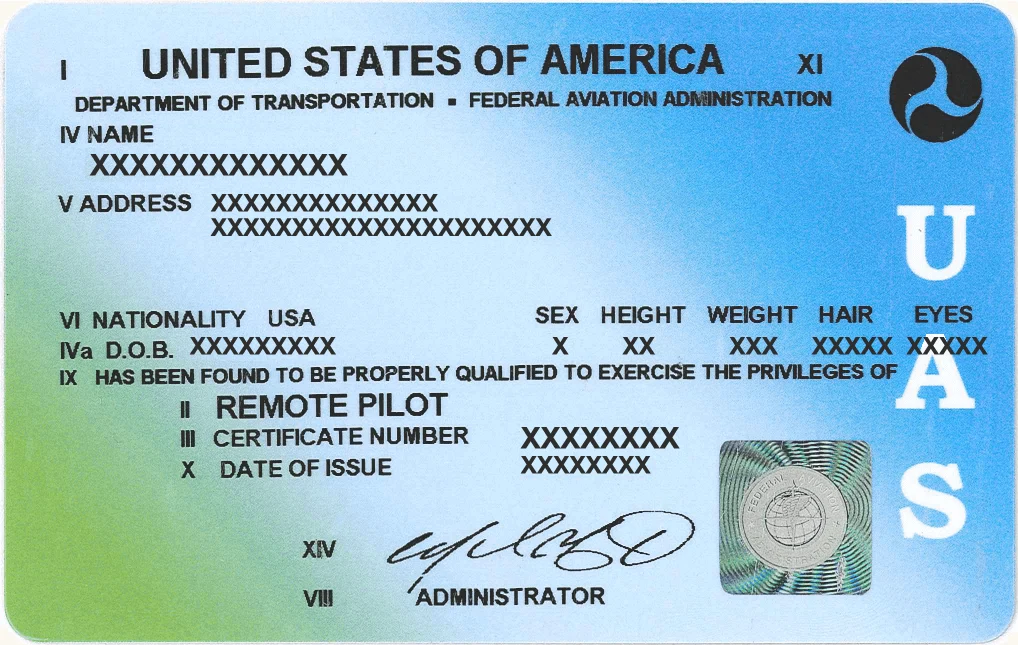
Any commercial drone operation in the United States requires an FAA Part 107 Remote Pilot Certificate, and drone cleaning is no exception. Despite its intimidating reputation, the Part 107 certification process is straightforward for operators who prepare systematically. This walks through everything drone cleaning operators need to understand about the regulatory framework: what the written exam covers and how to prepare for it efficiently, the specific weight limits that apply to drone cleaning systems and why total system weight including hose and water matters for compliance, how LAANC airspace authorization works in urban and commercial environments and why the process is faster and simpler than most operators expect, the FAA operational priorities that govern commercial drone work in practice, and how to document airspace authorizations and operational records in a way that supports both regulatory compliance and customer confidence. The post also addresses the broader credibility value of Part 107 certification in commercial sales conversations, including how customers and insurers respond to documented FAA compliance. Built for operators who want to understand the rules well enough to operate with confidence and explain them clearly to the property managers and facilities directors who ask about them.
This is for drone cleaning operators who are preparing for FAA Part 107 certification or who have their certificate but want a clearer understanding of how the rules apply specifically to commercial exterior cleaning work. The FAA regulatory framework can feel overwhelming when you encounter it for the first time, but experienced operators consistently describe it as more manageable than it appears. This post cuts through the complexity and focuses on what drone cleaning operators actually need to know to operate legally, confidently, and with full customer credibility.
If you are using a drone for commercial purposes in the United States, FAA Part 107 certification is not optional. It is the legal foundation of every commercial drone cleaning job you will ever run, and it is one of the first things serious commercial property managers ask about when evaluating a new vendor. The good news is that the certification process is more manageable than its reputation suggests. Experienced operators who have been through it consistently describe it as straightforward for anyone who prepares systematically. This breaks down exactly what Part 107 requires, what drone cleaning specific rules apply, and how to stay compliant on every job.
FAA Part 107 Made Simple for Drone Cleaning Operators
FAA Part 107 is the regulatory foundation of every legitimate commercial drone operation in the United States. For drone cleaning operators, it is not a suggestion or a best practice. It is a legal requirement that applies to every job, every flight, and every customer relationship you build. The operators who treat it that way from day one avoid the legal exposure that has ended other operators' businesses, and they gain a credibility signal that pays dividends in every commercial sales conversation they have.
Despite its reputation, Part 107 is more accessible than most new operators expect. Here is what you actually need to know.
What the Exam Requires
The FAA Part 107 Remote Pilot Certificate is earned through a written knowledge test administered at an FAA-approved testing center. The exam consists of 60 multiple-choice questions covering aeronautical knowledge topics relevant to unmanned aircraft operations. A passing score is 70 percent, and there is no flight test component. Most operators who prepare systematically are ready to sit for the exam within two to three weeks using a combination of FAA study guides, online prep courses, and practice exams. The exam is not trivial, but it is not designed to be prohibitive either. It is designed to ensure that commercial operators have a working understanding of airspace, weather, and operational safety before they fly for hire.
Once earned, the Remote Pilot Certificate must be renewed every 24 months through an online recurrent training course. The renewal process is significantly lighter than the initial certification and can be completed in a few hours.
Weight Limits That Apply to Drone Cleaning Systems
Part 107 operations are limited to aircraft with a maximum takeoff weight of 55 pounds. For drone cleaning systems, this calculation is more complex than it is for standard drone operations because the total system weight includes the drone itself, the cleaning payload, the hose, and the weight of any water or chemical solution in the system at the time of flight. All of those components count toward the 55-pound limit, and operators who have not run these numbers carefully can find themselves in violation without realizing it.
Weight calculations for your specific system should be documented before operations begin and revisited any time you change equipment, add a payload, or modify your hose configuration. This documentation protects you if you are ever questioned about compliance, and it demonstrates the kind of operational rigor that serious commercial customers expect from professional vendors.
Airspace Authorization in Urban and Commercial Environments
Commercial exterior cleaning jobs almost always happen in or near controlled airspace. Office parks, hotel corridors, medical campuses, and urban commercial districts frequently fall within the airspace jurisdiction of nearby airports and heliports, which means Part 107 operators need airspace authorization before they fly in those areas.
The good news is that the authorization process is faster and simpler than most operators expect. The Low Altitude Authorization and Notification Capability system, commonly called LAANC, allows operators to request airspace authorization through FAA-approved apps and often receive approval in seconds for altitudes within pre-defined grids. Many commercial cleaning altitudes fall within auto-approval parameters, which means operators who are prepared can obtain authorization on site before a job without any meaningful delay. Authorizations should be saved and documented as part of your operational record for each job.
For operations that fall outside LAANC auto-approval parameters, the FAA DroneZone portal provides a path to manual authorization. These requests take longer, typically several days, so planning ahead matters for jobs in more restricted airspace.
What the FAA Actually Prioritizes in Practice
The FAA's operational priorities for Part 107 commercial operations come down to two core concerns: not flying over uninvolved people and not interfering with crewed aircraft. For drone cleaning operators working on commercial properties, meeting those priorities in practice means establishing clear safety zones around the work area that prevent uninvolved people from walking beneath the flight path, controlling access to the immediate job site during operations, and maintaining clear operational boundaries that keep the drone well below the altitudes where crewed aircraft operate.
Most commercial exterior cleaning jobs happen on properties where access control is relatively straightforward. A parking lot safety perimeter, clear signage, and a spotter during operations are typically sufficient to satisfy the FAA's uninvolved persons requirements. The operational discipline required is not significantly more complex than what any professional contractor would implement for safety reasons regardless of regulatory requirements.
How Part 107 Supports Your Commercial Sales Conversations
Beyond legal compliance, Part 107 certification does something important in commercial sales conversations: it answers the regulatory question before it gets asked. Property managers who are responsible for vendor approval at commercial facilities think about liability and compliance as a matter of course. An operator who can reference their FAA Remote Pilot Certificate number, show current airspace authorizations, and explain their operational safety protocols in plain language is dramatically more credible than one who responds to compliance questions with vague reassurances.
Your Part 107 is not just permission to fly. It is a credential that signals you operate professionally, legally, and with full accountability for the airspace you use. Lead with it accordingly.
The Big Takeaway
FAA Part 107 certification is the legal foundation of commercial drone cleaning. It is more accessible than it appears, more valuable than operators often realize, and more important to commercial customers than many vendors think to emphasize. Earn it, maintain it, document your compliance on every job, and use it actively as the professional credential it is.
.jpg)
Why compliance is a sales advantage, not a bureaucratic burden
Property managers and facilities directors do not evaluate drone cleaning vendors the same way consumers evaluate service providers. They are not primarily asking whether the service works. They are asking what happens when something goes wrong. Every contractor they hire represents potential exposure to worker injuries, environmental damage, property claims, and regulatory complications. Operators who understand this dynamic and build their sales approach around it win accounts that price-focused competitors cannot touch. This explains the psychology of risk transfer that drives commercial property decisions, why compliance documentation functions as a silent sales tool in every vendor evaluation process, how FAA certification and insurance coverage reframe the conversation from cost to value, and how to present your compliance framework to customers in a way that positions your operation as the lowest-risk and therefore most attractive choice available. Topics also include the five-point compliance advantage framework that the most successful drone cleaning operators use to turn regulatory mastery into a competitive moat. Built for operators who are ready to stop apologizing for their pricing and start justifying it with documented professionalism.
This is for drone cleaning operators who think of regulatory compliance as something to get through rather than something to lead with. If you have your FAA certification, your insurance, and your safety procedures in place but you are not actively using them as sales tools, you are leaving significant competitive advantage on the table. This post reframes compliance entirely: not as overhead, but as the most credible signal of professionalism you can send to the property managers and facilities directors who decide which vendors get hired for high-value commercial work.
Most contractors treat compliance as something you get through so you can focus on the real work. In drone cleaning, that instinct gets the relationship between regulation and revenue exactly backwards. Property managers and facilities directors do not hire contractors just to remove dirt. They hire professionals to reduce risk. Every vendor they bring onto a commercial property represents potential exposure to injuries, lawsuits, environmental damage, and harms their reputation. When you demonstrate strong compliance through certifications, documented procedures, and comprehensive insurance, you are not just checking boxes. You are removing risk from their plate and putting it on yours. That is worth paying for.
Why Compliance Is a Sales Advantage, Not a Bureaucratic Burden
"An investment in knowledge pays the best interest." - Benjamin Franklin
Most contractors treat regulations as something to get through before the real work begins. In drone cleaning, that instinct gets the relationship between compliance and revenue exactly backwards. The operators who grow fastest and hold the strongest client relationships are not the ones who minimize their regulatory footprint. They are the ones who lead with it.
Compliance is not a cost center. It is a growth strategy. And understanding why requires understanding how commercial property decisions actually get made.
How Commercial Property Managers Actually Evaluate Vendors
Property managers and facilities directors operate in a constant state of risk awareness. Every contractor they bring onto a commercial property represents potential exposure across multiple categories: worker injuries and the OSHA complications that follow, environmental damage from chemical mishandling, property damage claims that involve their insurance carrier, and regulatory fines if something goes wrong on a job they approved.
When a new vendor shows up without documented credentials, comprehensive insurance, and clear safety procedures, a risk-aware property manager does not see an opportunity to save money. They see a liability they are not willing to absorb. The cheapest vendor is rarely the one that gets hired for high-value commercial work. The safest one is.
The Psychology of Risk Transfer
The most useful mental model for understanding compliance as a sales tool is risk transfer. Every customer who hires a contractor is implicitly deciding how much risk they are willing to hold and how much they want to move onto someone else. When you arrive with FAA certification, appropriate insurance coverage, documented chemical handling procedures, and a clear safety framework, you are making an explicit offer: we will carry the risk of this job so you do not have to.
That offer changes the conversation entirely. Customers stop evaluating you on price alone and start evaluating you on how completely you remove their exposure. Operators who understand this stop feeling defensive about premium pricing and start presenting it as the natural cost of genuine risk transfer.
What Compliance Signals in a Vendor Evaluation
Commercial property managers who evaluate multiple vendors simultaneously are looking for signals of professionalism that allow them to make a confident decision. Compliance documentation is one of the strongest signals available because it is verifiable, specific, and difficult to fake. FAA Part 107 certification signals that you are operating legally and have demonstrated a baseline of aeronautical knowledge. Comprehensive insurance coverage signals that incidents, if they occur, will be handled without involving the property's own carrier. Written safety procedures signal that you have thought through failure scenarios before they happen rather than improvising after the fact.
Operators who can present all three of these in a vendor qualification conversation are not just more credible than competitors who cannot. They are often the only vendors the property manager is comfortable approving at all. Many enterprise properties and institutional facilities have vendor qualification requirements that eliminate uninsured or uncertified operators before a single conversation about price ever takes place.
Turning Compliance Into a Competitive Moat
The best drone cleaning operators do not hide their compliance credentials in fine print at the bottom of a proposal. They lead with them. They explain how FAA certification protects the customer from regulatory exposure, how their insurance coverage shifts liability away from the property, and how their environmental procedures protect assets and landscaping throughout the job. That reframing turns compliance from an internal requirement into a customer benefit.
Over time, an operator who consistently leads with documented professionalism builds something that is very difficult for competitors to replicate quickly: a reputation for being the safe choice. That reputation supports premium pricing, generates referrals from risk-aware property managers to their colleagues, and creates the kind of vendor relationships that renew automatically rather than going back out to bid every cycle.
The Five-Point Compliance Advantage Framework
The most successful drone cleaning operators organize their compliance approach around five principles. First, they treat FAA Part 107 certification as a professional credential rather than a regulatory hurdle, and they reference it actively in sales conversations. Second, they integrate environmental compliance into their daily operations so thoroughly that it becomes a natural part of how they describe their service rather than a separate talking point. Third, they use insurance coverage as a differentiator by specifying coverage levels in proposals and explaining what each type of coverage means for the customer. Fourth, they document everything from training records to equipment inspections to chemical usage logs, and they make that documentation visible to customers during the vendor qualification process. Fifth, they sell peace of mind as the primary product and cleaning as the method of delivering it.
The Big Takeaway
Operators who treat compliance as an inconvenience struggle to grow beyond small residential accounts. Operators who treat it as a business asset build trust, win premium commercial work, and scale sustainably because customers keep renewing and referring.
If your compliance framework is already in place, start leading with it. If it is not yet complete, building it is not a distraction from growth. It is the foundation that makes growth possible.