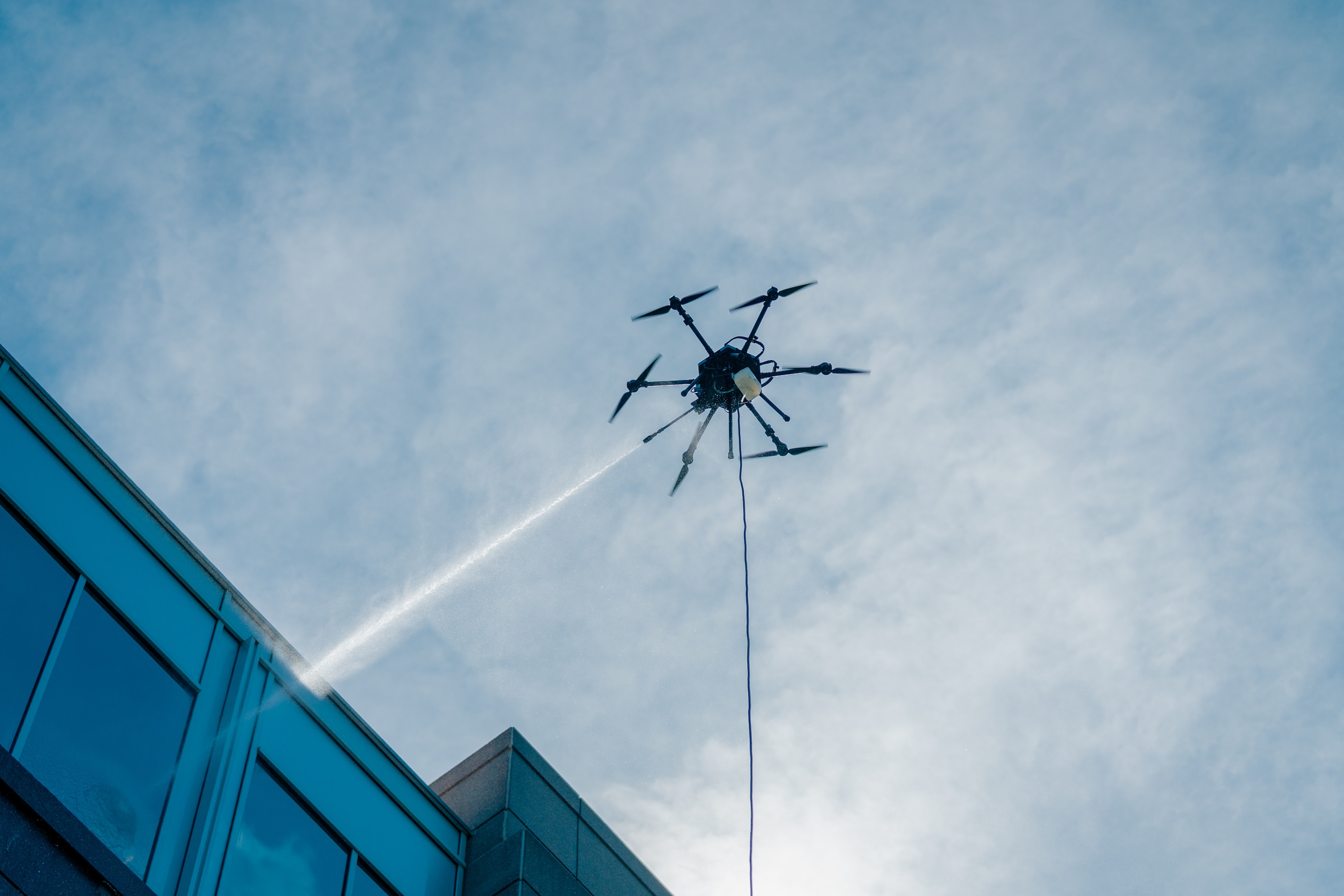
The Sherpa drone delivers water or cleaning solution to building exteriors, windows, and hard-to-reach surfaces while your pilot and ground crew stay below. Connect it to your existing ground system, choose the right payload, and take on the high-access jobs that used to require lifts, scaffolding, or rope access.
.png)
.jpg)
No. The Sherpa drone is operated by a trained pilot and does not currently support autonomous flight outside of its failsafe functions. Assisted hover, collision sensing and automated landing features help the pilot, but the pilot must maintain control and visual line of sight.
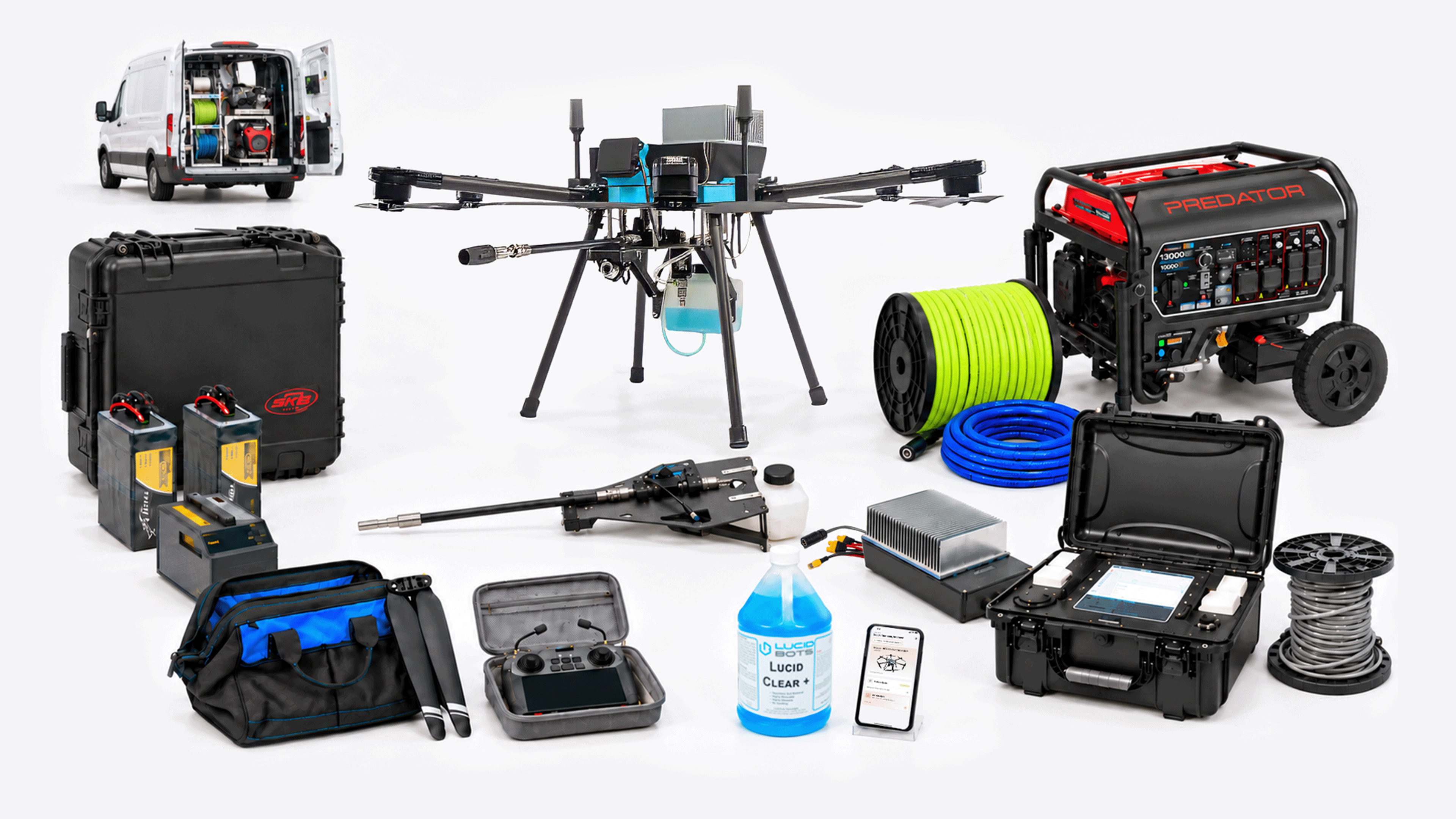
A working setup may include a pump, hoses, a water tank or site connection, chemicals, filtration or water purification, supporting plumbing and a generator when using the Power Tether.
Existing cleaning companies may be able to use some of the infrastructure they already own. Open trailer, enclosed trailer, van and truck-bed systems are also available through a Lucid Bots partner.
For soft washing, the Sherpa drone supports flow rates up to 12 GPM at 300 PSI. High-pressure configurations support pressure up to 4,500 PSI and flow up to 10 GPM.
The right combination of pressure, flow, chemistry and nozzle depends on the surface and cleaning method.
No. The Sherpa drone is strongest on repeatable maintenance work where water, chemistry and controlled spray can do most of the cleaning. Heavy restoration, etched glass, efflorescence, graffiti and work requiring physical agitation may require another method.
A test panel can help determine the right chemistry, process and equipment before the full job is quoted.
Equipped with the Window Payload, the Sherpa drone carries cleaning solution in an onboard tank and receives water from the ground. The operator can apply solution, rinse with deionized water, and repeat as needed while piloting from the ground.
The Sherpa drone does not replace soft washing or pressure washing as cleaning methods. It changes how water, pressure and chemistry reach the surface. On suitable high-access jobs, crews can reduce their reliance on lifts, scaffolding and rope access while using familiar cleaning processes.
Traditional methods may still be better for flatwork, detailed restoration, tight spaces or surfaces that require brushing, scraping or agitation.
No prior drone experience is required. Lucid Bots provides Sherpa Academy, an online training course, which can be completed at your own pace. We also offer a three day in-person training course for an additional fee. You will need an FAA Part 107 certification for commercial use.
The Sherpa drone works with many commercial soft-wash and high-pressure pumps. Compatibility depends on the payload, pressure, flow, hose and nozzle.
The Lucid Bots team can review your current system or recommend a compatible setup for the work you want to perform.
Battery-powered flight time is up to 19 minutes per cycle. Actual flight time depends on the payload, hose, wind, battery condition and operating environment.
For longer jobs, the optional Power Tether draws electricity from a compatible ground generator to support continuous operation without routine battery swaps. Lucid Bots has tested more than 8 hours of continuous tethered flight, with an onboard backup battery providing power for a safe landing if ground power is interrupted.
Lucid Bots is a Charlotte, North Carolina-based robotics company that builds commercial cleaning drones to take on dull, dirty, and dangerous exterior maintenance work.