Best Commercial Drones for Building Cleaning in 2026
175 deals, $9.7M in operator revenue in 2025. The complete guide to commercial drone cleaning: how it works, what it costs, and how to get started.
If you're evaluating commercial drones for building cleaning, you're not shopping for a hobby quadcopter. You're making a capital equipment decision — one that affects your crew's safety, your job capacity, and how you bid work going forward.
This comparison covers the drones actually being used for commercial exterior cleaning today, what they cost, what they do well, and where they fall short. No filler, no speculation.
Quick Comparison
| System | Type | Reach | Pressure | Flight Time | Price |
|---|---|---|---|---|---|
| Lucid Bots Sherpa | Aerial pressure washer | Up to 150 ft | 4,500 PSI | ~19 min | $45,750 or $2,950/mo |
| Apellix W1 | Tethered aerial sprayer | Variable (tethered) | Lower pressure | Continuous (tethered) | Custom quote |
1. Lucid Bots Sherpa — Best for Commercial Facade and Window Cleaning
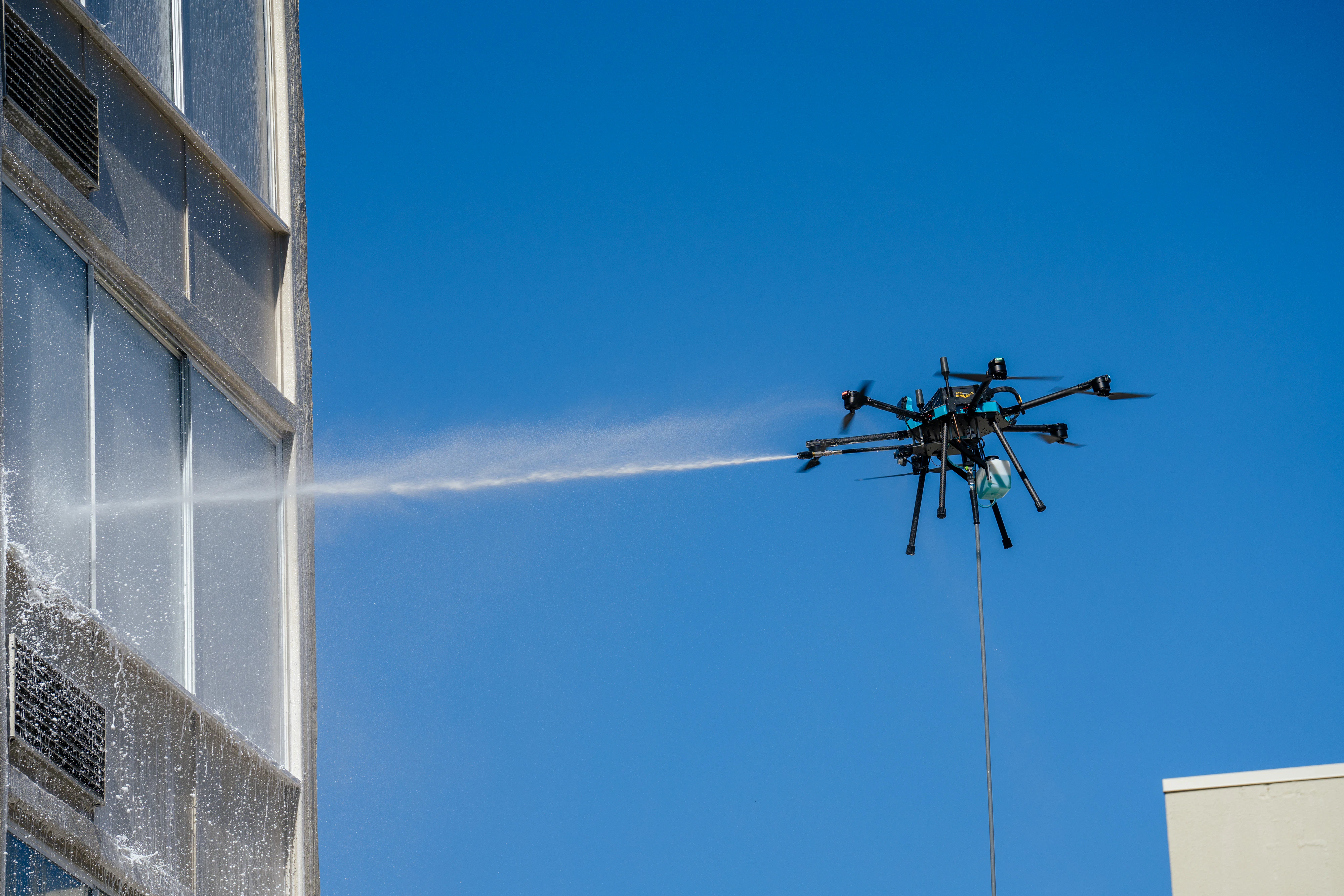
The Sherpa is the only purpose-built aerial pressure washing drone with commercial contractor-grade specs. It's designed for the same operators who currently budget scaffolding, swing stages, or rope access to clean mid-rise facades, curtain walls, and large commercial windows.
Key specs:
- Cleaning rate: 300+ sq ft per minute
- Pressure: 4,500 PSI
- Flight time: ~19 minutes per battery cycle
- Vertical reach: up to 150 ft
- Water supply: ground-based, fed through a lightweight hose
What it replaces:
A scaffolding setup for a 10-story facade can run $15,000–$40,000 in equipment rental and labor before a single gallon of water hits the building. The Sherpa lets a two-person crew do the same job from the ground — one operator flies the drone, one manages the ground rig. No swing stage permits. No OSHA fall protection coordination. No half-day setup.
ROI:
Most operators recover the equipment cost within two jobs when they're replacing scaffolding or lift rentals. On a $2,950/month Lucid Refresh subscription, the monthly payment typically runs well under the cost of a single aerial lift rental — which means the subscription pays for itself before the month is out on an active schedule.
Best use cases:
- Mid-rise and high-rise facade washing
- Commercial window cleaning (exterior)
- Curtain wall and glass panel cleaning
- Concrete and brick pressure washing at height
- Solar panel cleaning on commercial arrays
- Coating and sealant application on tall structures
Pricing:
The Sherpa is available outright at $45,750, or through the Lucid Refresh subscription at $2,950/month. The subscription includes maintenance, software updates, and technical support.
Honest limitations:
The Sherpa runs on battery cycles, so large jobs require either multiple batteries or scheduled charging windows. It's not a continuous-operation system the way a tethered unit is. For very high-volume, all-day industrial coating work on massive structures, that cycle management is a real operational consideration.
2. Apellix W1 — Best for Continuous Industrial Application
Apellix makes a tethered aerial system designed primarily for industrial painting and coating on large structures — think oil tanks, marine vessels, and infrastructure assets. It's a different tool for a different buyer.
What makes it different:
Because it's tethered, the Apellix W1 isn't limited by battery life. It can operate continuously as long as the ground power source runs. That's a meaningful advantage for all-day industrial coating projects where crew downtime between battery swaps would compound across a long job.
Where it fits:
If your work is primarily large-scale industrial coating — refineries, port infrastructure, storage tanks — Apellix is worth evaluating. It's built for that environment.
Where it doesn't fit:
For commercial building cleaning, facade washing, or window cleaning, Apellix is not the right tool. The tethered design limits maneuverability around complex building geometry. It's also priced and configured for industrial buyers, not commercial cleaning contractors. The two systems serve different markets.
What to Know Before You Buy
A drone is only part of the system. Operators consistently flag three things that determine whether aerial cleaning actually works in their business:
1. Ground crew requirements
The Sherpa needs a two-person crew at minimum. One flies, one manages the water supply and ground equipment. If your current jobs already run two-person crews, this is a direct substitution. If you're trying to run solo, aerial cleaning adds a headcount requirement.
2. Water source logistics
The Sherpa pulls water from a ground-based supply. On most commercial jobs, that means a water tank truck or a building-side hookup. Contractors who already operate pressure washing trucks have the infrastructure.
3. FAA Part 107
Flying commercially requires a Part 107 Remote Pilot Certificate. It's a written exam — most operators pass within a few weeks of study. Lucid Bots' onboarding process walks new customers through it.
The Case for Autonomous Ground Cleaning
Not every cleaning challenge is at height. For ground-level pressure washing — parking garages, warehouse floors, large hardscape surfaces — the Lavo Bot is worth knowing about. It's an autonomous ground pressure washing unit that runs independently while your crew handles other tasks. Contractors who run both aerial and ground work are increasingly pairing the Sherpa and Lavo Bot to cover a full site without dedicating a human to every surface.
Frequently Asked Questions
How much does a commercial cleaning drone cost?
The Lucid Bots Sherpa is priced at $45,750 purchased outright, or available through the Lucid Refresh subscription at $2,950 per month. The subscription includes maintenance and support. Apellix does not publish pricing publicly — their systems are priced for industrial buyers rather than commercial cleaning contractors.
Do I need a license to fly a commercial cleaning drone?
Yes. Any commercial drone operation in the U.S. requires a Part 107 Remote Pilot Certificate from the FAA. This is a written knowledge test. The process typically takes two to four weeks of preparation. It's a one-time certification, not a per-job permit.
Can a drone actually clean a building effectively?
At 4,500 PSI and 300+ sq ft per minute, the Sherpa cleans at commercial pressure washing standards. The limiting factor is usually water supply logistics and job planning, not the drone's cleaning capacity.
How does drone cleaning compare to scaffolding or swing stage costs?
Scaffolding and swing stage rentals for a 10-story building typically run $15,000 to $40,000 or more, depending on building complexity and duration. On jobs where the Sherpa replaces a lift rental, operators often recover the monthly subscription cost within a single project.
What buildings is the Sherpa suited for?
The Sherpa's 150-foot vertical reach covers most mid-rise commercial buildings — office towers, hotels, mixed-use buildings, and institutional facilities in the four- to twelve-story range.
The Bottom Line
For commercial building cleaning in 2026, the Lucid Bots Sherpa is the only purpose-built aerial pressure washing system designed for the commercial contractor market. The specs are real, the pricing is transparent, and the use case is specific: it's for operators who are currently spending significant money on scaffolding, lifts, or rope access to get water to the side of a building.
Apellix fills a different niche — industrial coating on large infrastructure assets — and is worth knowing about if that's your work.
If your business runs facade washing, exterior window cleaning, or high-rise pressure washing, the Sherpa is the closest thing to a direct answer.
Talk to our team to see whether the Sherpa fits your current job mix, or get a demo and put a number to what you'd save on your next scaffold job.
Related Articles
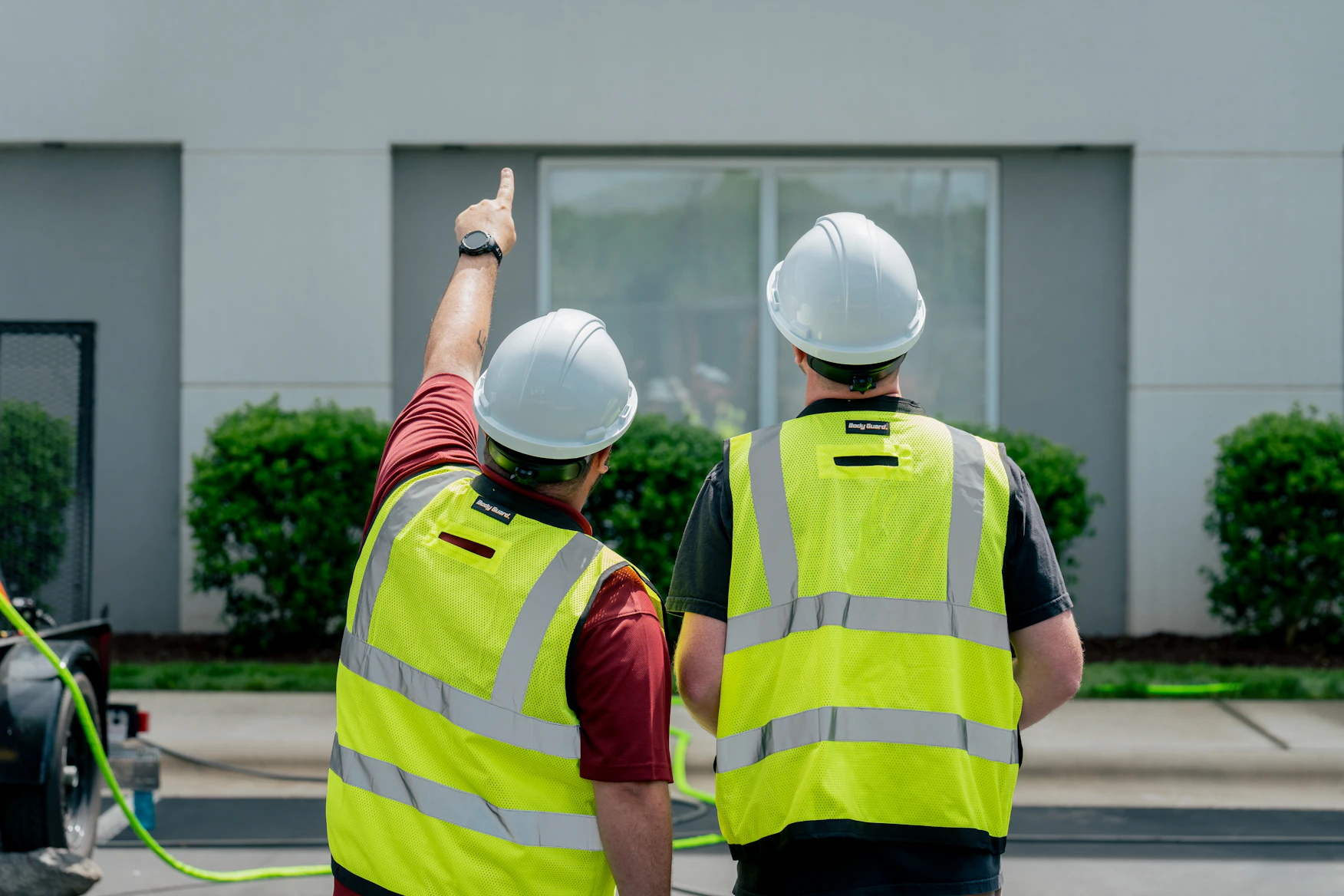
Insurance, Safety, and Documentation: The Risk Framework Customers Trust
FAA Part 107 certification is the starting point for commercial drone cleaning compliance, not the finish line. The operators who win and retain high-value commercial accounts have built a complete risk framework that addresses every category of exposure a property manager or facilities director might reasonably worry about: financial liability through comprehensive insurance coverage, operational safety through documented standard operating procedures, and administrative credibility through organized documentation systems. This post walks through each component in detail. Topics covered include the three insurance coverage types that serious commercial properties require and the specific coverage levels that satisfy enterprise vendor qualification requirements, the core elements of an operational safety system including pre-job site assessments, safety zone protocols, weather and emergency procedures, and aircraft malfunction response plans, and the documentation categories that function as silent sales tools throughout the customer relationship. The post also addresses how documentation reduces insurance premiums, speeds vendor approval processes, and protects operators legally when incidents occur. Built for operators who want to operate at the level that enterprise commercial accounts require and who understand that professional risk management is not overhead but a core business competency.
This is for drone cleaning operators who have their FAA certification and are ready to build out the rest of their professional risk framework: insurance coverage, standard operating procedures, and documentation systems. If you are targeting commercial properties, medical facilities, universities, or any institutional account with a formal vendor qualification process, this post gives you a complete picture of what those customers expect to see before they approve a new contractor and how to present your risk management systems in a way that builds confidence rather than raising more questions.
FAA certification gets you legally authorized to fly. It does not, by itself, get you hired for premium commercial work. The property managers and facilities directors who oversee institutional properties, enterprise facilities, and high-value commercial real estate have vendor qualification requirements that go significantly beyond regulatory compliance. They want to know what happens if someone gets hurt, what coverage is in place if property gets damaged, and what documentation exists to prove that your operation runs professionally every time. This post covers the complete risk framework that answers all of those questions before they become objections.
Insurance, Safety, and Documentation: The Risk Framework Customers Trust
Skill alone does not win enterprise commercial contracts. What wins them is proof: proof that people will not get hurt, proof that property will not be damaged, proof that incidents have been planned for, and proof that the operator's systems are professional enough to be trusted with a building that represents millions of dollars in asset value.
FAA Part 107 certification establishes your legal right to operate. The risk framework described in this post is what establishes your right to the accounts worth having.
Insurance: The Gatekeeper to Premium Work
Many high-value commercial properties will not consider an uninsured or underinsured contractor regardless of how compelling the demonstration looks or how competitive the pricing is. Insurance requirements are often embedded in vendor qualification processes that happen before any sales conversation takes place, which means operators without adequate coverage are eliminated from consideration before they ever get the chance to prove their work.
The three coverage types that professional drone cleaning operations require are general liability insurance, aviation and hull insurance, and workers' compensation. General liability coverage should sit at a minimum of one million dollars per occurrence with a two million dollar aggregate. This is the baseline that most commercial properties require and what enterprise vendor qualification processes typically specify. Aviation and hull insurance covers the aircraft and payload against damage or loss, which matters both for protecting your equipment investment and for satisfying insurers who want to know that a drone malfunction during a job will not result in an uninsured claim against the property. Workers' compensation coverage needs to explicitly include aviation-related work, as standard workers' compensation policies sometimes exclude aerial operations and operators who have not confirmed this with their carrier may find themselves with a gap in coverage at exactly the wrong moment.
This level of coverage does more than satisfy vendor requirements. It allows you to work on properties that competitors without adequate coverage cannot access, price with confidence because your cost structure reflects your actual liability exposure, and present yourself in vendor qualification conversations as an operator that has thought seriously about risk rather than one who is hoping nothing goes wrong.
Safety SOPs: Where Trust Is Built Before the Job Starts
Professional operators do not improvise on commercial job sites. They run standard operating procedures that have been developed, documented, and practiced before any customer ever sees them. The difference between an operator with written SOPs and one without is not primarily operational. It is perceptual. When a property manager asks how you handle an equipment malfunction mid-job and you hand them a written emergency response protocol, the conversation about whether you are a professional vendor ends immediately.
The core elements of a drone cleaning safety system begin with pre-job site assessments that identify hazards, access constraints, overhead obstacles, proximity to uninvolved people, and any site-specific conditions that affect the operational plan. Safety zones and access control procedures establish the perimeter around the work area that keeps uninvolved people clear of the flight path during operations. Weather protocols define the wind speed, visibility, and precipitation thresholds below which operations are suspended, and they specify the notification and rescheduling process that follows.
Emergency readiness planning covers the scenarios that operators hope never happen but must be prepared for: aircraft malfunction and uncontrolled descent, medical response if a team member is injured, and the customer and regulatory notification steps that follow any incident. Good safety systems prevent most incidents. Great safety systems prove you were prepared for the ones that occur anyway.
Documentation: Your Silent Sales Tool
Documentation is not administrative busywork. It is proof of professionalism that works for you in every vendor qualification process, every insurance renewal conversation, and every legal dispute that might arise from an incident on a job site. Operators who maintain organized, current documentation records operate with a confidence that operators who do not simply cannot replicate.
The documentation categories that matter most for commercial drone cleaning operations are training records showing that all team members have completed relevant certifications and safety training, equipment inspection logs that demonstrate regular maintenance and airworthiness verification, incident reports for any event that deviates from normal operations regardless of whether it resulted in damage or injury, and maintenance schedules that show the aircraft and equipment are being serviced according to manufacturer specifications.
Well-organized records build customer confidence during vendor qualification because they demonstrate operational maturity. They reduce insurance premiums over time because insurers reward documented risk management. They protect operators legally if an incident generates a claim or a regulatory inquiry. And they speed the vendor approval process at institutional accounts where procurement teams need to verify compliance before approving a new contractor.
Presenting Your Risk Framework to Customers
The operators who get the most commercial value from their risk framework are the ones who present it proactively rather than waiting for customers to ask. In a proposal or vendor qualification document, leading with your insurance coverage levels, referencing your FAA certification, and summarizing your safety SOP structure does something important: it answers the risk questions before they become objections.
Customers who never have to ask whether you are insured, whether you are certified, or whether you have a plan for emergencies are customers who spend their mental energy evaluating the quality of your work rather than the reliability of your operation. That is exactly where you want their attention.
The Big Takeaway
Insurance, safety systems, and documentation are not the cost of doing business in drone cleaning. They are the foundation of doing it at the level that premium commercial accounts require. Operators who build this framework early do not find that it slows them down. They find that it clears the path to the accounts worth having and keeps competitors without equivalent credentials from following them there.
Build it completely. Document it thoroughly. Lead with it confidently. That is how compliance becomes a competitive moat.
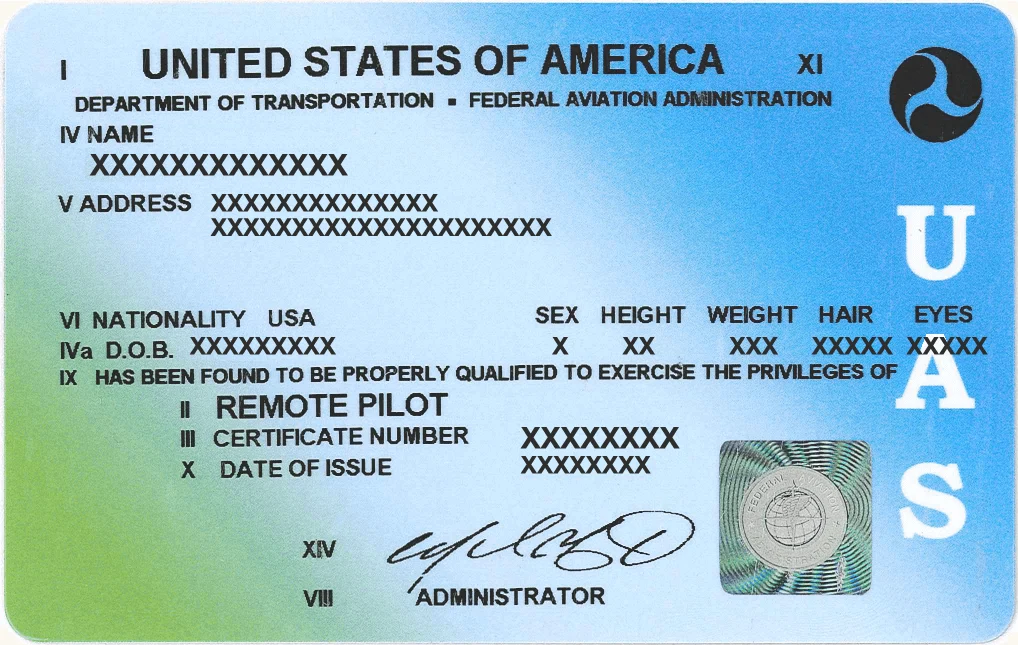
FAA Part 107 Made Simple for Drone Cleaning Operators
Any commercial drone operation in the United States requires an FAA Part 107 Remote Pilot Certificate, and drone cleaning is no exception. Despite its intimidating reputation, the Part 107 certification process is straightforward for operators who prepare systematically. This walks through everything drone cleaning operators need to understand about the regulatory framework: what the written exam covers and how to prepare for it efficiently, the specific weight limits that apply to drone cleaning systems and why total system weight including hose and water matters for compliance, how LAANC airspace authorization works in urban and commercial environments and why the process is faster and simpler than most operators expect, the FAA operational priorities that govern commercial drone work in practice, and how to document airspace authorizations and operational records in a way that supports both regulatory compliance and customer confidence. The post also addresses the broader credibility value of Part 107 certification in commercial sales conversations, including how customers and insurers respond to documented FAA compliance. Built for operators who want to understand the rules well enough to operate with confidence and explain them clearly to the property managers and facilities directors who ask about them.
This is for drone cleaning operators who are preparing for FAA Part 107 certification or who have their certificate but want a clearer understanding of how the rules apply specifically to commercial exterior cleaning work. The FAA regulatory framework can feel overwhelming when you encounter it for the first time, but experienced operators consistently describe it as more manageable than it appears. This post cuts through the complexity and focuses on what drone cleaning operators actually need to know to operate legally, confidently, and with full customer credibility.
If you are using a drone for commercial purposes in the United States, FAA Part 107 certification is not optional. It is the legal foundation of every commercial drone cleaning job you will ever run, and it is one of the first things serious commercial property managers ask about when evaluating a new vendor. The good news is that the certification process is more manageable than its reputation suggests. Experienced operators who have been through it consistently describe it as straightforward for anyone who prepares systematically. This breaks down exactly what Part 107 requires, what drone cleaning specific rules apply, and how to stay compliant on every job.
FAA Part 107 Made Simple for Drone Cleaning Operators
FAA Part 107 is the regulatory foundation of every legitimate commercial drone operation in the United States. For drone cleaning operators, it is not a suggestion or a best practice. It is a legal requirement that applies to every job, every flight, and every customer relationship you build. The operators who treat it that way from day one avoid the legal exposure that has ended other operators' businesses, and they gain a credibility signal that pays dividends in every commercial sales conversation they have.
Despite its reputation, Part 107 is more accessible than most new operators expect. Here is what you actually need to know.
What the Exam Requires
The FAA Part 107 Remote Pilot Certificate is earned through a written knowledge test administered at an FAA-approved testing center. The exam consists of 60 multiple-choice questions covering aeronautical knowledge topics relevant to unmanned aircraft operations. A passing score is 70 percent, and there is no flight test component. Most operators who prepare systematically are ready to sit for the exam within two to three weeks using a combination of FAA study guides, online prep courses, and practice exams. The exam is not trivial, but it is not designed to be prohibitive either. It is designed to ensure that commercial operators have a working understanding of airspace, weather, and operational safety before they fly for hire.
Once earned, the Remote Pilot Certificate must be renewed every 24 months through an online recurrent training course. The renewal process is significantly lighter than the initial certification and can be completed in a few hours.
Weight Limits That Apply to Drone Cleaning Systems
Part 107 operations are limited to aircraft with a maximum takeoff weight of 55 pounds. For drone cleaning systems, this calculation is more complex than it is for standard drone operations because the total system weight includes the drone itself, the cleaning payload, the hose, and the weight of any water or chemical solution in the system at the time of flight. All of those components count toward the 55-pound limit, and operators who have not run these numbers carefully can find themselves in violation without realizing it.
Weight calculations for your specific system should be documented before operations begin and revisited any time you change equipment, add a payload, or modify your hose configuration. This documentation protects you if you are ever questioned about compliance, and it demonstrates the kind of operational rigor that serious commercial customers expect from professional vendors.
Airspace Authorization in Urban and Commercial Environments
Commercial exterior cleaning jobs almost always happen in or near controlled airspace. Office parks, hotel corridors, medical campuses, and urban commercial districts frequently fall within the airspace jurisdiction of nearby airports and heliports, which means Part 107 operators need airspace authorization before they fly in those areas.
The good news is that the authorization process is faster and simpler than most operators expect. The Low Altitude Authorization and Notification Capability system, commonly called LAANC, allows operators to request airspace authorization through FAA-approved apps and often receive approval in seconds for altitudes within pre-defined grids. Many commercial cleaning altitudes fall within auto-approval parameters, which means operators who are prepared can obtain authorization on site before a job without any meaningful delay. Authorizations should be saved and documented as part of your operational record for each job.
For operations that fall outside LAANC auto-approval parameters, the FAA DroneZone portal provides a path to manual authorization. These requests take longer, typically several days, so planning ahead matters for jobs in more restricted airspace.
What the FAA Actually Prioritizes in Practice
The FAA's operational priorities for Part 107 commercial operations come down to two core concerns: not flying over uninvolved people and not interfering with crewed aircraft. For drone cleaning operators working on commercial properties, meeting those priorities in practice means establishing clear safety zones around the work area that prevent uninvolved people from walking beneath the flight path, controlling access to the immediate job site during operations, and maintaining clear operational boundaries that keep the drone well below the altitudes where crewed aircraft operate.
Most commercial exterior cleaning jobs happen on properties where access control is relatively straightforward. A parking lot safety perimeter, clear signage, and a spotter during operations are typically sufficient to satisfy the FAA's uninvolved persons requirements. The operational discipline required is not significantly more complex than what any professional contractor would implement for safety reasons regardless of regulatory requirements.
How Part 107 Supports Your Commercial Sales Conversations
Beyond legal compliance, Part 107 certification does something important in commercial sales conversations: it answers the regulatory question before it gets asked. Property managers who are responsible for vendor approval at commercial facilities think about liability and compliance as a matter of course. An operator who can reference their FAA Remote Pilot Certificate number, show current airspace authorizations, and explain their operational safety protocols in plain language is dramatically more credible than one who responds to compliance questions with vague reassurances.
Your Part 107 is not just permission to fly. It is a credential that signals you operate professionally, legally, and with full accountability for the airspace you use. Lead with it accordingly.
The Big Takeaway
FAA Part 107 certification is the legal foundation of commercial drone cleaning. It is more accessible than it appears, more valuable than operators often realize, and more important to commercial customers than many vendors think to emphasize. Earn it, maintain it, document your compliance on every job, and use it actively as the professional credential it is.
.jpeg)
Best Commercial Drones for Building Cleaning in 2026 (Reformatted Preview)
175 deals, $9.7M in operator revenue in 2025. The complete guide to commercial drone cleaning: how it works, what it costs, and how to get started.
If you're evaluating commercial drones for building cleaning, you're not shopping for a hobby quadcopter. You're making a capital equipment decision, one that affects your crew's safety, your job capacity, and how you bid work going forward.
This comparison covers the drones actually being used for commercial exterior cleaning today, what they cost, what they do well, and where they fall short. No filler, no speculation.
Quick Comparison
| System | Type | Reach | Pressure | Flight Time | Price |
|---|---|---|---|---|---|
| Lucid Bots Sherpa | Aerial pressure washer | Up to 150 ft | 4,500 PSI | ~19 min | $45,750 or $2,950/mo |
| Apellix W1 | Tethered aerial sprayer | Variable (tethered) | Lower pressure | Continuous (tethered) | Custom quote |
1. Lucid Bots Sherpa: Best for Commercial Facade and Window Cleaning
The Sherpa is the only purpose-built aerial pressure washing drone with commercial contractor-grade specs. It's designed for the same operators who currently budget scaffolding, swing stages, or rope access to clean mid-rise facades, curtain walls, and large commercial windows.
Key specs:
- Cleaning rate: 300+ sq ft per minute
- Pressure: 4,500 PSI
- Flight time: ~19 minutes per battery cycle
- Vertical reach: up to 150 ft
- Water supply: ground-based, fed through a lightweight hose
What it replaces: A scaffolding setup for a 10-story facade can run $15,000 to $40,000 in equipment rental and labor before a single gallon of water hits the building. The Sherpa lets a two-person crew do the same job from the ground: one operator flies the drone, one manages the ground rig. No swing stage permits. No OSHA fall protection coordination. No half-day setup.
ROI: Most operators recover the equipment cost within two jobs when they're replacing scaffolding or lift rentals. On a $2,950/month Lucid Refresh subscription, the monthly payment typically runs well under the cost of a single aerial lift rental, which means the subscription pays for itself before the month is out on an active schedule.
Best use cases:
- Mid-rise and high-rise facade washing
- Commercial window cleaning (exterior)
- Curtain wall and glass panel cleaning
- Concrete and brick pressure washing at height
- Solar panel cleaning on commercial arrays
- Coating and sealant application on tall structures
Pricing: The Sherpa is available outright at $45,750, or through the Lucid Refresh subscription at $2,950/month. The subscription includes maintenance, software updates, and technical support.
Honest limitations: The Sherpa runs on battery cycles, so large jobs require either multiple batteries or scheduled charging windows. It's not a continuous-operation system the way a tethered unit is. For very high-volume, all-day industrial coating work on massive structures, that cycle management is a real operational consideration.
2. Apellix W1: Best for Continuous Industrial Application
Apellix makes a tethered aerial system designed primarily for industrial painting and coating on large structures like oil tanks, marine vessels, and infrastructure assets. It's a different tool for a different buyer.
What makes it different: Because it's tethered, the Apellix W1 isn't limited by battery life. It can operate continuously as long as the ground power source runs. That's a meaningful advantage for all-day industrial coating projects where crew downtime between battery swaps would compound across a long job.
Where it fits: If your work is primarily large-scale industrial coating on refineries, port infrastructure, or storage tanks, Apellix is worth evaluating. It's built for that environment.
Where it doesn't fit: For commercial building cleaning, facade washing, or window cleaning, Apellix is not the right tool. The tethered design limits maneuverability around complex building geometry. It's also priced and configured for industrial buyers, not commercial cleaning contractors. The two systems serve different markets.
What to Know Before You Buy
A drone is only part of the system. Operators consistently flag three things that determine whether aerial cleaning actually works in their business:
1. Ground crew requirements. The Sherpa needs a two-person crew at minimum. One flies, one manages the water supply and ground equipment. If your current jobs already run two-person crews, this is a direct substitution. If you're trying to run solo, aerial cleaning adds a headcount requirement.
2. Water source logistics. The Sherpa pulls water from a ground-based supply. On most commercial jobs, that means a water tank truck or a building-side hookup. Contractors who already operate pressure washing trucks have the infrastructure.
3. FAA Part 107. Flying commercially requires a Part 107 Remote Pilot Certificate. It's a written exam, and most operators pass within a few weeks of study. Lucid Bots' onboarding process walks new customers through it.
The Case for Autonomous Ground Cleaning
Not every cleaning challenge is at height. For ground-level pressure washing on parking garages, warehouse floors, and large hardscape surfaces, the Lavo Bot is worth knowing about. It's an autonomous ground pressure washing unit that runs independently while your crew handles other tasks. Contractors who run both aerial and ground work are increasingly pairing the Sherpa and Lavo Bot to cover a full site without dedicating a human to every surface.
Frequently Asked Questions
How much does a commercial cleaning drone cost? The Lucid Bots Sherpa is priced at $45,750 purchased outright, or available through the Lucid Refresh subscription at $2,950 per month. The subscription includes maintenance and support. Apellix does not publish pricing publicly. Their systems are priced for industrial buyers rather than commercial cleaning contractors.
Do I need a license to fly a commercial cleaning drone? Yes. Any commercial drone operation in the U.S. requires a Part 107 Remote Pilot Certificate from the FAA. This is a written knowledge test. The process typically takes two to four weeks of preparation. It's a one-time certification, not a per-job permit.
Can a drone actually clean a building effectively? At 4,500 PSI and 300+ sq ft per minute, the Sherpa cleans at commercial pressure washing standards. The limiting factor is usually water supply logistics and job planning, not the drone's cleaning capacity.
How does drone cleaning compare to scaffolding or swing stage costs? Scaffolding and swing stage rentals for a 10-story building typically run $15,000 to $40,000 or more, depending on building complexity and duration. On jobs where the Sherpa replaces a lift rental, operators often recover the monthly subscription cost within a single project.
What buildings is the Sherpa suited for? The Sherpa's 150-foot vertical reach covers most mid-rise commercial buildings like office towers, hotels, mixed-use buildings, and institutional facilities in the four- to twelve-story range.
The Bottom Line
For commercial building cleaning in 2026, the Lucid Bots Sherpa is the only purpose-built aerial pressure washing system designed for the commercial contractor market. The specs are real, the pricing is transparent, and the use case is specific: it's for operators who are currently spending significant money on scaffolding, lifts, or rope access to get water to the side of a building.
Apellix fills a different niche in industrial coating on large infrastructure assets, and is worth knowing about if that's your work.
If your business runs facade washing, exterior window cleaning, or high-rise pressure washing, the Sherpa is the closest thing to a direct answer.
Talk to our team to see whether the Sherpa fits your current job mix, or get a demo and put a number to what you'd save on your next scaffold job.

.svg)
.avif)


.avif)