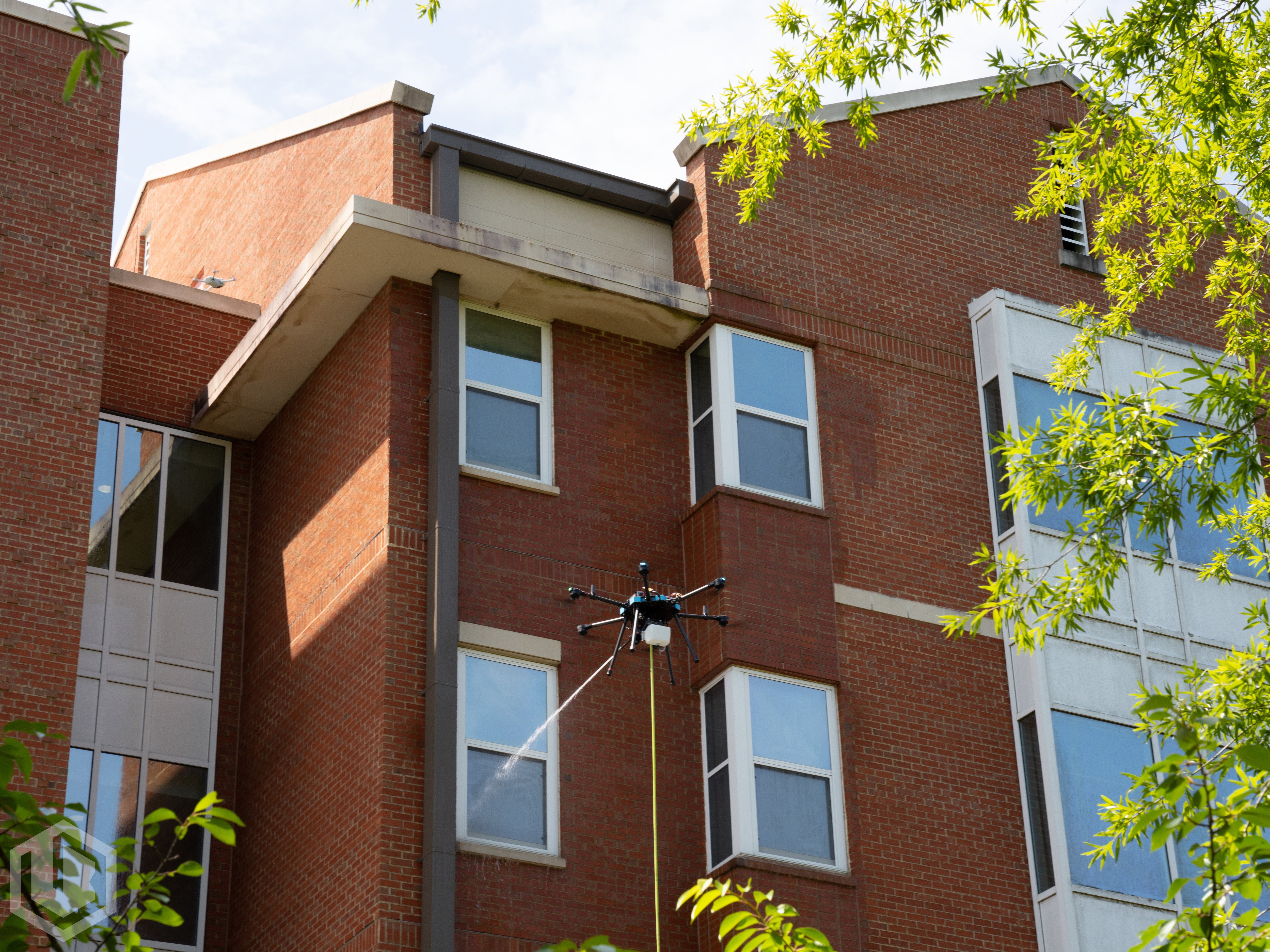
Facility Management: Adding Value with Lucid Bots' Drone Technology
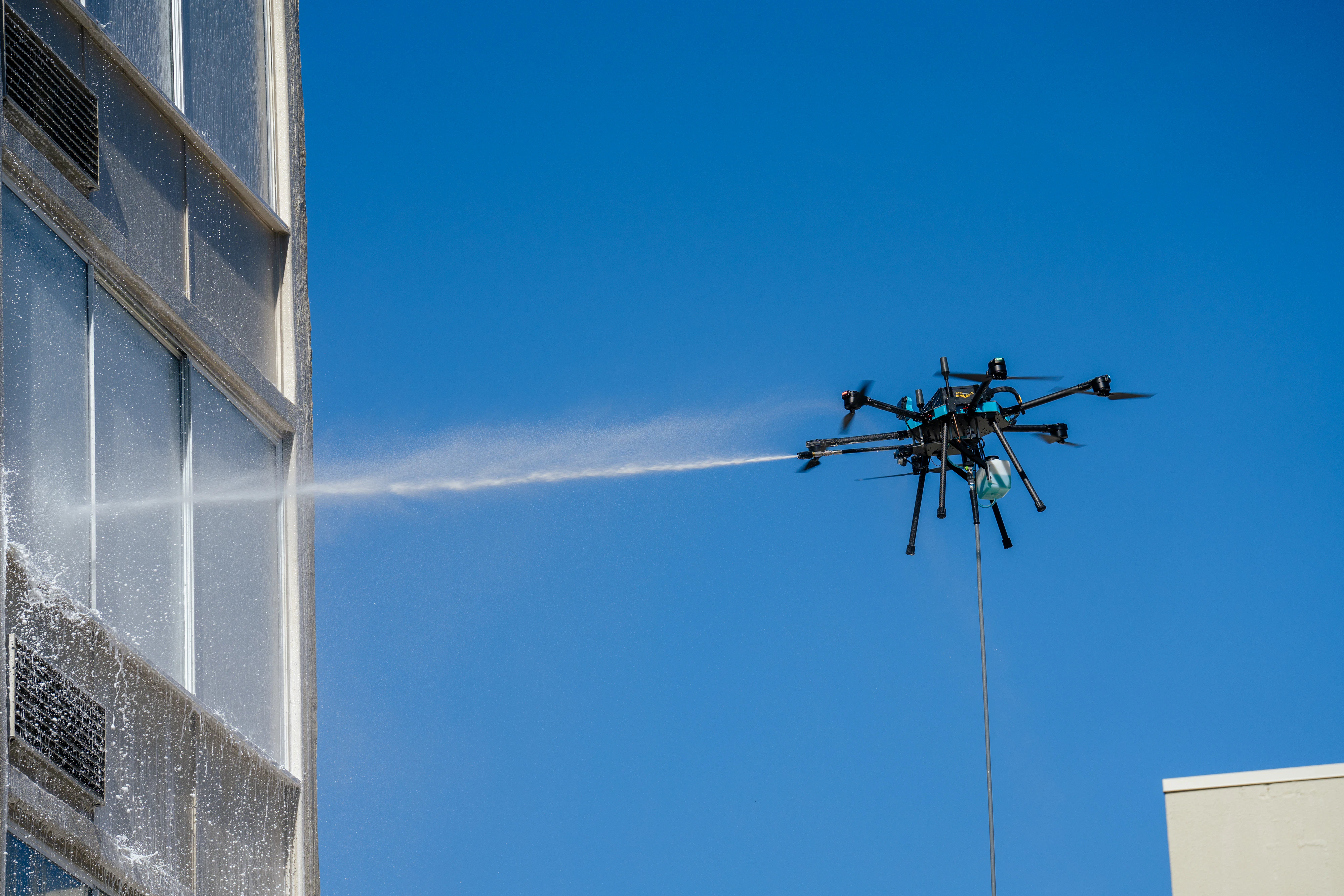
Discover how Lucid Bots’ advanced industrial spray dones are transforming facility management by enhancing precision and safety for exterior cleaning.
Did you know that facility management is often regarded as the silent force behind the scenes, playing a critical role in ensuring that buildings, properties, and assets operate efficiently?
More businesses are starting to recognize the strategic importance of streamlining workflows and operations. As they do this, a new trend has emerged: introducing robotics into facility management services.
At its core, facility management covers many functions. From building maintenance and energy-efficient initiatives to landscaping and property management, the broad scope of facility management contributes greatly to the overall well-being of buildings.
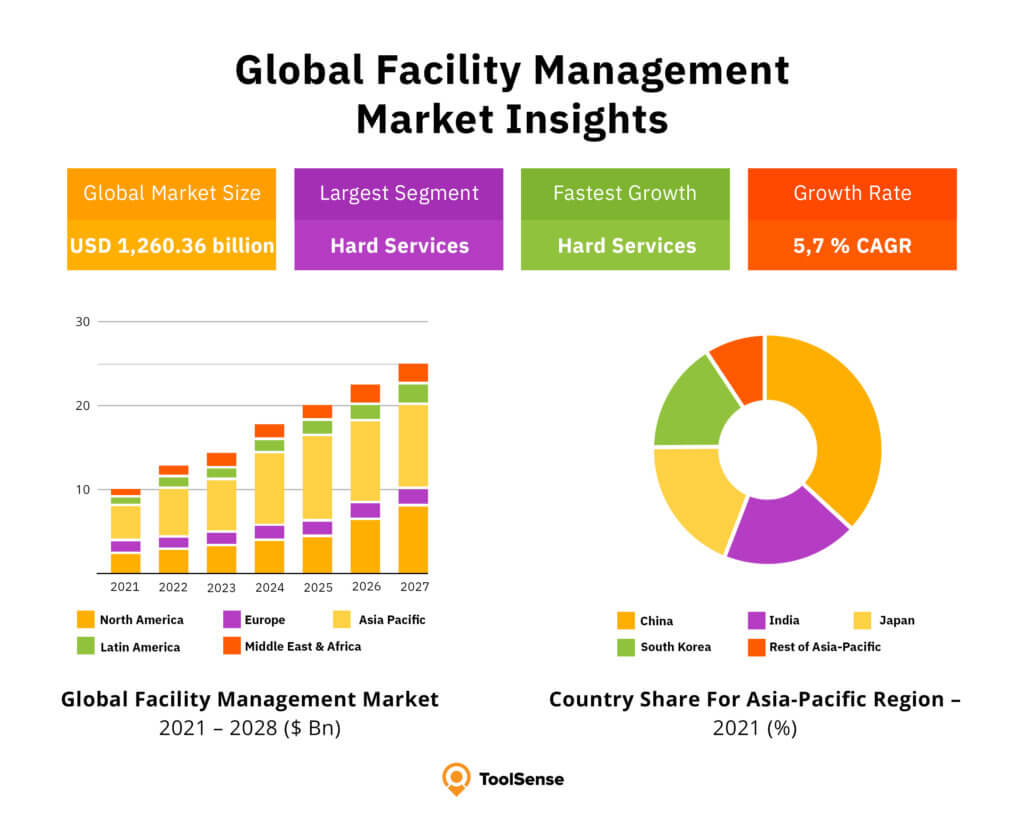
A study by ToolSense indicates the facility management industry is only set to grow.
However, the traditional approach to keeping facility operations with an in-house team is becoming difficult — especially with labor shortages. This is where the benefits of introducing robotics come in.
Robotics, specifically drones, are no longer reserved for science fiction, after all. They’re game changers from the future, offering innovative solutions to reshape your facility management practices with precision and safety like never before.
In this article, we’ll uncover the transformative role drones play in facility management, specifically from Lucid Bots. Keep reading to find learn about these must-know advancements in property upkeep.
The Shift Toward Robotics in Facility Management
Robotics has long been a popular solution for businesses looking to step into the future and grow their bottom line. The strategic evolution of robotics with FM has grown over the last few years, in large part thanks to the exciting development of drone technology.
This decision represents a shift in the priorities of modern businesses. Allowing facilities managers to retain more control of these operations, and keeping your facilities management team in-house.
With rising costs and inflation, not to mention valuable labor being diverted to secondary business functions, businesses today want an alternative, more pragmatic solution.
According to the Department of Energy, by 2030, 20% of building energy consumption can be cut using cost-effective technologies. Enter drones!
Introducing drone for facility management gives a chance to streamline their business activities without compromising on quality or sustainability.
What difference can drone technology make to maximize your competitive advantage?
- Drones come equipped with state-of-the-art features that expand the boundaries of building management operations.
- Drones can perform cleaning tasks in urban environments where GPS signals may be weak.
- Collison prevention technology ensures a safe and stable distance is maintained between the drone and the surface in consideration, minimizing the risk of accidents and damage.
- Safeguards your staffing team, on-site pedestrians, and the property in concern while promising energy efficiency.
With functions like these, it’s no surprise drones are all the talk of FM operations.
Advantages of Using Drones in Facility Management
Curious to know how the integration of drone technology can drive your strategic decision-making and success? Here are the four main benefits of working with an outsourcing provider like us.
Enhanced Efficiency and Expedited Operations
Using drones significantly reduces the time required to perform previously manual tasks. From routine property inspections to complex maintenance procedures, drones can replace the ‘human factor’ and carry out these tasks in safer and faster ways.
With advanced sensors and navigation capabilities, drones can swiftly navigate intricate structures like high-rise buildings and challenging terrains. Reaching places that were otherwise insurmountable before opens doors to new opportunities, maximizing your facility maintenance.
Related Articles
Drone Cleaning Is Chemistry: The Two Analogies That Build Instant Customer Trust
The biggest misconception about drone cleaning is that the technology is the secret ingredient. It is not. The cleaning chemistry used in drone exterior cleaning is identical to the proven methods traditional contractors have used for decades. The drone is simply a safer, more efficient delivery system. The problem is that when customers do not understand this, they approach the service with skepticism that no amount of technical explanation can dissolve. This gives operators two simple analogies that reframe chemical cleaning in terms every prospect already understands. The dishwasher analogy addresses the agitation objection directly by connecting drone cleaning to a process every homeowner trusts. The pool chemistry analogy neutralizes fear of bleach-based solutions by linking sodium hypochlorite to chlorinated pools that customers happily let their families swim in. The post also includes the limestone cautionary story that illustrates what happens when method selection goes wrong, the full customer education framework with tailored language for four distinct customer types, and guidance on what not to lead with in sales conversations. Built for operators who want to close more deals by explaining their service more simply.
This is for drone cleaning operators who struggle to explain their service to skeptical customers in plain language. If you have ever watched a prospect's eyes glaze over during a technical explanation of your cleaning process, or fielded the question 'but how does it actually clean without scrubbing,' this post gives you two simple, field-tested analogies that cut through confusion immediately. Understanding the chemistry behind drone cleaning and knowing how to communicate it simply is one of the most practical sales skills an operator can develop.
When people first encounter drone cleaning, they often assume the drone is doing something special to the surface: scrubbing, blasting, or using some new futuristic method. That assumption creates immediate skepticism. How does it clean without brushing? Is it strong enough? Is it safe? The fastest way to overcome those objections is not a technical explanation of your equipment. It is a familiar analogy that connects chemical cleaning to something the customer already understands and trusts. This post walks through the two analogies that drone cleaning operators use to build instant customer confidence, and the customer education framework that turns those analogies into closed deals.
Drone Cleaning Is Chemistry: The Two Analogies That Build Instant Customer Trust
"The expert in anything was once a beginner." - Helen Hayes
The biggest misconception about drone cleaning is that the drone is the secret sauce. It is not. After thousands of successful jobs across hundreds of operators, one truth becomes clear: the cleaning chemistry is identical to traditional exterior cleaning methods. The drone is simply a safer, more efficient delivery system that gets proven solutions exactly where they need to go.
The challenge is that customers do not know this. And when they do not understand how chemical cleaning works, skepticism fills the gap. The answer is not a more technical explanation. It is a simpler language.
The Dishwasher Analogy
When a customer asks how drone cleaning works without scrubbing, this is the response that lands every time:
"There are no scrub brushes in your dishwasher. The detergent is specially designed to break down food and bacteria chemically, and water flow rinses it away. Exterior cleaning works exactly the same way."
This analogy works for several reasons. Everyone understands how dishwashers clean without scrubbing, so the concept requires no technical education. It normalizes chemical-based cleaning as proven, familiar technology rather than something experimental. It addresses the agitation objection directly without being defensive. And it shifts the customer's attention from the mechanism to the outcome, which is a clean surface, which is all they actually care about.
Once a customer accepts that their dishwasher cleans without brushes, the logic of drone cleaning follows naturally. Chemistry breaks down contamination. Dwell time allows it to work. Rinsing removes the residue. The drone just delivers the chemistry more safely and efficiently than a crew on a lift.
The Pool Chemistry Analogy
Some customers hear the word bleach and immediately become concerned. Sodium hypochlorite sounds industrial and dangerous to people who have not worked with it professionally. The pool analogy resolves that concern in a single sentence:
"Do you have a pool? Have your kids ever swam in a pool? How do you think that water stays clean? It is chlorine. Sodium hypochlorite is the same family of chemistry, used correctly at the right concentration for the job."
The psychology behind this analogy is straightforward. People who are comfortable with chlorinated pools, which is most people, already trust the chemistry at a personal level. They have made peace with the fact that their families swim in chlorinated water regularly. Connecting sodium hypochlorite to that existing comfort immediately reframes the conversation. The chemical is no longer scary industrial bleach. It is a familiar cleaning agent they already accept in their daily lives.
The Limestone Story: Why Method Matters More Than Equipment
Understanding chemistry is not just a sales tool. It is what protects customers from expensive mistakes. One of the clearest illustrations of this comes from a real job at a university.
The building had beautiful limestone trim that was heavily stained with mold. A previous contractor had approached it with a lift, high pressure, and hot water at 4,000 PSI. They literally ate away a quarter inch of the limestone trying to clean it with mechanical force.
The correct approach had nothing to do with pressure. Mold is an organic compound with root systems. If you do not treat it chemically, you are not truly removing it. You are just abrading the surface. The right solution was a soft wash pump running around 150 PSI with proper chemistry and dwell time. The pressure was almost irrelevant. The chemistry did the work.
The principle applies to every job: match the method to the contamination type and the surface material, not to the equipment you happen to have available. Operators who understand this protect their customers from exactly the kind of expensive damage that makes property managers distrust contractors for years.
How to Explain Drone Cleaning to Any Customer
Not every customer cares about the same thing. The operators who communicate most effectively tailor their explanation to what the specific customer values. Here is the framework that works across four common customer types.
For Safety-Focused Customers
"We use the same proven cleaning chemistry that traditional contractors use. The difference is that our drone keeps workers safely on the ground throughout the entire job. No lifts, no ladders, no workers at height."
For Quality-Focused Customers
"Our window cleaning works like a dishwasher. Specialized chemistry breaks down dirt without physical scrubbing, and we use ultra-pure filtered water to prevent any spotting or streaking. The result is consistent, streak-free glass every time."
For Cost-Focused Customers
"Chemical cleaning kills organic growth at the root level, which means buildings stay clean longer after a soft wash than after a pressure wash. Fewer cleanings per year translates directly into lower total annual maintenance costs."
For Skeptical or Technical Customers
"The chemistry is identical to what traditional exterior cleaning contractors have used for decades. We are not doing anything experimental. We are just delivering proven solutions more safely and efficiently using a drone as the delivery system instead of a crew on a lift."
What Not to Lead With
When introducing drone cleaning to a new prospect, resist the urge to open with equipment specifications. Flight time, battery capacity, payload engineering, and drone model numbers do not answer the questions customers are actually asking. They want to know whether it works, whether it is safe, and whether it will damage their building. Lead with the analogies. Let technical details come out naturally if the customer is curious, not as your opening pitch.
The operators who explain drone cleaning most effectively do not sound like engineers. They sound like trusted professionals who happen to use a smarter tool.
The Big Takeaway
Drone cleaning is not magic. It is proven chemistry delivered more safely and efficiently. The dishwasher analogy explains how chemical cleaning works without scrubbing. The pool analogy neutralizes fear of bleach-based solutions. The limestone story illustrates what happens when operators prioritize equipment over chemistry knowledge. And the customer education framework gives you the right language for any prospect you sit across from.
Master the simple explanation. Use the analogies. Let the chemistry do the work it has always done.
Insurance, Safety, and Documentation: The Risk Framework Customers Trust
FAA Part 107 certification is the starting point for commercial drone cleaning compliance, not the finish line. The operators who win and retain high-value commercial accounts have built a complete risk framework that addresses every category of exposure a property manager or facilities director might reasonably worry about: financial liability through comprehensive insurance coverage, operational safety through documented standard operating procedures, and administrative credibility through organized documentation systems. This post walks through each component in detail. Topics covered include the three insurance coverage types that serious commercial properties require and the specific coverage levels that satisfy enterprise vendor qualification requirements, the core elements of an operational safety system including pre-job site assessments, safety zone protocols, weather and emergency procedures, and aircraft malfunction response plans, and the documentation categories that function as silent sales tools throughout the customer relationship. The post also addresses how documentation reduces insurance premiums, speeds vendor approval processes, and protects operators legally when incidents occur. Built for operators who want to operate at the level that enterprise commercial accounts require and who understand that professional risk management is not overhead but a core business competency.
This is for drone cleaning operators who have their FAA certification and are ready to build out the rest of their professional risk framework: insurance coverage, standard operating procedures, and documentation systems. If you are targeting commercial properties, medical facilities, universities, or any institutional account with a formal vendor qualification process, this post gives you a complete picture of what those customers expect to see before they approve a new contractor and how to present your risk management systems in a way that builds confidence rather than raising more questions.
FAA certification gets you legally authorized to fly. It does not, by itself, get you hired for premium commercial work. The property managers and facilities directors who oversee institutional properties, enterprise facilities, and high-value commercial real estate have vendor qualification requirements that go significantly beyond regulatory compliance. They want to know what happens if someone gets hurt, what coverage is in place if property gets damaged, and what documentation exists to prove that your operation runs professionally every time. This post covers the complete risk framework that answers all of those questions before they become objections.
Insurance, Safety, and Documentation: The Risk Framework Customers Trust
Skill alone does not win enterprise commercial contracts. What wins them is proof: proof that people will not get hurt, proof that property will not be damaged, proof that incidents have been planned for, and proof that the operator's systems are professional enough to be trusted with a building that represents millions of dollars in asset value.
FAA Part 107 certification establishes your legal right to operate. The risk framework described in this post is what establishes your right to the accounts worth having.
Insurance: The Gatekeeper to Premium Work
Many high-value commercial properties will not consider an uninsured or underinsured contractor regardless of how compelling the demonstration looks or how competitive the pricing is. Insurance requirements are often embedded in vendor qualification processes that happen before any sales conversation takes place, which means operators without adequate coverage are eliminated from consideration before they ever get the chance to prove their work.
The three coverage types that professional drone cleaning operations require are general liability insurance, aviation and hull insurance, and workers' compensation. General liability coverage should sit at a minimum of one million dollars per occurrence with a two million dollar aggregate. This is the baseline that most commercial properties require and what enterprise vendor qualification processes typically specify. Aviation and hull insurance covers the aircraft and payload against damage or loss, which matters both for protecting your equipment investment and for satisfying insurers who want to know that a drone malfunction during a job will not result in an uninsured claim against the property. Workers' compensation coverage needs to explicitly include aviation-related work, as standard workers' compensation policies sometimes exclude aerial operations and operators who have not confirmed this with their carrier may find themselves with a gap in coverage at exactly the wrong moment.
This level of coverage does more than satisfy vendor requirements. It allows you to work on properties that competitors without adequate coverage cannot access, price with confidence because your cost structure reflects your actual liability exposure, and present yourself in vendor qualification conversations as an operator that has thought seriously about risk rather than one who is hoping nothing goes wrong.
Safety SOPs: Where Trust Is Built Before the Job Starts
Professional operators do not improvise on commercial job sites. They run standard operating procedures that have been developed, documented, and practiced before any customer ever sees them. The difference between an operator with written SOPs and one without is not primarily operational. It is perceptual. When a property manager asks how you handle an equipment malfunction mid-job and you hand them a written emergency response protocol, the conversation about whether you are a professional vendor ends immediately.
The core elements of a drone cleaning safety system begin with pre-job site assessments that identify hazards, access constraints, overhead obstacles, proximity to uninvolved people, and any site-specific conditions that affect the operational plan. Safety zones and access control procedures establish the perimeter around the work area that keeps uninvolved people clear of the flight path during operations. Weather protocols define the wind speed, visibility, and precipitation thresholds below which operations are suspended, and they specify the notification and rescheduling process that follows.
Emergency readiness planning covers the scenarios that operators hope never happen but must be prepared for: aircraft malfunction and uncontrolled descent, medical response if a team member is injured, and the customer and regulatory notification steps that follow any incident. Good safety systems prevent most incidents. Great safety systems prove you were prepared for the ones that occur anyway.
Documentation: Your Silent Sales Tool
Documentation is not administrative busywork. It is proof of professionalism that works for you in every vendor qualification process, every insurance renewal conversation, and every legal dispute that might arise from an incident on a job site. Operators who maintain organized, current documentation records operate with a confidence that operators who do not simply cannot replicate.
The documentation categories that matter most for commercial drone cleaning operations are training records showing that all team members have completed relevant certifications and safety training, equipment inspection logs that demonstrate regular maintenance and airworthiness verification, incident reports for any event that deviates from normal operations regardless of whether it resulted in damage or injury, and maintenance schedules that show the aircraft and equipment are being serviced according to manufacturer specifications.
Well-organized records build customer confidence during vendor qualification because they demonstrate operational maturity. They reduce insurance premiums over time because insurers reward documented risk management. They protect operators legally if an incident generates a claim or a regulatory inquiry. And they speed the vendor approval process at institutional accounts where procurement teams need to verify compliance before approving a new contractor.
Presenting Your Risk Framework to Customers
The operators who get the most commercial value from their risk framework are the ones who present it proactively rather than waiting for customers to ask. In a proposal or vendor qualification document, leading with your insurance coverage levels, referencing your FAA certification, and summarizing your safety SOP structure does something important: it answers the risk questions before they become objections.
Customers who never have to ask whether you are insured, whether you are certified, or whether you have a plan for emergencies are customers who spend their mental energy evaluating the quality of your work rather than the reliability of your operation. That is exactly where you want their attention.
The Big Takeaway
Insurance, safety systems, and documentation are not the cost of doing business in drone cleaning. They are the foundation of doing it at the level that premium commercial accounts require. Operators who build this framework early do not find that it slows them down. They find that it clears the path to the accounts worth having and keeps competitors without equivalent credentials from following them there.
Build it completely. Document it thoroughly. Lead with it confidently. That is how compliance becomes a competitive moat.
FAA Part 107 Made Simple for Drone Cleaning Operators
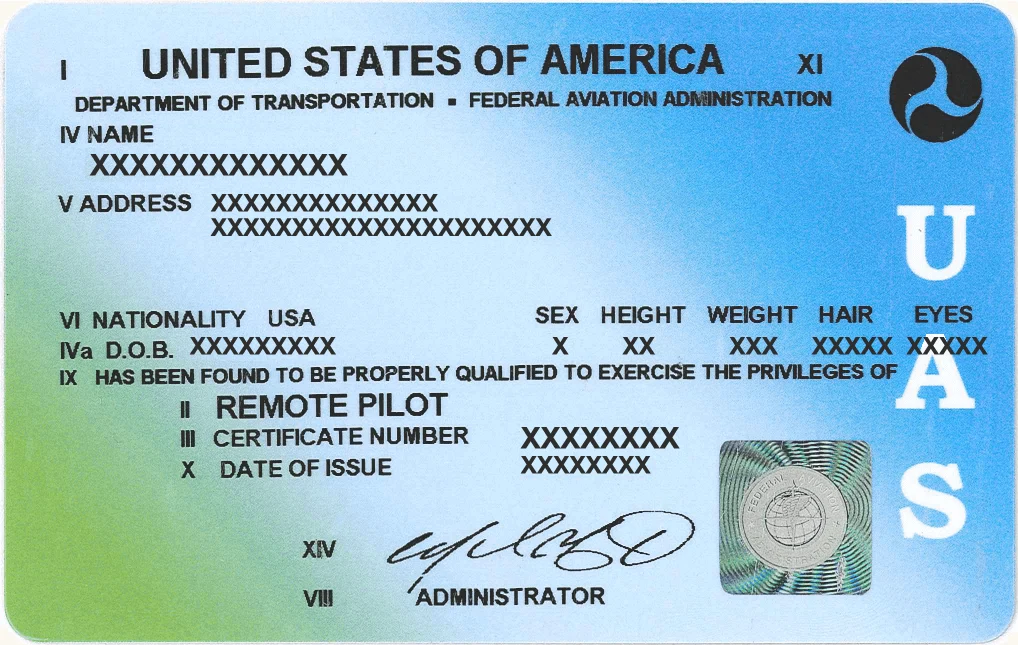
Any commercial drone operation in the United States requires an FAA Part 107 Remote Pilot Certificate, and drone cleaning is no exception. Despite its intimidating reputation, the Part 107 certification process is straightforward for operators who prepare systematically. This walks through everything drone cleaning operators need to understand about the regulatory framework: what the written exam covers and how to prepare for it efficiently, the specific weight limits that apply to drone cleaning systems and why total system weight including hose and water matters for compliance, how LAANC airspace authorization works in urban and commercial environments and why the process is faster and simpler than most operators expect, the FAA operational priorities that govern commercial drone work in practice, and how to document airspace authorizations and operational records in a way that supports both regulatory compliance and customer confidence. The post also addresses the broader credibility value of Part 107 certification in commercial sales conversations, including how customers and insurers respond to documented FAA compliance. Built for operators who want to understand the rules well enough to operate with confidence and explain them clearly to the property managers and facilities directors who ask about them.
This is for drone cleaning operators who are preparing for FAA Part 107 certification or who have their certificate but want a clearer understanding of how the rules apply specifically to commercial exterior cleaning work. The FAA regulatory framework can feel overwhelming when you encounter it for the first time, but experienced operators consistently describe it as more manageable than it appears. This post cuts through the complexity and focuses on what drone cleaning operators actually need to know to operate legally, confidently, and with full customer credibility.
If you are using a drone for commercial purposes in the United States, FAA Part 107 certification is not optional. It is the legal foundation of every commercial drone cleaning job you will ever run, and it is one of the first things serious commercial property managers ask about when evaluating a new vendor. The good news is that the certification process is more manageable than its reputation suggests. Experienced operators who have been through it consistently describe it as straightforward for anyone who prepares systematically. This breaks down exactly what Part 107 requires, what drone cleaning specific rules apply, and how to stay compliant on every job.
FAA Part 107 Made Simple for Drone Cleaning Operators
FAA Part 107 is the regulatory foundation of every legitimate commercial drone operation in the United States. For drone cleaning operators, it is not a suggestion or a best practice. It is a legal requirement that applies to every job, every flight, and every customer relationship you build. The operators who treat it that way from day one avoid the legal exposure that has ended other operators' businesses, and they gain a credibility signal that pays dividends in every commercial sales conversation they have.
Despite its reputation, Part 107 is more accessible than most new operators expect. Here is what you actually need to know.
What the Exam Requires
The FAA Part 107 Remote Pilot Certificate is earned through a written knowledge test administered at an FAA-approved testing center. The exam consists of 60 multiple-choice questions covering aeronautical knowledge topics relevant to unmanned aircraft operations. A passing score is 70 percent, and there is no flight test component. Most operators who prepare systematically are ready to sit for the exam within two to three weeks using a combination of FAA study guides, online prep courses, and practice exams. The exam is not trivial, but it is not designed to be prohibitive either. It is designed to ensure that commercial operators have a working understanding of airspace, weather, and operational safety before they fly for hire.
Once earned, the Remote Pilot Certificate must be renewed every 24 months through an online recurrent training course. The renewal process is significantly lighter than the initial certification and can be completed in a few hours.
Weight Limits That Apply to Drone Cleaning Systems
Part 107 operations are limited to aircraft with a maximum takeoff weight of 55 pounds. For drone cleaning systems, this calculation is more complex than it is for standard drone operations because the total system weight includes the drone itself, the cleaning payload, the hose, and the weight of any water or chemical solution in the system at the time of flight. All of those components count toward the 55-pound limit, and operators who have not run these numbers carefully can find themselves in violation without realizing it.
Weight calculations for your specific system should be documented before operations begin and revisited any time you change equipment, add a payload, or modify your hose configuration. This documentation protects you if you are ever questioned about compliance, and it demonstrates the kind of operational rigor that serious commercial customers expect from professional vendors.
Airspace Authorization in Urban and Commercial Environments
Commercial exterior cleaning jobs almost always happen in or near controlled airspace. Office parks, hotel corridors, medical campuses, and urban commercial districts frequently fall within the airspace jurisdiction of nearby airports and heliports, which means Part 107 operators need airspace authorization before they fly in those areas.
The good news is that the authorization process is faster and simpler than most operators expect. The Low Altitude Authorization and Notification Capability system, commonly called LAANC, allows operators to request airspace authorization through FAA-approved apps and often receive approval in seconds for altitudes within pre-defined grids. Many commercial cleaning altitudes fall within auto-approval parameters, which means operators who are prepared can obtain authorization on site before a job without any meaningful delay. Authorizations should be saved and documented as part of your operational record for each job.
For operations that fall outside LAANC auto-approval parameters, the FAA DroneZone portal provides a path to manual authorization. These requests take longer, typically several days, so planning ahead matters for jobs in more restricted airspace.
What the FAA Actually Prioritizes in Practice
The FAA's operational priorities for Part 107 commercial operations come down to two core concerns: not flying over uninvolved people and not interfering with crewed aircraft. For drone cleaning operators working on commercial properties, meeting those priorities in practice means establishing clear safety zones around the work area that prevent uninvolved people from walking beneath the flight path, controlling access to the immediate job site during operations, and maintaining clear operational boundaries that keep the drone well below the altitudes where crewed aircraft operate.
Most commercial exterior cleaning jobs happen on properties where access control is relatively straightforward. A parking lot safety perimeter, clear signage, and a spotter during operations are typically sufficient to satisfy the FAA's uninvolved persons requirements. The operational discipline required is not significantly more complex than what any professional contractor would implement for safety reasons regardless of regulatory requirements.
How Part 107 Supports Your Commercial Sales Conversations
Beyond legal compliance, Part 107 certification does something important in commercial sales conversations: it answers the regulatory question before it gets asked. Property managers who are responsible for vendor approval at commercial facilities think about liability and compliance as a matter of course. An operator who can reference their FAA Remote Pilot Certificate number, show current airspace authorizations, and explain their operational safety protocols in plain language is dramatically more credible than one who responds to compliance questions with vague reassurances.
Your Part 107 is not just permission to fly. It is a credential that signals you operate professionally, legally, and with full accountability for the airspace you use. Lead with it accordingly.
The Big Takeaway
FAA Part 107 certification is the legal foundation of commercial drone cleaning. It is more accessible than it appears, more valuable than operators often realize, and more important to commercial customers than many vendors think to emphasize. Earn it, maintain it, document your compliance on every job, and use it actively as the professional credential it is.

.svg)
.avif)



.avif)