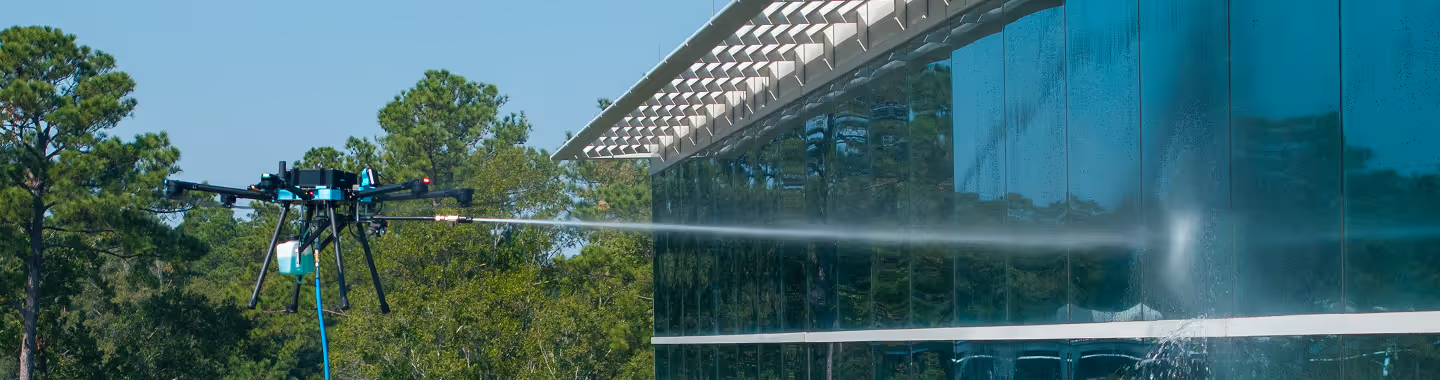
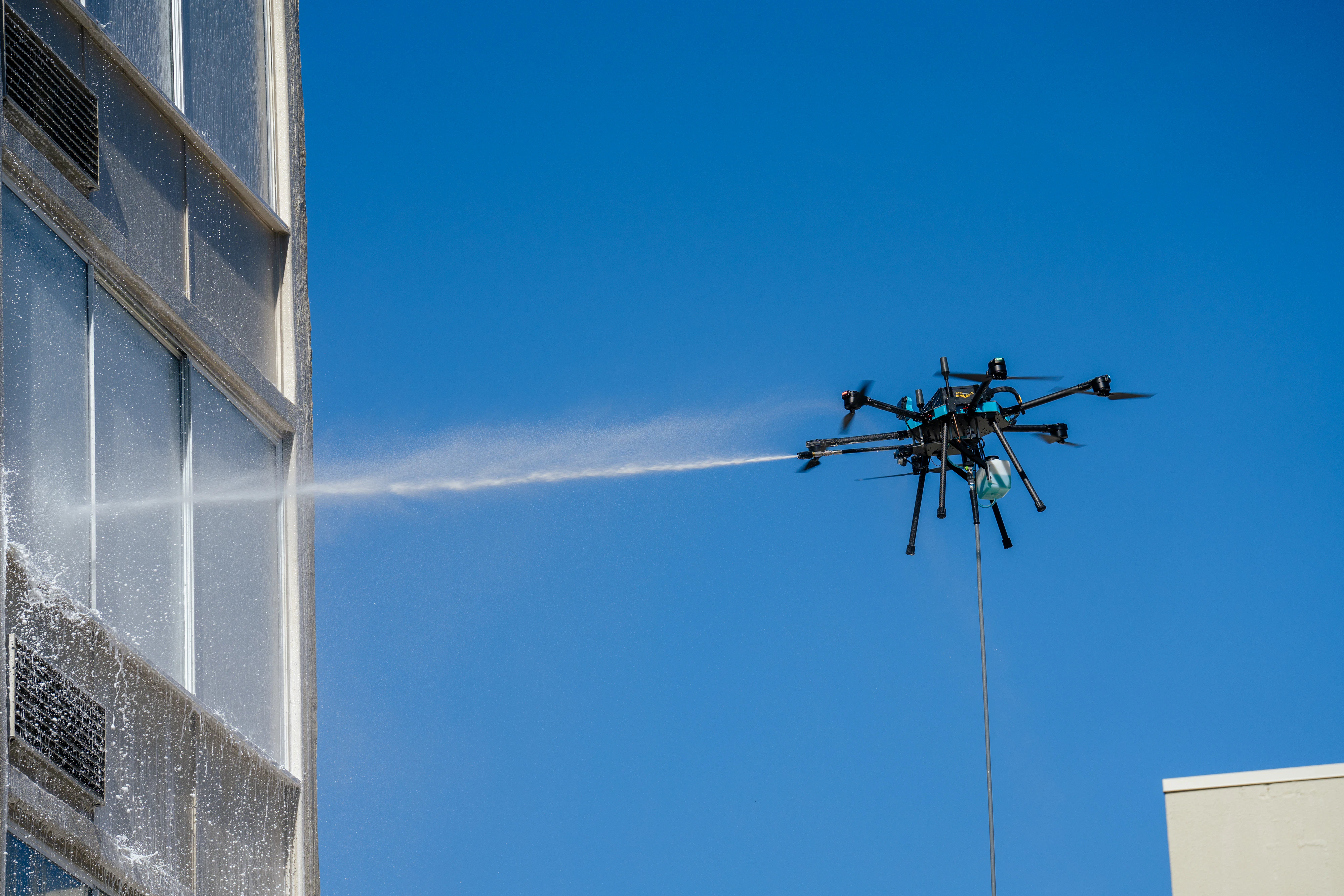
Experience Lucid Bots.
Discover a small sampling of what can be accomplished with Lucid Bots. The Lucid Bots resources page offers a comprehensive collection of case studies, videos, e-books, and more.

Training and Retention: The 30-Day Ramp Program That Builds Confident Operators
Great drone cleaning teams are not found. They are built through deliberate training programs, competitive and well-structured compensation, clear career development pathways, and a safety culture that makes people want to stay. Most operator turnover in drone cleaning happens early, in the first 30 to 90 days, and it happens primarily because training is rushed, expectations are unclear, or new operators never develop the confidence that comes from systematic skill building. This post delivers the complete framework for preventing that outcome. Topics covered include the four-week 30-day ramp program that moves new operators progressively from knowledge building through controlled practice, real-world supervised execution, and full independent operation with formal assessment, the compensation benchmarks for entry-level operators, experienced operators, and team leaders with geographic adjustment guidance, the three performance incentive categories that tie bonus compensation to the outcomes that matter most for the business, the career pathway structure that gives operators a visible future within the organization, and the safety culture framework covering PPE quality, systematic risk assessment protocols, no-blame reporting systems, and regular emergency scenario practice. Built for business owners who want to build teams that compound rather than churn.
This is for drone cleaning business owners who have made a hire and want a structured framework for turning that new team member into a confident, capable, long-term operator rather than another early-stage washout. If you have experienced the frustration of investing in training only to have someone leave or underperform within the first few months, this post gives you the week-by-week ramp program, the compensation and career pathway structure, and the safety culture framework that together produce the retention outcomes that make team building sustainable.
Great teams are not found. They are built. And in drone cleaning, the first 30 days of a new operator's experience determine whether they become a long-term asset or an early washout. Most turnover in this industry happens not because operators are poor fits but because training is rushed, expectations are unclear, or new hires never develop the confidence that comes from systematic skill building in a supportive environment. A structured 30-day ramp program changes that dynamic entirely. This post delivers the complete framework: the week-by-week training progression, the compensation structure that retains good operators, and the safety culture that makes people want to stay.
Training and Retention: The 30-Day Ramp Program That Builds Confident Operators
The difference between operators who succeed long-term and those who wash out often comes down to their initial training experience. Rushed, unclear, or inconsistent onboarding creates uncertainty that compounds into underperformance. A structured, progressive ramp program creates confidence that compounds into excellence. Here is the framework that produces the second outcome.
Week One: Foundations and Safety Culture
The first week focuses entirely on knowledge building and safety culture without the pressure of actual equipment operation. New operators need to understand the business they are representing, the safety framework they are operating within, and the technical systems they will eventually be responsible for before any of those elements are combined under real job-site pressure.
Comprehensive safety training should go beyond basic compliance. Use real incident case studies that make the consequences of safety shortcuts concrete and memorable rather than abstract. New operators who understand what actually happens when safety steps are skipped develop a very different relationship with safety protocols than those who receive compliance-focused checklists without context.
Business model education is equally important in week one. New operators need to understand that they are representing your company to high-value commercial clients who expect professionalism, communication, and results. The operator who understands why their behavior on a job site matters to the business performs very differently from the one who sees themselves as a technician rather than a brand representative.
Cover equipment systems, basic maintenance, weather considerations, and regulatory requirements through hands-on demonstrations rather than purely classroom instruction. End week one with Part 107 certification completion if the new operator has not already achieved it. The week one standard is simple: every operator should finish this week with a clear understanding of what they are doing, why it matters, and what the professional standard looks like before they touch the equipment operationally.
Week Two: Controlled Environment Practice
Week two moves from knowledge to muscle memory in controlled, low-risk environments where the consequences of a mistake are minimal and the opportunity to learn from it is immediate. New operators practice flight patterns and stable positioning using training approaches in open areas away from structures. Spray system operation begins with water-only practice before chemicals are introduced, allowing operators to develop comfort with the physical workflow before adding the chemical handling responsibility.
Setup and breakdown procedures should be practiced repeatedly until the process becomes automatic rather than effortful. The operator who has to think through each step of equipment setup during a real job is an operator who is not tracking the environmental variables that determine job quality. Automaticity in setup frees mental capacity for the operational awareness that the job actually requires.
Customer interaction roleplay is an underrated component of week two training. Practice explaining the cleaning process to curious onlookers, handling common questions about the drone and the chemicals, and communicating professionally when something unexpected happens. These scenarios feel awkward in a training context and become natural with repetition before the stakes are real.
Week Three: Real-World Application With Supervision
Week three transitions new operators to actual customer projects with intensive supervision. The projects selected for this phase should be lower-complexity jobs: smaller buildings, straightforward access, cooperative customers who are willing to provide feedback, and site conditions that allow the supervisor to observe and coach without competing demands on their attention.
The focus in week three is on developing systematic habits rather than on production speed. Operators who learn to assess job sites methodically, work through their checklists deliberately, and maintain quality standards consistently from the first section to the last are building the foundation of professional execution. Speed develops naturally through repetition. Consistency requires deliberate cultivation and does not develop automatically.
Use week three to introduce real troubleshooting: equipment that behaves unexpectedly, site conditions that differ from the pre-job assessment, customer questions that require clear and professional answers in real time. Every scenario encountered in week three with a supervisor present is a scenario the operator can handle independently in week four.
Week Four: Independent Operations With Check-ins
Week four builds independence while maintaining the support structure that catches problems before they become crises. New operators handle complete projects from planning through execution, with supervisory check-ins at defined points rather than constant oversight. The projects assigned in week four should test the complete range of skills developed across the previous three weeks: more complex geometries, varying weather conditions, demanding customers, and tight timelines.
End week four with a formal assessment and certification milestone that recognizes the operator's achievement of independent operation readiness. This milestone matters more than it might seem. In an industry where the credential path is not yet standardized, creating an internal certification that marks genuine competence gives operators a sense of achievement and organizational recognition that contributes directly to retention.
Compensation That Retains Good Operators
Pay is not the only retention factor, but it is a foundational one. Drone cleaning operators command premium compensation relative to conventional service industry roles because of the specialized skills, equipment responsibility, and customer interaction the job requires. Entry-level operators typically earn between 18 and 25 dollars per hour depending on market and prior experience. Experienced operators with a strong track record generally fall in the 25 to 32 dollar range. Team leaders who combine operational excellence with crew management and customer relationship responsibilities typically earn between 28 and 35 dollars per hour. Urban markets generally require a 15 to 25 percent premium over suburban and rural benchmarks to remain competitive with the local labor market.
Performance incentives tied to the outcomes that matter most for the business create alignment between operator behavior and company goals. Customer satisfaction bonuses tied to documented client feedback create direct accountability for service quality. Efficiency incentives that reward consistent project completion under the time estimate without compromising quality encourage the operational discipline that protects margins. Safety incentives that recognize perfect safety records, additional training completion, and proactive hazard identification reinforce the safety culture that protects everyone on the team.
Career Pathways That Create a Visible Future
Retention increases significantly when operators can see a future within the organization. The career pathway that works best in drone cleaning operations moves from operator to senior operator, then to crew leader, then to trainer and mentor for newer team members. Each step brings higher base compensation, broader responsibilities, and deeper organizational investment in the individual's development.
Training budgets that support advanced certifications, equipment-specific training, and leadership development send a clear signal: the company is investing in the long-term development of its people, not just in their current productivity. That signal matters to the candidates who will become your best long-term operators, because those are exactly the candidates who are paying attention to whether the organization they join is one that develops people or simply uses them.
Building a Safety Culture That Actually Sticks
Safety culture is not posters on a break room wall. It is the set of systems, leadership behaviors, and organizational norms that determine how operators actually behave when no one is watching. Building a safety culture that sticks requires intentional work across several dimensions.
Make Safety Personal and Visible
Use real team photos and real stories of near-misses prevented through good practices rather than generic safety imagery. When safety is associated with real people on your team rather than anonymous stock images, it feels personal rather than procedural. Leadership demonstration matters enormously here: operators will match the safety behavior they see from the people above them in the organization, not the behavior described in the safety manual.
Invest in High-Quality PPE
When personal protective equipment is uncomfortable, looks cheap, or fits poorly, compliance drops consistently. Professional-grade PPE that works well and looks appropriate to the job signals that the organization takes safety seriously enough to invest in it. That signal reinforces the safety culture in every interaction where an operator reaches for their equipment.
Standardize Risk Assessment
Build systematic protocols for job site assessment that identify potential hazards before they become problems. Create comprehensive checklists that cover equipment inspection, weather assessment, site hazard identification, emergency procedures, and communication plans for every job regardless of how straightforward it appears. The discipline of working through a risk assessment checklist on an easy job is what makes the same process automatic on a difficult one.
Practice Emergencies Regularly
Run tabletop scenarios and simulated equipment failures regularly so that teams develop automatic responses rather than consulting manuals in real-time during actual incidents. A drone malfunction, a chemical spill, unexpected bystanders entering the safety perimeter, a sudden wind change that creates drift risk: each of these scenarios should be practiced until the response is immediate rather than deliberated.
Create No-Blame Reporting Systems
Near-miss reporting generates the organizational learning that prevents the same near-miss from becoming an actual incident. But near-miss reporting only happens when operators feel safe reporting without fear of punishment or blame. Establish explicitly that all incident and near-miss reports are treated as system improvement opportunities rather than individual performance issues. Review incidents as a team, focus on what the system can do differently rather than what the individual did wrong, and document the improvement so the lesson reaches everyone rather than staying with the operator who experienced it.
The Big Takeaway
Great drone cleaning teams are built through deliberate training, competitive compensation, clear career pathways, and a safety culture that makes people want to stay. The 30-day ramp program creates the confidence that comes from systematic skill building. The compensation and incentive structure creates the alignment between operator behavior and company goals. The career pathway creates the visible future that retains operators who have options. And the safety culture creates the environment where excellent people choose to build their careers. In an emerging industry, the companies that build great teams today are building the competitive advantage that will be very difficult for later entrants to replicate.

The Interview Framework: Questions That Reveal Judgment, Safety, and Customer Professionalism
Traditional interview questions fail in drone cleaning hiring because the job combines technical operation, physical demands, chemical handling, safety responsibility, and commercial client interaction in a way that standard hiring processes are not designed to surface. The candidate who interviews confidently may lack the safety awareness that keeps job sites incident-free. The candidate who seems reserved may have exactly the systematic, risk-aware thinking that excellent operators demonstrate consistently. This post delivers a complete three-part interview framework designed specifically for drone cleaning operator roles. The three categories are values-based questions that reveal character and judgment under pressure, scenario-based questions that test safety thinking, troubleshooting approach, and customer communication without requiring prior experience, and learning orientation questions that identify the growth mindset and persistence that determine whether a new operator improves rapidly or plateaus early. Each question includes the answer patterns to look for and the red flags that indicate poor fit regardless of how confident the candidate appears. Built for business owners who want to hire for judgment rather than confidence and build teams that perform under real commercial pressure.
This is for drone cleaning business owners who are conducting interviews for operator positions and want a structured framework that goes beyond resume screening and generic questions. Drone cleaning combines technical skill, physical job demands, and customer-facing professionalism in a way that traditional interview processes are not designed to evaluate. This post gives you the specific question categories, the individual questions that work best within each category, and the answer patterns that distinguish candidates who will succeed from those who will struggle once the job pressure is real.
Drone cleaning combines technical operation, physical job demands, chemical handling, safety responsibility, and commercial client interaction in a single role. Traditional interview questions are not designed to evaluate that combination. The candidate who interviews most confidently is not always the one who will perform best when equipment is malfunctioning on a commercial job site and a building owner is asking for a status update. This post gives you a structured three-part interview framework that surfaces the judgment, safety awareness, and customer professionalism that actually predict operator success, along with the specific answer patterns and red flags that tell you what you are actually looking at.
The Interview Framework: Questions That Reveal Judgment, Safety, and Customer Professionalism
The drone cleaning operator role is unlike most service industry positions. It requires real-time technical judgment, proactive safety thinking, physical coordination, chemical handling competence, and the customer-facing professionalism that commercial property managers expect from the vendors they trust with their buildings. Generic interview questions miss most of that. Here is a framework built specifically for this role.
Part One: Values-Based Questions
Values-based questions reveal character in a way that skills-focused questions cannot. They surface how a candidate thinks about responsibility, honesty, and behavior under pressure, which are the qualities that determine performance in the moments a job description cannot fully anticipate.
What personal values matter most to you, and how do they show up in your work?
Strong answers connect specific values to specific behaviors rather than offering abstract statements. A candidate who says they value responsibility and then describes how that shows up as double-checking equipment before every flight, or arriving early to assess a job site before the customer arrives, is demonstrating the connection between values and action that you are looking for. Be cautious of candidates who list values without being able to articulate how they translate to day-to-day behavior, and of generic answers that sound like they were prepared to sound impressive rather than drawn from real experience.
When something goes wrong at work, how do you personally respond?
This question reveals how a candidate handles pressure, whether they default to ownership or blame, and whether their instinct in a difficult moment is to communicate clearly or to go quiet and hope the problem resolves. Strong answers emphasize taking personal responsibility for whatever portion of the situation was within their control, communicating proactively with whoever is affected, focusing on solutions rather than on assigning fault, and identifying what they learned from the experience. Red flags include focusing primarily on external factors, describing panic or paralysis as a natural response, or indicating that they would handle the situation by waiting to see how it developed rather than acting decisively.
Part Two: Scenario-Based Questions
Scenario-based questions test thinking and judgment without requiring prior experience. They reveal whether a candidate approaches novel situations with systematic, safety-aware thinking or with improvisation and assumption. In drone cleaning, the difference between those two approaches shows up in job site outcomes.
Walk me through how you would set up a job site for cleaning a 15-story office building downtown.
This question is designed to surface safety thinking and systematic planning without requiring any prior drone cleaning experience. Strong candidates, even those who have never done this job before, will naturally consider pedestrian traffic patterns and how to establish a safety perimeter, overhead hazards including power lines, cell towers, and tree canopies, weather conditions and wind direction relative to chemical drift, equipment staging positions that allow clean hose routing and easy access, communication protocols with building management before and during the job, and access control to keep uninvolved people clear of the operational area.
Candidates who jump immediately to flying the drone without considering the environment they are flying in are showing you exactly the gap in situational awareness that creates problems on real job sites. That gap is not easily corrected through training alone.
You are halfway through a cleaning project when your equipment starts malfunctioning and the building owner is asking when you will be finished. How do you handle this?
This scenario tests three things simultaneously: safety judgment about when to continue versus when to stop, technical troubleshooting instinct, and customer communication under pressure. Strong answers prioritize safety first by assessing whether the malfunction creates any risk that justifies stopping operations immediately, then move to calm, systematic troubleshooting aimed at identifying the cause before attempting a fix, and communicate with the customer honestly and specifically rather than with vague reassurances. The candidate who says they would try to push through the malfunction to finish on time is showing poor safety judgment. The candidate who says they would stop, assess, fix what they can, communicate clearly with the building owner about status and revised timeline, and escalate to support if the fix is beyond their current capability is showing exactly the judgment that commercial clients trust.
Part Three: Learning Orientation Questions
Learning orientation is the quality that determines whether a new operator improves rapidly or plateaus after the initial training period. Drone cleaning is technically demanding and operationally complex, and the gap between basic competency and genuine proficiency is bridged through deliberate practice and continuous improvement rather than through time alone.
Tell me about a time you had to learn something completely new for work. How did you approach it?
Strong answers describe a systematic learning approach: breaking the new skill or knowledge into manageable components, seeking out multiple sources of information, practicing deliberately rather than casually, asking for feedback from people with more experience, and persisting through the initial phase of confusion and error that precedes competence. The specific topic matters much less than the learning process the candidate describes. An answer about learning a new software system using the same approach that would work for learning drone operations is revealing the learning capability you are evaluating, regardless of the subject matter.
What are you trying to get better at right now?
This question reveals whether a candidate has an active development agenda or is coasting on whatever level they have already reached. Candidates with a growth mindset almost always have a specific and genuine answer to this question because they are always working on something. The area of improvement matters less than the specificity and authenticity of the answer. A candidate who says they are working on a specific skill, names what they are doing to develop it, and can describe the progress they have made recently is demonstrating the self-directed development that excellent operators sustain throughout their careers. A candidate who struggles to identify anything they are actively working to improve is showing you a learning posture that will not serve them well in a technically demanding and continuously evolving role.
What You Are Hiring For
The three question categories together give you a picture of whether a candidate has the judgment to make good decisions under pressure, the safety awareness to manage a commercial job site responsibly, and the learning orientation to develop rapidly and continuously rather than reaching a competence ceiling and staying there. Those three qualities, combined with the trait profile covered in Blog 1, define the operator who will succeed long term in drone cleaning and represent your business in the way commercial clients expect.
Hire for judgment, not just confidence. The candidate who interviews most smoothly is not always the one who performs best when the job is real and the pressure is on.
The Big Takeaway
Generic interview questions produce generic hiring outcomes. A framework built around values, scenario-based judgment, and learning orientation produces a much clearer picture of which candidates will succeed in a role that combines technical skill, safety responsibility, and commercial professionalism in ways that standard hiring processes are not equipped to evaluate. Use the questions in this post. Pay attention to the answer patterns and the red flags. And remember that the goal is not to find the candidate who interviews best. It is to find the one who will perform best when the job site is real and the stakes are high.
.jpg)
Who Makes a Great Drone Cleaning Operator? The Traits That Predict Success
Your drone cleaning business will live or die by the people operating equipment at height, handling chemicals, and representing your brand to high-stakes commercial clients. In an industry this young, you are not just hiring technicians. You are helping create a new category of skilled operator from the ground up. This post gives drone cleaning business owners the complete framework for identifying, attracting, and evaluating the candidates who succeed long term. Topics covered include the two proven paths to building a team, upskilling existing service employees versus hiring dedicated drone operators from outside, and the hybrid approach that combines the best of both, the four operator success traits that predict long-term performance regardless of prior experience, the surprising role that competitive gaming background plays in operator skill development with a real-world example, why safety mindset is the non-negotiable foundation that skills can be taught around but cannot substitute for, how to assess spatial awareness and mechanical aptitude during the hiring process, and the talent pool reality that makes drone operator postings dramatically more effective than traditional service job postings. Built for business owners who want to hire once and develop long-term rather than cycling through candidates who seemed promising and washed out early.
This is for drone cleaning business owners and operators who are ready to hire their first team member or expand an existing crew and want a framework for identifying candidates who will succeed long term rather than wash out early. Because drone cleaning is still a young industry, there is no established pipeline of experienced candidates to draw from. That creates a challenge and an opportunity: the operators who learn to hire for the right traits rather than the right resume will build teams that outperform those who rely on conventional hiring criteria.
In drone cleaning, hiring is uniquely challenging because the role is still new. There is no decades-old pipeline of experienced candidates to draw from, no obvious credential to screen for, and no established industry standard for what a qualified drone cleaning operator looks like. That is actually good news for operators who understand what it means: you can hire for the traits that predict success rather than the qualifications that signal prior exposure to a job that barely existed five years ago. The strongest predictors of long-term operator performance are not on anyone's resume. Here is what to look for instead.
Who Makes a Great Drone Cleaning Operator? The Traits That Predict Success
"Talent wins games, but teamwork and intelligence win championships." - Michael Jordan
Your technology can be cutting-edge, your marketing brilliant, and your pricing perfectly calibrated. But your drone cleaning business will ultimately live or die by your people. They are handling expensive equipment, working with chemicals and safety protocols, representing your brand on high-visibility commercial job sites, and operating aircraft near structures and people. Getting the hiring right matters more than almost anything else you do to build the business.
The good news is that because this industry is young, you are not competing against decades of established hiring practices. You can define what great looks like and hire for it.
Two Proven Paths to Building Your Team
Path One: Upskill Existing Employees
If you already run a service business, training your current technicians on drone operations is often the fastest route to a stable, high-performing team. Existing employees already understand your quality standards and customer service expectations, have proven their reliability and work ethic in your specific environment, understand the rhythm and demands of commercial service work, and experience drone training as career growth rather than job displacement.
One Texas operator reported that his cleaning technicians were fighting over who got to be trained next. Drone training became one of the most powerful internal motivators his team had experienced. With proper systems, most service technicians achieve basic competency within the first 30 days and strong proficiency within 90 days.
Path Two: Hire Dedicated Drone Operators
External hiring opens a dramatically larger talent pool than traditional service industry recruiting. One cleaning company owner described the contrast plainly: he had posted the same cleaning technician job ad for decades and could barely get applicants. When he posted for a drone pilot, there were not enough hours in the day to get through all the resumes. The appeal of drone work attracts a different and often larger candidate pool than conventional service roles.
The tradeoff is that external hires do not automatically understand service business realities: customer interaction standards, the physical demands of hose and pump work, chemical handling protocols, and the professionalism expected on commercial job sites. That gap has to be bridged through onboarding and mentorship.
The Hybrid Approach
Many of the strongest drone cleaning operations blend both strategies. Upskill one or two internal team members first to establish the operational and cultural foundation. Then begin hiring external drone pilots who learn the service side of the business from experienced internal team members. This creates a natural mentorship dynamic where service standards and company culture get passed down consistently rather than being reinvented with each new hire.
The Four Traits That Predict Long-Term Operator Success
Gaming Background
Competitive gaming background, particularly first-person or flight simulation games, is one of the strongest and most surprising predictors of drone cleaning operator success. The skills that make someone effective at FPS or simulation gaming are precisely the skills that drone cleaning requires: real-time hand-eye coordination, spatial awareness across three dimensions, rapid micro-adjustments while maintaining situational awareness, and the ability to track multiple variables simultaneously under time pressure.
One operator who ranked in the top ten globally in Madden NFL became one of the most precise cleaning technicians his company ever employed. He intuitively understood concepts like leading targets, compensating for wind drift, and maintaining optimal positioning relative to the building surface. Those skills transferred from a gaming context to a commercial cleaning context with minimal friction. If a candidate mentions competitive gaming, pay attention.
Safety Mindset
Technical skills can be taught. Safety mindset is significantly harder to install after the fact, which makes it the non-negotiable foundation of the operator success profile. The safety-minded candidates you are looking for use proactive language naturally: let me double-check that, what is our backup plan if this changes, we should set the perimeter before we start. They do not just follow safety rules. They anticipate risk before it materializes.
During the interview process, ask candidates to walk you through how they would set up a job site for a large commercial building. Even candidates with no direct experience can demonstrate safety thinking by identifying pedestrian traffic patterns, overhead power lines, weather and wind considerations, equipment staging positions, and communication protocols with building management. The ones who do that without being prompted have the safety mindset. The ones who jump straight to flight operations without considering the environment around them do not.
Spatial Awareness and Comfort Near Height
Although drone cleaning operators remain on the ground throughout a job, psychological comfort around height translates directly to operational confidence when piloting near tall structures. Operators who are fearful or anxious near buildings tend to become tentative in their positioning, which reduces cleaning quality and increases the risk of the aircraft drifting too close to the facade. Strong operators develop an intuitive sense of three-dimensional positioning: understanding how wind affects aircraft behavior at different altitudes and distances from the building, and making constant micro-adjustments to maintain ideal coverage patterns.
Mechanical Aptitude and Physical Coordination
Despite the high-technology nature of the equipment, drone cleaning is a physically demanding and mechanically complex job. Operators work with pump systems, hundreds of feet of hose, chemical mixing and handling, quick-connect fittings, and routine maintenance and troubleshooting. Candidates who naturally enjoy hands-on work, working on vehicles, woodworking, home improvement projects, gardening, or any other pursuit that requires both physical coordination and practical problem-solving, consistently learn faster and troubleshoot more effectively than those who are primarily comfortable in purely technical or administrative roles.
The Talent Pool Advantage
One of the underappreciated advantages of hiring for drone cleaning roles is the quality of the candidate pool the job posting attracts. Drone pilot postings consistently generate significantly more applications than equivalent service industry postings, and the applicant pool tends to skew toward candidates with the gaming backgrounds, mechanical interests, and technical curiosity that correlate with operator success. That talent pool advantage is available to every drone cleaning operator who writes a job posting that leads with the drone rather than burying it in the description.
The Big Takeaway
In drone cleaning, the best operators are not necessarily the most experienced. They are the best fit. Hire for safety mindset, spatial awareness, mechanical aptitude, and the hand-eye coordination that gaming and hands-on hobbies develop. Use the two-path and hybrid approach to build a team that combines service industry professionalism with drone operation skill. And use the job posting itself to attract the candidate pool that the role deserves. The companies that get hiring right in this industry today are building the teams that will define it tomorrow.

Days 61 to 90: From One-Off Jobs to Recurring Revenue and Scalable Systems
By the end of day 60, a drone cleaning operator who has followed the crawl-walk-run progression has proven one thing: they can deliver consistent commercial results on four to six story buildings. Month three is about building on that proof to create something more durable. The shift from month two to month three is the shift from executing individual jobs to building a business that generates recurring revenue, operates through documented systems rather than individual effort, and has a clear growth roadmap that does not depend on finding a new customer for every dollar of revenue. This post delivers the complete week-by-week plan for the days 61 through 90 phase, covering the expansion into campus-style and multi-building projects at hospitals, universities, and corporate campuses, the recurring revenue contract templates and property manager relationship strategies that produce repeat business, the business system maturation work covering cost tracking, ROI measurement, cash flow planning, and equipment maintenance schedules, the growth planning framework for second equipment, additional crew, and strategic partnerships, the customer success touchpoints that accelerate progress through all three phases, the maintenance reality check that applies throughout the life of the operation, and the 90-day success metrics that define what a genuinely scalable drone cleaning business looks like at the end of the first quarter. Built for operators who want to stop depending on individual jobs and start building a business that compounds.
This is for drone cleaning operators who have completed their first two months of operations, proven they can deliver consistent commercial results, and are now ready to build the systems and relationships that turn a collection of individual jobs into a scalable, recurring-revenue business. If you have hit your month two targets and are looking for a concrete plan for month three, this post gives you the week-by-week framework for expanding into larger projects, building recurring maintenance contracts, maturing your financial and operational systems, and creating the growth infrastructure that makes your business compound rather than plateau.
By day 60 you have proven you can deliver. You have completed commercial jobs, validated your pricing, and established a revenue-positive trajectory. Days 61 through 90 are about something different: building the systems, relationships, and operational infrastructure that turn a collection of individual jobs into a scalable business. The shift that happens in month three is the shift from doing to building. You are still delivering jobs, and you are delivering bigger and more complex ones, but the work that matters most in this phase is the infrastructure work that makes your business capable of generating recurring revenue and growing without requiring you to personally manage every detail of every job.
Days 61 to 90: From One-Off Jobs to Recurring Revenue and Scalable Systems
Month two proved you can deliver. Month three is about building a business that does not depend on you finding a new customer for every dollar of revenue you want to generate. The operators who make this transition successfully do not just work more in month three. They work differently: expanding into higher-leverage projects, building recurring relationships, and creating the systems and infrastructure that allow growth to compound rather than requiring constant reinvention.
Here is the complete plan for days 61 through 90.
Weeks 9 and 10: Expanding Into Campus-Scale Projects
The project profile that defines month three is the campus or multi-building site: hospitals, universities, corporate campuses, and commercial complexes where multiple buildings share a single property manager relationship and a single maintenance budget. These projects represent a step up in operational complexity from the four to six story buildings of month two, and they also represent a step up in revenue potential, relationship depth, and recurring contract opportunity.
Target properties where a single decision-maker controls multiple buildings. Winning that relationship means winning multiple cleaning contracts simultaneously rather than one at a time, and it means that a strong performance on the first building creates a natural path to the rest of the portfolio without requiring additional prospecting effort.
The operational capabilities that month three builds include multi-building logistics planning, consistent quality delivery across multiple structures in a single visit, scheduling coordination for larger and more complex jobs, and the recurring revenue contract templates that turn a one-time campus job into a predictable maintenance relationship. These capabilities require the commercial foundation built in month two. They cannot be improvised from scratch in month three.
Building Recurring Revenue Contracts
The single most important financial shift that happens in month three is the transition from one-off jobs to recurring maintenance agreements. A building that gets cleaned once and then accumulates contamination back to its original state over the following year is a missed opportunity. A building on a quarterly or semi-annual maintenance schedule is a predictable revenue stream that compounds over time as the portfolio of recurring clients grows.
Propose recurring maintenance agreements directly and specifically after every successful month three job. The property manager who just watched you clean their campus is in the best possible frame of mind to commit to a schedule that keeps it looking that way. Structure the agreement around the building's actual contamination cycle: how quickly does organic growth return, and what cleaning frequency maintains the result the customer just paid for. The answer to that question determines the right maintenance interval, and the right maintenance interval is the foundation of a recurring contract that the customer renews because it is genuinely solving their maintenance problem rather than because they forgot to cancel.
Weeks 11 and 12: Business System Maturation
The second half of month three shifts focus from project execution to business infrastructure. The systems you build in weeks 11 and 12 are what determine whether the growth you generate in month three compounds in month four or stalls because the business cannot support it operationally.
Financial Systems
Implement cost tracking at the job level so you know what each job actually cost to deliver, not just what you billed for it. Build an ROI measurement system that connects job costs to job revenue and tracks margin trends over time. Create a cash flow forecast that accounts for the gap between when jobs are delivered and when invoices are paid. Plan your equipment replacement and expansion strategy based on real operational data rather than aspiration. These financial systems are not bureaucracy. They are the information infrastructure that allows you to make good decisions about pricing, capacity, and growth.
Operational Systems
Streamline your setup and breakdown procedures based on everything you have learned across two months of real jobs. Optimize crew productivity by documenting the role definitions and communication protocols that have worked best in practice. Implement quality control measures that produce consistent results regardless of which crew member is running the job. Build your referral generation and management system so that satisfied customers have a clear and easy path to introducing you to colleagues who manage other properties.
Growth Planning
Month three is when the growth roadmap becomes concrete rather than aspirational. Analyze whether your current operation can support the revenue target you are working toward, or whether additional equipment, crew capacity, or strategic partnerships are required to get there. Develop the training materials and onboarding process for a future hire so that bringing someone into your operation is a structured process rather than an improvised one. Identify the complementary service partnerships, interior cleaning companies, property management firms, and facilities services providers, that could accelerate your territory penetration through warm introductions rather than cold outreach.
The Customer Success Touchpoint Framework
The support structure that accelerates progress through all three phases follows a rhythm that mirrors the 30-60-90 framework itself. The week one onboarding call establishes communication preferences, reviews training completion, and plans the first practice jobs. The week four check-in reviews practice job results, addresses any equipment or operational issues, and plans the transition into commercial work. The week eight progress review analyzes commercial project performance, reviews financial results and pricing strategy, and identifies the improvement opportunities that will drive month three. The week twelve strategic planning session is a comprehensive business performance review that defines the growth plan, resource requirements, and long-term development path for the operation.
This support rhythm exists to remove friction at exactly the moments when new operators are most likely to get stuck. Operators who engage with it consistently shorten their learning curves and avoid the common mistakes that derail month one and month two progress.
The Maintenance Reality Check
The drone maintenance habits established in month one become increasingly important as operational intensity increases in month three. A vehicle that goes 12 months without service does not operate reliably, and a drone operating at commercial scale with inadequate maintenance will not either. The failure modes that emerge from neglected maintenance do not announce themselves in advance. They surface during jobs, in front of customers, at the worst possible moments.
Professional operators treat maintenance as uptime insurance. They follow maintenance schedules, perform daily and weekly checks as a matter of routine rather than memory, keep the tools and spare parts on hand that their vendor recommends, and understand that the cost of a preventable failure during a commercial job is always higher than the cost of the maintenance that would have prevented it. Build these habits in month one and protect them through months two and three.
Your 90-Day Success Metrics
The markers that define a genuinely scalable drone cleaning business at the end of the first quarter are five in number. Monthly revenue should be exceeding ten thousand dollars, reflecting the combination of larger project sizes and the beginning of recurring revenue contributions. Customer retention intent should be above 90 percent, meaning that the customers you have served are planning to use you again rather than evaluating alternatives. Referrals should be actively coming in from satisfied customers, reflecting a service quality and relationship depth that generates organic pipeline growth. Operations should be standardized and profitable, meaning that consistent delivery does not depend on your personal involvement in every detail of every job. And a clear growth roadmap should exist with resource needs identified, meaning you know specifically what the path to the next level requires rather than hoping the business will figure it out on its own.
The Big Takeaway
Month three is where the drone cleaning business stops depending on individual jobs and starts compounding through systems. The campus projects build relationship depth and recurring revenue potential. The business system maturation work builds the infrastructure that supports growth without requiring constant reinvention. The referral engine, once running, reduces the prospecting burden that consumes so much energy in months one and two. Build all of it deliberately. The operators who invest in these systems in month three are the ones who look back at their first 90 days as the foundation of something genuinely durable rather than a difficult beginning they eventually outgrew.
.jpg)
Days 31 to 60: How to Win and Deliver Your First Commercial Drone Cleaning Jobs
Month two is the transition point where drone cleaning operators stop practicing and start operating commercially. The sweet spot for skill development and early profitability in this phase is the four to six story commercial building: complex enough to develop real operational capability, forgiving enough to allow learning without catastrophic consequences, and lucrative enough to establish a revenue-positive trajectory. This post walks through the complete four-week plan for commercial development, covering pipeline building through targeted prospecting and property demos, the sample spray strategy that manages customer expectations before a full job is committed, crew coordination and job timing refinement through real commercial execution, pricing model validation through actual performance data rather than estimates, and the 60-day success metrics that indicate genuine readiness to scale into the larger, higher-leverage projects that define month three. Also covers the critical learning objectives that determine whether month two produces the commercial confidence and operational efficiency that month three requires. Built for operators who have done the foundation work and are ready to turn it into a real business.
This is for drone cleaning operators who have completed their foundation month and are ready to transition into real commercial work. If you have your certifications, your equipment dialed in, and at least a handful of practice jobs under your belt, this post gives you the week-by-week plan for building a commercial pipeline, running effective property demos, pricing based on real performance data, and delivering your first four to six commercial jobs in a way that builds both competence and a track record you can sell from.
Month two is the transition point. You are done building the foundation and ready to operate commercially. The goal for days 31 through 60 is to complete four to six commercial jobs on four to six story buildings, validate your pricing model with real performance data, and establish a revenue-positive trajectory that carries into month three. This is where the practice jobs and the checklist discipline and the customer education repetitions from month one start paying off. It is also where the gaps in your foundation, if any exist, will surface. The operators who arrive at month two with genuine competence leave it with a real business.
Days 31 to 60: How to Win and Deliver Your First Commercial Drone Cleaning Jobs
By the end of your first 30 days, you have your certifications, your equipment dialed in, your safety protocols documented, and at least a handful of practice jobs providing a baseline of real-world experience. Month two is where that foundation gets tested against commercial reality and where drone cleaning operators become actual businesses.
The target for this phase is four to six commercial jobs on four to six story buildings, a validated pricing model, and a revenue-positive trajectory. Here is how to get there.
Weeks 5 and 6: Building a Commercial Pipeline
The first two weeks of month two are about prospecting and pipeline, not execution. Before you can deliver commercial jobs you need to have identified the right targets, reached the right decision-makers, and created enough demo opportunities to give yourself a realistic chance of closing four to six jobs over the following two weeks.
Start by identifying approximately 20 commercial prospects in your territory. Focus on four to six story buildings with visible exterior staining, mold, algae, or discoloration, because visible need creates a shorter sales cycle than invisible need. Hotels, office parks, medical facilities, and light industrial properties are your primary categories in this phase. They offer the right combination of deal size, decision-maker accessibility, and cleaning complexity for skill development.
Research who makes exterior maintenance decisions at each property before you approach. In many cases that is a property manager or a facilities director rather than the business owner. Knowing who to ask for when you walk in the front door saves time and demonstrates professionalism from the first interaction.
The Sample Spray Strategy
One of the most effective tools for managing customer expectations and accelerating the demo-to-contract conversion in month two is the sample spray: cleaning a small, visible area at ground level with different chemistry before committing to a full job quote. This approach accomplishes several things simultaneously. It demonstrates the chemistry's effectiveness on the specific surface and contamination type at the property. It gives the customer a visual proof point that reduces the risk they feel in hiring a newer operator. And it gives you real data about how the surface responds before you commit to a timeline and price.
Sample sprays should be offered proactively as part of your demo process rather than reactively when a customer expresses doubt. The operator who arrives with equipment ready and offers to show results before asking for a commitment is demonstrating exactly the confidence and competence that commercial customers are looking for.
Weeks 7 and 8: Commercial Project Execution
The second half of month two is about execution. Aim to complete four to six commercial jobs on buildings in the four to six story range. Choose your first commercial projects deliberately rather than taking whatever comes first. Straightforward site access, cooperative customers who are willing to provide feedback, moderate complexity that allows learning without overwhelming pressure, and pricing that covers your costs and provides a modest margin while you are still refining your efficiency are the characteristics of a well-chosen first commercial project.
As you run these jobs, focus on four critical learning objectives. First, develop ground crew efficiency and clear role coordination so that the communication and task division that happens during a job becomes smooth and automatic rather than improvised. Second, learn how long jobs actually take at commercial scale, because the gap between estimated and actual time is where early profitability problems most often originate. Third, refine your pricing based on real performance data: what did the job actually cost in time, chemistry, and labor, and how does that compare to what you quoted. Fourth, build confidence operating at commercial scale, because the psychological shift from practice-job mindset to professional-delivery mindset is real and requires reps to develop.
Pricing Validation Through Real Data
One of the most valuable outputs of month two is a pricing model that is grounded in actual performance rather than estimates. The per-square-foot framework from your foundation month gives you a starting point, but real commercial jobs produce the data that refines it into something you can bid from with genuine confidence.
After each job, compare your estimated time against actual time, your estimated chemistry usage against actual usage, and your quoted price against what the job actually cost to deliver. Those comparisons reveal whether you are pricing accurately, where your efficiency has the most room to improve, and whether the adjustments you make between jobs are producing measurable results. Operators who track this data through month two arrive at month three with a pricing model they have validated against real commercial experience rather than one they are still guessing at.
Customer Satisfaction as a Business Asset
Month two is also when customer satisfaction becomes a business asset rather than just a job metric. A satisfied commercial customer in month two is a potential testimonial, a potential referral, and a potential recurring contract. The operators who build the strongest pipelines into month three are the ones who treat every month two job as the beginning of a relationship rather than a transaction.
Ask for feedback directly and specifically after every job. Use a simple scale of one to five and ask one open-ended follow-up question about what could have been better. The target for month two is customer satisfaction consistently above 4.5 out of 5. That standard is achievable with the foundation built in month one, and it is the standard that produces the testimonials and referrals that support month three growth.
Your 60-Day Success Metrics
The markers that indicate readiness to move into the scaling phase are a combination of completion, quality, efficiency, and financial trajectory. By day 60, four to six commercial jobs should be completed with documented before-and-after results. Customer satisfaction should be consistently above 4.5 out of 5. Your operational efficiency on comparable jobs should have improved by at least 25 percent relative to your first month baseline, which reflects the learning that comes from deliberate practice rather than repetition without reflection. Your pricing model should be validated against real performance data. And your revenue trajectory should be positive: not necessarily profitable yet, but moving clearly in that direction with a credible path to profitability visible in the data.
If those markers are in place by day 60, you are ready for the scaling phase. If they are not, extending the commercial development phase until they are is the right decision. The scaling phase rewards operators who arrive with genuine operational confidence and a validated business model. It amplifies whatever you bring into it, good or bad.
The Big Takeaway
Month two is where drone cleaning operators become real businesses. The four to six story commercial building is the right training ground for this phase: complex enough to develop genuine operational capability, accessible enough to allow learning, and lucrative enough to establish revenue momentum. Run the jobs deliberately. Track the data rigorously. Build the customer relationships intentionally. Arrive at month three with competence, confidence, and a pricing model you can defend. That is the foundation that month three scales from.

Crawl Before You Run: The First 30 Days of Drone Cleaning Done Right
The biggest mistake new drone cleaning operators make is trying to run before they can walk. After training thousands of operators, one pattern is consistent: drone cleaning mastery follows a predictable progression that cannot be shortcut, and the operators who respect that progression consistently outperform those who skip phases to chase early revenue. This post delivers the complete week-by-week plan for the first 30 days of drone cleaning operations, built around four focused weeks that move from certification and setup through controlled skill development, low-pressure practice jobs, and commercial preparation. Topics covered include why FAA Part 107 certification enables legal operation but systematic practice is what builds profitable competence, the Formula One analogy that illustrates why certification and competence are not the same thing, the friend-and-family project strategy that provides the low-pressure repetition needed to develop real job flow before commercial stakes are involved, the church success story that demonstrates what happens when operators respect the crawl-walk-run progression over time, the specific 30-day success metrics that indicate genuine readiness to move into commercial development, and the maintenance reality check that applies from day one. Built for operators who want to build a foundation that supports years of growth rather than a launch that stalls under the weight of preventable early mistakes.
This is for new drone cleaning operators who are in their first weeks with their system and want a structured, week-by-week plan for building a real foundation before they take on commercial work. If you are feeling the pull to jump straight into big jobs and big revenue, this post explains why the operators who resist that pull and invest their first 30 days in deliberate skill building consistently outperform those who do not. The first month is not about profitability. It is about building competence that will not fall apart under pressure.
New drone cleaning operators feel the pull to jump straight into commercial jobs. That instinct is understandable and it is exactly what causes the most expensive early mistakes. Drone cleaning mastery follows a predictable progression that cannot be shortcut, and the operators who respect that progression consistently outperform those who skip phases to chase early revenue. Think of your first 30 days as training camp. Your mission is not to generate significant revenue. Your mission is to become safe, consistent, and repeatable so that when commercial work arrives, you can deliver on your promises without the job exposing gaps in your foundation.
Crawl Before You Run: The First 30 Days of Drone Cleaning Done Right
"A goal without a plan is just a wish." - Antoine de Saint-Exupery
The biggest mistake new drone cleaning operators make is treating certification as competence. Getting your FAA Part 107 Remote Pilot Certificate means you are legally authorized to fly commercially. It does not mean you are ready to take on a six-story hotel with a paying customer watching. Those are two different thresholds, and the gap between them is where most early mistakes happen.
Our VP of Customer Success puts it plainly: it is like getting your driver's license and then driving in a Formula One race on day one with your license. The license gets you on the track legally. The track skills are what actually keep you there. Your first 30 days are about building track skills, not chasing race results.
The Crawl-Walk-Run Framework
Drone cleaning mastery follows a predictable three-phase progression. The crawl phase covers your first 30 days and focuses on basic equipment operation, safety protocols, and simple job execution on forgiving projects. The goal is competence, not profitability. The walk phase runs from day 31 to day 60 and develops operational efficiency, customer interaction skills, and repeatable execution on commercial projects. The goal is consistent delivery and early profitability. The run phase covers days 61 through 90 and expands into larger, higher-leverage work with recurring revenue and systems for growth.
Skipping phases does not accelerate success. It creates knowledge gaps that eventually surface as expensive lessons at the worst possible moments. The framework works because each phase builds the specific capabilities that the next phase requires.
Week 1: Certification and Operational Setup
Your first week is about getting legally and operationally ready before anything else. Complete your Part 107 study and examination if you have not already done so. Finish your vendor-provided training program. Obtain your insurance coverage and finalize any required business licensing or permits. These are not administrative tasks to rush through. They are the legal and operational foundation that every subsequent job depends on.
On the equipment side, unpack and inspect everything carefully. Complete your initial setup and practice assembly and disassembly until the process is smooth and consistent. Test all systems in a controlled environment. Master your pre-flight inspection checklist so it becomes automatic rather than effortful. Build your job-site safety checklist and practice your emergency procedures. The week one standard is simple: nothing should be improvised by the time week two begins.
Week 2: Controlled Skill Development
Week two moves from setup to muscle memory. Practice flight patterns and stable positioning in open areas away from buildings where the consequences of a mistake are minimal. Work through spray system operation and control until you understand how the chemistry behaves at different flow rates and distances. Practice hose routing and management because hose behavior on a real job site is more complex than it appears in training. Work on safety zone establishment and timing your setup and breakdown procedures to establish a baseline that you can improve against in subsequent weeks.
The goal of week two is not perfection. It is repetition. The procedural knowledge that makes commercial jobs run smoothly is built through repetition in low-stakes environments, not through exposure to high-stakes situations before the fundamentals are solid.
Week 3: Low-Pressure Practice Jobs
Week three introduces real-world complexity through the lowest-pressure projects available: a friend's house, a family member's small business, a one to two story local property where the relationship absorbs any imperfection in your execution. These are not charity jobs. They are deliberate training environments that give you access to real surfaces, real chemistry behavior, and real customer interaction without commercial stakes attached.
One of our most successful operators started by cleaning his church. That familiar, low-pressure environment became his training ground, where he built the skills and confidence through repetition that eventually made him a six-figure commercial operator. The pattern holds across hundreds of operators: start safe, repeat reps, build proof, then scale. Week three is the start-safe phase. Use it.
Focus your week three practice jobs on customer education conversations, before-and-after documentation, chemistry testing across different surface materials, and refining your overall job flow. Research what competitors in your area are charging so your pricing framework has a market reference point before you start quoting commercial work.
Week 4: Commercial Preparation
Week four is about building the business infrastructure that makes commercial work professional from the first job. Set up a customer management and scheduling system before you need it under pressure. Create your proposal and contract templates. Have your certificate of insurance documentation ready to send on request, because commercial property managers will ask for it. Build your basic marketing materials: a simple capability statement and business cards at minimum.
Practice your customer presentation and your 30-second pitch until both feel natural. The ability to explain drone cleaning simply and confidently is a sales skill that pays dividends throughout your commercial career, and it develops through practice the same way flight skills do.
Your 30-Day Success Metrics
The markers that indicate genuine readiness to move into commercial development are not revenue-based. They are competence-based. By the end of day 30, you should have your Part 107 certification complete or scheduled, at least five practice jobs executed with before-and-after documentation, safety protocols mastered and written down rather than held in memory, a baseline setup and breakdown time established that you can work to improve, and a photo portfolio started that will support future commercial bids.
If those markers are in place, you are ready for month two. If they are not, extending the foundation phase is the right decision regardless of how eager you feel to move forward. The commercial phase rewards operators who arrive with genuine competence. It exposes those who arrive with enthusiasm and gaps.
The Maintenance Reality Check
One principle that applies from day one and never stops applying: drones require maintenance the same way vehicles do. A car that goes 12 months without any service does not operate reliably, and a drone that receives the same treatment will not either. Build maintenance habits into your routine from the very first week. Follow your maintenance schedule. Perform your daily and weekly checks. Keep the tools and spare parts on hand that your vendor recommends. Treat maintenance as uptime insurance rather than an inconvenience, because the cost of a preventable failure during a commercial job is always higher than the cost of the maintenance that would have prevented it.
The Big Takeaway
Your first 30 days are an investment in everything that comes after them. The operators who treat this phase as training camp, build their foundation deliberately, and resist the pull to skip ahead consistently outperform those who rush into commercial complexity before their skills are ready. Crawl first. Walk second. The run phase is coming, and it will be significantly more profitable if you arrive there with a foundation that can support it.
How Lucid Bots is Helping Concrete Curing with Smart Robotics
How Lucid Bots is Helping Concrete Curing with Smart Robotics
Drone Cleaning at Cajundome
Drone cleaning at Cajundome
The Era of AI Entrepreneurship | An Unfiltered Conversation with Victorio Pellicano
Hear insights from Andrew Ashur and Victorio Pellicano in this special episode!
Drone Clean USA Revolutionizes Soft Washing with Drone Technology
In this case study, we explore how Drone Clean USA, led by founder David Wheeler, is using drone technology to revolutionize soft washing. Discover how they tackled a challenging six-story apartment complex in Charleston, South Carolina—an area inaccessible by traditional methods. With their innovative Sherpa drone, they completed the job more safely, efficiently, and effectively than ever before. See how this veteran-owned business stands out in a crowded market by combining technology with a commitment to safety, client trust, and efficiency. Drone Clean USA is setting new standards in the cleaning industry and aiming for national expansion.
Drone Roof and Building cleaning at The Inn on Biltmore Estate July 2022 Full Video
Baker SoftWash was contracted to clean the front half of the concrete tile roof and all the windows on the customer entrance side of the Inn on Biltmore Estate in Asheville NC. The Inn is a seven-stories tall and they were able to utilize the Sherpa drone to safely apply a soft washing solution to the roof to get rid of the GleoCapsa Magma on the roof and bring the true beauty of this concrete tile roof back. They were able to clean the roof with the drone while other crews cleaned the Inn and the windows.
Lucid Bots Acquires AI Powerhouse Avianna
Andrew Ashur shares Lucid's news of purchasing AI company Avianna.
Lucid Bots Podcast
How Ryan Godwin is Transforming Exterior Cleaning with the Sherpa Drone
Dive into the future of exterior cleaning with Ryan Godwin, the visionary behind Lucid Bots. Discover how Ryan is leveraging cutting-edge robotics to revolutionize cleaning for buildings and outdoor surfaces—boosting efficiency, safety, and sustainability.
.avif)




.avif)